


what are we looking for when we connect with some whilst avoiding others?
There are so many variations on a simple theme. Familial, friendship, professional and educational. Flatmates, fleeting, competing and neighbourly as well as entertaining, adversarial, transactional and sexual. Of course, the dynamics criss-cross here and there making relations all the more complex, yet, without them we know that we’ll cease to be. It’s the meaning in our existence giving rise to the bonds that we cherish without question, until life perhaps says otherwise. Naturally, those strains may impact us in more ways than one with angles on a problem, waiting to be found.
So, we can all imagine metaphorically signing a contract with our mental health: where the terms of an offer and acceptance to and by yourself end up dictating how you proceed with life, while considering the value of what you hold dear. In fact, the offer must be clear and transparent in creating certainty while a level of intent is underlined by consequences. It’s entirely unoriginal with ‘The Big Bang Theory’ comedy getting there first with the ‘The Flaming Spittoon Acquisition’ episode, but it’s an interesting viewpoint begging more questions when we apply it to the sheer range of alliances.
It’s why, on the whole, a contract is a socioeconomic tool on all levels in bridging the gaps between the tenuous and the unspoken. So, what, for instance, are the relationship contracts running through your own life? Have your short or long-term expectations matched up to the letter or been caught out, in the infuriating small print?

It’s a terrifying question in truth where it’s essentially asking you to reflect, on your personal satisfaction. Just what did you buy into and how has it changed you? Have you known for long or is it only just dawning? What’s the balance of power and how does it sit with you? These and other matters may have shaped who you are, where personal relations are existential issues. The spectrum of examples is wide, too, from desire and passion in the apparently insatiable appetite of Albert Camus, to the starry-eyed musings of Søren Kierkegaard:
‘Oh, can I really believe the poet’s tales, that when one first sees the object of one’s love, one imagines one has seen her long ago, that all love like all knowledge is remembrance, that love too has its prophecies in the individual, its types, its myths…‘
Camus and Kierkegaard, represent different parts of the so-called ‘Ladder of love’ in which, Diotima, a female character in Plato’s ‘Symposium’ (a fictitious gathering where love was discussed by notable thinkers, including Socrates): speaks of human development through bonding. Like Shakespeare’s ‘Seven Ages of Man‘ and Erik Erikson’s ‘Stages of Psychosocial Development,’ this movement through time of our childhood, teens, romance, careers, marriage, parenting, old age and death spans an entirety of love.
So, to the residential as it appears in your day-to-day life and where the pact of a relationship appears everywhere. Whether you walk into a shop or get on a train, it’s a temporary relationship. Or, in agreeing with your partner to pick up groceries on your way home: you’ve entered a deed of one sort or another. An obligation to part with money, in return for a service or simply a new promise underwritten by character and the meaningful connection, signed by you both. Even as we speak in negotiated terms, we roll in the grip of transactional analysis. Comms covenants, laying the groundwork for peace or conflict through ego states. Well, interpreting pacts agreed upon or with faith can be two different things, depending on your truth.
Your stage of life determines as much, as in not just the contents but the speed at which you seal. Teens, for example, rarely bother with paragraphs and sections and before the ink has dried, regret fills a heart in pain and in full. Traditional gender roles can also give a view where apparently our sex, defines how we observe contractual rules. Still, once we get into old age, we’ve seen, heard and felt enough to gauge measures of trust before going anywhere near a clause.
The fact is relationship agreements are unavoidable, and it seems all too often that a failure to read or revisit the original terms, sets up a crisis for the future.
‘There is always some madness in love. But there is also always some reason in madness.’
Friedrich Nietzche

Of course, economics and existentialism have lots to say, too, and it’s interesting to look at some of the philosophers whose work helped to define an outlook.
Jean-Paul Sartre and Albert Camus, for instance, began a friendship in 1943 that became one of the most famous in the annals of thought. After meeting at a performance of Sartre’s play, The Flies, the two men became intellectual sparring partners for years, in developing a warm and mutual respect. An undated letter, found in 2013 and written by Camus to Sartre, begins: ‘My dear Sartre…’ before going on to talk about the issues he’d faced in starring and directing in Sartre’s own stage-play. Something, Sartre himself had asked Camus to do. Also, having read each other’s work before meeting, they often acknowledged one another in public writings.
Unfortunately, the large print of political differences spliced the affection in two when in 1952, Camus published The Rebel. It was a narrative on revolutionary thought which Sartre took great umbrage to as he responded, with a withering review. As always, relational collisions occur on the back of unread or unrenewed details, meaning nurtured minds can take centre stage in predicting what’s to come. In fact, what followed was an intellectual and socioeconomic explosion as Camus’ background in poverty and strife bumped into Sartre’s, wealthier childhood.
The former was born in a town on Algeria’s northern coast, and it was in Mondovi now called Dréan that Camus originally lived before later moving to Algiers with his mother: a deaf and illiterate woman with apparently 400-words, to her vocabulary. There, he shared a three-room apartment with her, a brother, uncle, grandmother and it seems, a cleaning woman, too.
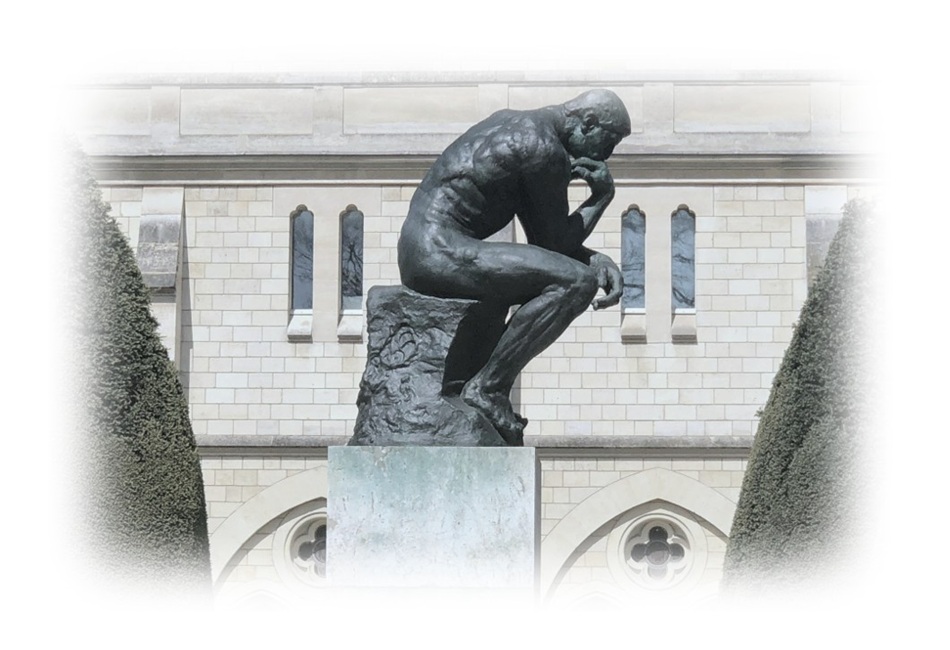
By contrast, Sartre was raised by his mother in the variously described ‘choice’ and ‘chic’ Parisian suburb of Meudon until the age of five and then in an apartment in central Paris, near Luxembourg Gardens. So, it seems these are the stipulations in need of a second look. Interestingly, as an aside, Meudon was also home to Renoir, the painter; Wagner the composer and Rodin the sculptor whose work famously includes ‘The Thinker.’ Clearly, it was nothing in the way of a slum and yet, despite both men losing their fathers in childhood while later carrying a passion for social equality and a mutual rejection of the term ‘existentialist’: their class-driven experiences, shaped their feud.
So, in 1943 and ’44, a series of essays were secretly published under the title: ’Resistance, Rebellion and Death’ and in them, Camus questioned the justification of violence:
‘…that deep-rooted [French] conviction of ours that no victory ever pays, whereas any mutilation of mankind is irrevocable. We had to give up all at once our knowledge and our hope, the reasons we had for loving and the loathing we had for all war.’
In addition, with The Rebel nurturing a theme amongst others in the rejection of force it was the opening salvo with Sartre and the topic of political violence, a contested territory. In fact, as the Algerian War of Independence unfolded, in 1954, Camus felt the carnage inflicted in both directions was simply too high a price to pay. Perhaps, his earlier struggle in austerity drew a short bridge to the impact of conflict whilst Sartre took the opposite view.
For him, revolutionary action implied violence thus justifying the means and maybe, it was the later experience of being a prisoner of war for eight months in Stalag 12D, in Germany, in 1940, that pushed his thinking. In fact, whether or not he advocates brutality has been a long-running debate; still, the result for both was eternal enmity and in the preface to Frantz Fanon’s, ’Wretched of the Earth’ Sartre had this to say:
‘Irrepressible violence is neither sound and fury, nor the resurrection of savage instincts, nor even the effect of resentment: it is man re-creating himself. The rebel’s weapon is the proof of his humanity.’
Opposite twins and yet, it’s pure supposition under surface conclusions where it seems neither had read a relationship agreement and so it may go for the rest of us, too.
How many times have you looked back on an encounter and thought: ‘Why on Earth, didn’t I just read the contract?’ Equally, how often have others thought the same thing about you? By that, it doesn’t mean sitting on opposite sides of a table; instead, it’s suggestive of taking the time to get to know someone. It means listening and watching while a scent of behaviour, gives a taste of the future. Those are the fine details you may want to talk about before committing to any kind of role. You’ll find out with certain questions, as well, in measuring expectations of who is supposed to give what? I’ll trade up a little more honesty, in return for some patience.

An episode of the well-written comedy ’The King of Queens’ shows this perfectly. With Doug and Carrie looking after the two children of their best friends, Deacon and Kelly: surely, it’s only right that Carrie’s incredibly annoying father is looked after by them, in return. So, as ‘Switch Sitters’ unfolds, the two couples end up on opposite sides of a table in brokering a deal that begins with Deacon’s brazen suggestion for Doug and Carrie to continue babysitting whilst he and Kelly, stop taking Arthur.
In reality, of course, these things matter where they can turn into the stuff of nightmares. Take being at work where on a daily basis, we’ll accept that we’ve signed on the dotted line. In fact, your job or career can spin on the whim of a boss’s need to re-haggle. With whom, you may ask: well, it comes from above in the pressure of trying to look competent and so that agreement you’d reached now means nothing at all, in the new and cold light of day. It’s the burden of commitment running into principles as you glance between a rock and a hard place.
‘People ask the difference between a leader and a boss. The leader leads, and the boss drives.’
Theodore Roosevelt
Yet, despite a professional environment, minions and chiefs are subject to the mechanics of being human, too: meaning attachment styles are more than a trend when it comes to seeing what’s on the table.
John Bowlby, was a psychologist whose early work in the field of childhood attachment brought a great deal of controversy, with its implications for women. His initial studies helped him conclude that a child’s singular source of emotional security, only came through a mother or an enduring mother-figure. With this appearing at the end of World War Two and an expectation for women to leave the workspace, partly to make room for returning men: its impact was huge. Yet, Bowlby was nothing if not attentive because over time, he revised his conclusions to say that his earlier findings were wrong and that, specifically, a time-critical period for attachment in infancy was also incorrect.
His eventual work on Attachment Theory, however, is his real legacy and it left us all wondering about four particular attachment styles which in terms of ‘The Relationship Agreement’ are the original documents, so to speak. Secure attachment; anxious attachment; avoidant attachment and anxious-avoidant attachment are measures we can use to understand a personal approach, to relationships.

It’s the equivalent of reading the terms of your own contract before getting others to sign as you scribble on theirs, too. For instance, secure attachments whilst laid back in their drafts, wield a magnifying glass so that nothing in the way of small print gets past and that’s how they stay so calm. Meanwhile, the anxious amongst us may well sign simply to be loved while later threatening to rip up the above, through a fear of being abandoned. The avoidants know right from the start that covering the words: ‘I may run, if you get too close’, at least gets them out of the blocks.
Finally, the anxious-avoidants may want to sign but the memory of pain still stings, so invisible ink is their weapon of choice which surprises you weeks or months in. Undoubtedly, dealing with potential or actual rejection is part of the deal, too, in terms of honesty and where the penalty for buyers remorse lies in accepting the cost of not being wanted.
Naturally, all of this comes from somewhere and in dialling back to the origins, we have to look at the family. This singular unit with the power to build and protect while dismantling within, is the earliest source of our strength. So, the covenants we sign at the time of our birth make no sense until our teens while it’s the drill yard for life’s do-or-die lessons, filled with the weight of the past. It’s here you’ll study ideas of forgiveness, vengeance, honour and trickery with love, odium and fickleness. Then as life moves on, you’ll spread these traits out into families near and far. Work, sport or maybe your own, it’ll take time and effort to smooth out those styles of attachment, rejection and negotiation.
‘Happy or unhappy, families are all mysterious. We have only to imagine how differently we would be described – and will be, after our deaths – by each of the family members who believe they know us.’
Gloria Steinem
It’s also true, though, as John Bowlby realised: nothing is too fixed in the frame. In fact, a family’s spin is quite centripetal but scrutiny is never in vain where stories run deep and patterns may resolve, in eventually overcoming strife. Still, it shines a light on the complex traits running through any family and a study on family dynamics mentions the term ‘role reciprocity’, which in the context of ‘The Relationship Agreement’ is briefly worth looking at. In the online Cambridge Dictionary, reciprocity is defined as: ‘a situation in which two groups agree to help each other by behaving in the same way or by giving each other similar advantages.’

This looks like a contract on any level including that of our non-verbal cousin, the chimpanzee. Indeed, in 1960, the anthropologist and primatologist, Jane Goodall, went on a field trip to The Gombe National Park in Tanzania to study our closest, non-human relative. She later wrote about her experiences in two outstanding books: In The Shadow of Man, which was published in 1971 and Through a Window, in 1990, and it’s through these that the simplicity of reciprocity shines. For example, in her own words and from her first book, she says:
‘Presently, Mike reached out towards Flo’s hand and began almost imperceptibly to play with her fingers. Soon she responded, gently grasping his hand, twisting pulling away – only to reach out and grasp it again. After a few minutes Mike sat up and leaned over Flo, tickling her neck and her ticklish groin until, protecting Flint [her son] with one hand and parrying Mike with the other, Flo started to shake with panting gasps of chimpanzee laughter.’
In her later book, she writes:
‘Like all highly motivated adolescent males, Goblin began to challenge the females of his community early and vigorously. In this endeavour Figan played little part, for these swaggering displays are seldom performed in the presence of adult males. Melissa sometimes helped her son on those not infrequent occasions when he fell victim to the retaliatory fury of one of the higher-ranking, tougher females. But she was not always around and Goblin frequently had to stand alone. As his displays became ever more vigorous and his confidence grew, he tackled the more senior females, and many were the times that he was chased off, often by two females who had formed a temporary alliance.’
These reciprocals in playing and fighting remind us that our most basic instincts are entirely contractual, whenever we encounter another. In turn, they make up the family units – human or otherwise – that are of such socioeconomic importance. Our societies through which we form a larger social contract depend on them and even as they change over time, the basic function remains the same. It’s kinship, meaning: ‘The relationship between members of the same family’ or ‘a feeling of being close or similar to other people or things.’
Yet, does it mean unspoken obligations within a unit are there to be taken for granted? It seems counter-productive with terms re-read to establish an outlook: but then, it’s the repeat offenders who mess up a pact, making more work for the rest. Some, perhaps, seem not to care if their word was given in blood; so, an intent towards consequence is nothing at all, leaving many more issues with trust and at times, it’s only confirmation bias saying it’s fine if others are ripping stuff up. Still, as we look across the street or over the fence to see our neighbours, in turn; we’ll witness routines born of an agreement, somewhere in the near or distant past.
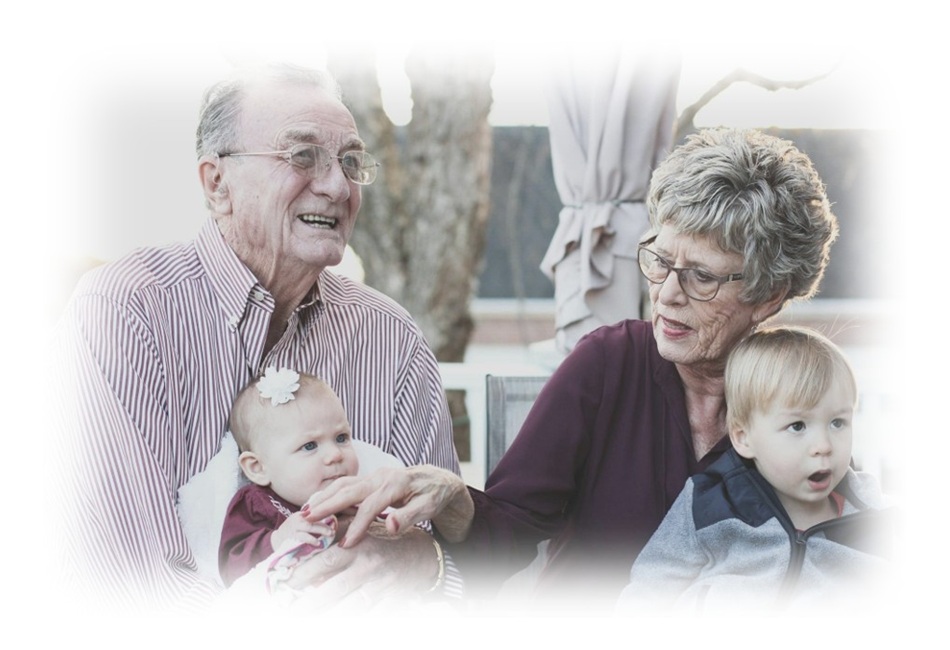
It’s always about relationships and it’s not to be underestimated where a good deal of research over time underscores the influence and impact of a family, on individual progression and health. Equally, the importance can’t be overstated as we prepare to occupy a place, in the social and economic hierarchy.
In returning then to the existentialists or the philosophers who’d rather not be so: the feud between Camus and Sartre never really came to an end. The author of The Outsider died tragically in a car accident, in 1960, while Sartre when asked about his old rival in an interview, fifteen-years later, said: ‘He was probably, my last good friend.’ On reflection, it may have occurred to him that the re-written conditions of a Relationship Agreement could have been visited at some point. Yet, it’s not always simple if the terms are unpalatable while renegotiation takes communication, leaving reciprocity to call out once more.
The Relationship Agreement is the first and last treaty to bookend the story of our lives. As we pass through each other, we’ll barter for better to ensure that our time here runs smooth. In the end, though, we knew that concessions meant something to people, some of whom we’ve loved. The push and the pull to give and receive allowing all of us to hopefully sleep better. It’s the offer and acceptance of emotions and favours, commitment, passion and yes, deceit. It’s so run of the mill that we forget how it works, until someone breaks the accord. Still, it’s our birthright to breathe and our freedom to grieve yet, it’s so human nature to do what we do: the essence of existence is our all.
As Albert Camus wrote about World War Two, in his essays from 1943:
‘It took us all that time to find out if we had the right to kill men, if we were allowed to add to the frightful misery of this world.’
Well, socioeconomic and international relations are as complex as people, making our deeds upon deeds just transitory fare. So, maybe we’ll get there or maybe we won’t, if ‘there’ leads to something that’s not a slippery slope.
Copyright © 2024 | recoveryourwellbeing.com | All Rights Reserved
Images:
Age Old Love, by Mabel Amber, Pixabay – Main Image
In Agreement, by kindelmedia, Pexels
Hello Sibling, by Daniel Duarte, Pexels
Rodin’s ‘The Thinker’, by Alepere, Pexels
Chilly Hugs, by Mikhail Nilov, Pexels
Daddy’s Shoulder, by Aditya Bose, Pexels
Over Coffee, by Ketut Subiyanto
Generational Love, by Pixabay
References:
‘Existence precedes essence’, Oxford Reference, Oxford Dictionary (Oxford, Oxford University Press, 2023) accessed 9th January 2024, https://www.oxfordreference.com/display/10.1093/oi/authority.20110803095804529
Michael Lambarth, “A Really Basic Introduction to English Contract Law” (California, CreateSpace Independent Publishing Platform, 2014)
‘The Big Bang Theory’, Chuck Lorre Productions & Warner Bros. Television, 14th February 2008, IMDb, accessed 20 January 2024, https://www.imdb.com/title/tt0898266/
‘The Flaming Spitton Acquisition’, The Big Bang Theory, Youtube, YoureInMySpotFBPage, Series 5, Episode 10, accessed 20th January 2024, https://www.youtube.com/watch?v=lwuVwOhFu58
Biography Books, Review, ‘Camus and his Women’, The Guardian newspaper, 15th October 1997, accessed 10th January 2023, https://www.theguardian.com/books/1997/oct/15/biography.albertcamus
Søren Kierkegaard, ‘The Soul of Kierkegaard: Selections from His Journals’ (New York, Dover Publications, 2003) pp61
Stempel, Daniel, ‘Shelley and the Ladder of Love’, Keats-Shelley Journal, 15 (1966): 15-23, https://www.jstor.org/stable/30209849
Lillian Wilde, ‘Embracing Imperfection: Plato vs Nussbaum On Love’, Philosophy Now, 2017, Para 3, accessed 11th January 2024, https://philosophynow.org/issues/122/Embracing_Imperfection_Plato_vs_Nussbaum_On_Love
William Shakespeare, ‘Famous Quotes – As You Like It’, Royal Shakespeare Company, Act 2, Scene 7, 2024, accessed 15th January 2024, https://www.rsc.org.uk/as-you-like-it/about-the-play/famous-quotes
Erik Erikson, ‘Eight Stages of Psychosocial Development’, APA, American Dictionary of Psychology, 19th April 2018, accessed 14th January 2024, https://dictionary.apa.org/eriksons-eight-stages-of-psychosocial-development
Becky Banham, ‘Transactional Analysis’, Counselling Directory, March 2022, accessed 14th January 2024, https://www.counselling-directory.org.uk/transactional-analysis.html#whatistransactionalanalysis
Coffman, M; Marques, J, ‘Gender and Communication: Are There Decisive Differences? In: Marques, J (eds) Exploring Gender at Work. Palgrave Macmillan, Cham. Accessed 15th January 2024, https://doi.org/10.1007/978-3-030-64319-5_4
Friedrich Nietzsche Quote, ‘There is always some madness…’, Brainy Quote, 2024, accessed 18th January 2024, https://www.brainyquote.com/quotes/friedrich_nietzsche_138908?src=t_relationship
Ronald Aronson, ‘An Excerpt from Camus and Sartre: The Story of a Friendship and the Quarrel that Ended It’ (Chicago, University of Chicago Press, 2004), Chapter 1, Para 1, accessed 15th January 2024
J.P Sartre, ‘The Flies’, Artistic Director Elena El Earthbourne, Youtube, 11th April 2012, accessed 18th January 2024, https://www.youtube.com/watch?v=nperewvokQw
AFP, Agence France-Presse, ‘Discovery of an Unpublished Letter by Camus to Sartre and Beauvoir’, Libération, 8th August 2013, accessed 15th January 2024, https://www.liberation.fr/livres/2013/08/08/decouverte-d-une-lettre-inedite-de-camus-a-sartre-et-beauvoir_923577/
Albert Camus, ‘The Rebel’ (London, Penguin Modern Classics, 2000)
Google Maps, ‘Dréan’, accessed 15th January 2024, https://maps.app.goo.gl/uQPRL3sinAT3VVNu8
Joshua Hammer, Contributing Writer, ‘Why Is Albert Camus Still a Stranger In His Native Algeria?’ The Smithsonian Magazine, October 2013, Paras 11 & 12, accessed 16th January 2024, https://www.smithsonianmag.com/innovation/why-is-albert-camus-still-a-stranger-in-his-native-algeria-13063/
The Editors of Encyclopedia Britannica, ‘Meudon; France’, Encyclopedia Britannica Inc, 2024, accessed 16th January 2024, https://www.britannica.com/event/Selma-March/We-Shall-Overcome-LBJ-and-the-1965-Voting-Rights-Act
‘Luxembourg Gardens; Paris, France’, Tripadvisor, accessed 16th January 2024, https://www.tripadvisor.com/Attraction_Review-g187147-d189687-Reviews-Luxembourg_Gardens-Paris_Ile_de_France.html
Auguste Rodin, ‘The Thinker’ Musée Rodin, Paris, France, 2024, accessed 16th January 2024, https://www.musee-rodin.fr/en/musee/collections/oeuvres/thinker
Albert Camus, ‘Resistance, Rebellion and Death’ (New York, Knopf Doubleday Publishing Group, 1995) Essay 1, Letters to a German Friend, pp8
History.com Editors, French-Algerian Truce, History Channel, A&E Televison Networks, 9th February 2010, accessed 16th January 2024, https://www.history.com/this-day-in-history/french-algerian-truce
Clara Király, Library, ‘ICRC Action During The Algerian War of Independence (1954 – 1962)’, 17th March 2023, Cross-files, Archives/Audio-visual Library, ICRC – International Committee of The Red Cross, accessed 16th January 2024, https://blogs.icrc.org/cross-files/icrc-action-during-the-algerian-war-br-of-independence-1954-1962/
Desautels, Alfred R, ‘The Sartre of Stalag 12D (1940-1941)’, The French Review, 55, No.2 (1981): pp201-6, https://www.jstor.org/stable/391354
Presbey, Gail M, ‘Sartre on Violence’, International Studies in Philosophy, No.4, Vol.39, pp164-167, 2007, https://philpapers.org/rec/PRESOV-2
Frantz Fanon, ‘The Wretched of the Earth’ (New York, Grove Press Publishing, 2021)
‘The King of Queens’, Hanley Productions & CBS Productions, 11th February 2004, IMDb, Season 6, Episode 14, ‘Switch Sitters’, accessed 17th January 2024, https://www.imdb.com/title/tt0620164/
Theodore Roosevelt Quote – ‘People ask the difference…’, Brainy Quote, 2024, accessed 17th January 2024, https://www.brainyquote.com/quotes/theodore_roosevelt_100965
Barbera Tizard, ‘Looking Back: The Making and Breaking of Attachment Theory’, The British Psychological Society, 5th October 2009, accessed 17th January 2024, https://www.bps.org.uk/psychologist/looking-back-making-and-breaking-attachment-theory
Kossoudji, Sherrie A, and Laura J. Dresser, ‘Working Class Rosies: Women Industrial Workers During World War II’, The Journal of Economic History, 52, No.2 (1992): pp431-46, https://www.jstor.org/stable/2123119
‘Attachment and Child Development’, NSPCC – Learning, National Society for the Prevention of Cruelty to Children, 10th August 2021, accessed 17th January 2024, https://learning.nspcc.org.uk/child-health-development/attachment-early-years
Benoit, D. ‘Infant.parent Attachment: Definition, Types, Antecedents, Measurement and Outcome’, Paedtiatr Child Health, 2004 Oct, 9(8):541-545. Doi: 10.1093/pch/9.8.541. PMID: 19680481; PMCID: PMC2724160, https://www.ncbi.nlm.nih.gov/pmc/articles/PMC2724160/
Harmeet Kaur, ‘The Four attachment Styles and How They Affect Your Relationships’, CNN – Relationships, 29th August 2023, accessed 17th January 2024, https://edition.cnn.com/health/attachment-styles-types-relationships-wellness-cec/index.html
Jessica Slice, ‘He Cared About Me, So I Broke Up With Him’, The New York Times, Modern Love, 19th November 2021, accessed 17th January 2024, https://www.nytimes.com/2021/11/19/style/modern-love-he-cared-so-i-broke-up-with-him.html
Gloria Steinem Quote – ‘Happy or unhappy…’, Brainy Quote, 2024, accessed 17th January 2024, https://www.brainyquote.com/quotes/gloria_steinem_155670?src=t_family
Jabbari B, et al, ‘Family Dynamics’, [Updated 2023 Sep 16] In: StatPearls [Internet], Treasure Island (FL): StatPearls Publishing; 2023 Jan- Para 3, https://www.ncbi.nlm.nih.gov/books/NBK560487/#:~:text=Family%20dynamics%20refer%20to%20the,of%20relationship%20security%20or%20stress.
Online Cambridge Dictionary, ‘Reciprocity’, Cambridge University Press, 2024, accessed 17th January 2024, https://dictionary.cambridge.org/dictionary/english/reciprocity
Jane Goodall, ‘In The Shadow of Man’ (London, Weidenfeld & Nicolson, 1999) Chapter 10, pp191, Para 4
Jane Goodall, ‘Through A Window’ (London, Weidenfeld and Nicolson, 2020) Chapter 13, pp160, Para 2
Locke, Rousseau, Kant & Rawls, ‘The Social Ocntract’, Stanford Encyclopedia of Philosophy, 2023, accessed 18th January 2024, https://plato.stanford.edu/entries/contractarianism-contemporary/
Noble, Trevor, ‘The Nuclear Family and Postmodern Theory’, Hitotsubashi Journal of Social Studies, 27, No.2 (1995): 127-43, https://www.jstor.org/stable/43294397
‘Kinship’, Cambridge Dictionary (Cambridge, Cambridge University Press, 2023) accessed, 17th January 2024, https://dictionary.cambridge.org/dictionary/english/kinship
‘Confirmation Bias’, APA, American Psychological Association, Online Dictionary, 19th April 2018, accessed 17th January 2024, https://dictionary.apa.org/confirmation-bias
Averett, S and Kohn, J, ‘The Economics of Family and Health’, Oxford Research Encyclopedia of Economics and Finance, 30th July 2018, accessed 17th January 2024, https://oxfordre.com/economics/display/10.1093/acrefore/9780190625979.001.0001/acrefore-9780190625979-e-9
Albert Camus, ‘The Outsider’ (London, Penguin Classics, 2013)
Von Volker Hage, ‘The Falling Out of Camus and Sartre’, Spiegel International, 6th November 2013, accessed 17th January 2024, https://www.spiegel.de/international/zeitgeist/camus-and-sartre-frien

 recover your wellbeing