


lying awake at night in awe of the cosmos makes here and now, the real point
One day, in the far and distant future, our sun will begin a long death rattle as it swells into what’s known as a red giant star. It’s core fuel of hydrogen converting to helium will have run out and the latter will begin helium fusion into carbon, as the star contracts and the outer shell expands. This can take around a billion years, but as Earth and the inner planets are consumed in a celestial fire worthy of Dante and his inferno, questions on the meaning of life will finally have hit both definitions of absurdity.
So, on the one hand, our grasp of irony in the ridiculousness of things, means trying to drive with a broken foot or believing the blatant is actually subtle: merely reflects chaos in a mirrored view. On the other, wrestling with ideas of celestial importance can lead to the same if it’s not mathematical: so, what’s the best pathway through it all? In a 2012 paper called ‘Foundationless Freedom and Meaninglessness of Life, in Sartre’s Being and Nothingness’, Iddo Landau suggests:
‘Many people occasionally feel that life is absurd or meaningless. These feelings vary from person to person in strength, duration and frequency, and are interpreted by different people differently: some take these feelings as an indication that life really is absurd, believing that when they do not feel that life is meaningless, they are ‘covering up’. Others believe that life is generally meaningful, and that these feelings are misleading or have to do with exaggerated reactions to idiosyncratic discontents.’
Well, these are universal experiences in a global sense while trying to unravel a relationship with yourself, your work and the people around you is trial, error and hopefully success.
Meanwhile, two of the many giants of existential thought held opposing views when it came to the ‘absurd’. So, not content with crossing swords over the validity of revolutionary violence, Jean Paul Sartre’s picture of absurdity believed in the frailty of our thinking when faced with a vast and overwhelming cosmos. For him, the fundamental purpose of our existence remains utterly meaningless and the absence of a reason equates to an absurdity.
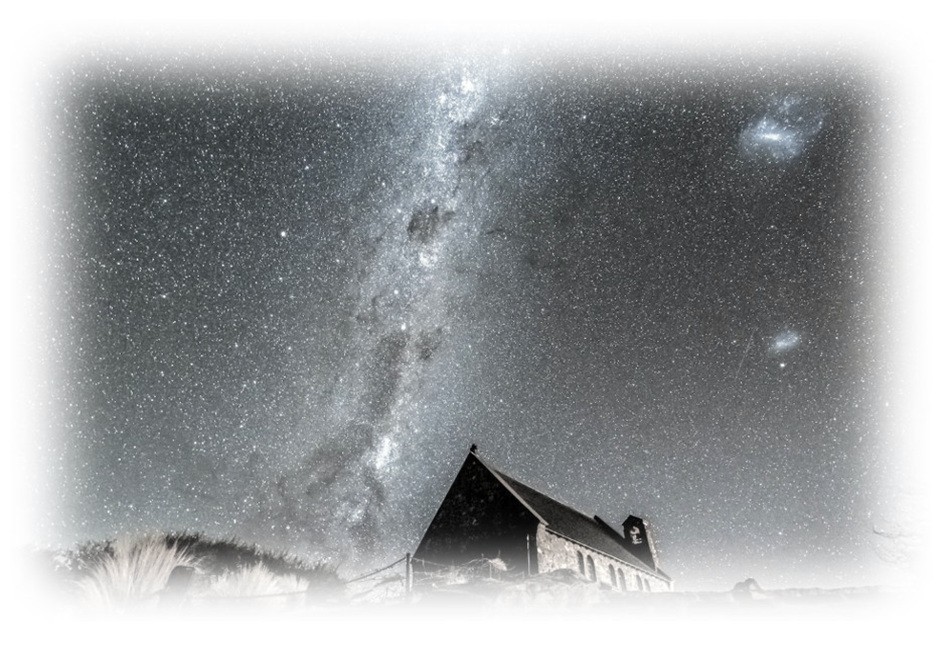
Similarly, Albert Camus wrestled with the idea of infinity making no sense, but he ground his axe on our functional inability to find answers which for him was simply absurd, too. So, for Sartre, the mere fact of existence is absurd while for Camus an incapacity to explain it brings the same. Clearly, a lot of grey was involved, too, but for all who are engaged in the daily act of living or for many, surviving, the fact of being alive is entirely secondary to keeping it that way. It seems that Maslow’s Hierarchy of Needs is King and Queen when it comes to priorities, meaning our acceptance of absurdity should be more or less a given.
Or, should it?
Every year, over 700,000 people worldwide end their lives prematurely with reasons ranging from depression, financial issues and substance dependency to sickness, chronic pain and failed relationships. In these tragic circumstances where the weight of life has proven too much: the fact of existence has lost the inherent quality carrying most of us over planned or unexpected lines, and its most eloquent expression perhaps lies in a quote, by Camus.
‘There is but one truly serious philosophical problem and that is suicide. Judging whether life is or is not worth living amounts to answering the fundamental question of philosophy.’
Surely, this must be true in so far as there can be no other question as basic. Yet, in years to come the matter will be answered by the heat of the sun, unless of course, a massive black hole has pulled the planet to pieces as it swallows everything including light, whole. In the meantime, trying to reconcile the apparent futility of our existence only makes sense in the absence of any meaning, throughout a life in itself. So, the mystery means different things to different people and as Camus also famously said:
‘You will never be happy if you continue to search for what happiness consists of. You will never live if you are looking for the meaning of life.’
True words for all time, it seems.
Copyright © 2024 | recoveryourwellbeing.com | All Rights Reserved
Images:
Desperate Times, by Alana Jordan, Pixabay, AI Generated – Main Image
Scales of infinity, by Nick K Wanh, Pixabay
References:
Astronomy Staff, ‘What Will Happen to the Planets When The Sun Becomes A Red Giant?’ Astronomy Magazine, 18th May 2023, Para 1, accessed 24th March 2024, https://www.astronomy.com/observing/what-will-happen-to-the-planets-when-the-sun-becomes-a-red-giant/
‘The Life Cycle of Stars: How Supernovae Are Formed’, National Aeronautical and Space Administration, NASA, 7th May 2015, Para 2, accessed 24th March 2024, https://imagine.gsfc.nasa.gov/educators/lessons/xray_spectra/background-lifecycles.html
Alessandra Pagano & Matteo Dalena, ‘Dante’s ‘Inferno’ Is A Journey To Hell and Back’, National Geographic, 21st October 2022, accessed 24th March 2024, https://www.nationalgeographic.co.uk/history-and-civilisation/2022/10/dantes-inferno-is-a-journey-to-hell-and-back
Landau, Iddo, ‘Foundationless Freedom and Meaninglessness of Life, in Sartre’s Being and Nothingness’, Sartre Studies International 18, No.1 (2012): 1-8, accessed 24th March 2024, http://www.jstor.org/stable/42705180
Sam Dresser, ‘How Camus and Sartre Split Up Over The Question Of How To Be Free’, Aeon Magazine, 27th January 2017, Paras 5,6 & 7, accessed 24th March 2024, https://aeon.co/ideas/how-camus-and-sartre-split-up-over-the-question-of-how-to-be-free
‘Critical Essays Sartrean Existentialism: An Overview’, Cliffs Notes, 2024, Para 2, accessed 24th March 2024, https://www.cliffsnotes.com/literature/n/no-exit/critical-essays/sartrean-existentialism-an-overview
‘Critical Essays Camus and the Absurd’, Cliff Notes, 2024, Para 2, accessed 24th March 2024, https://www.cliffsnotes.com/literature/p/the-plague/critical-essays/camus-and-the-absurd
A.J Willingham, ‘What Is Maslow’s Hierarchy of Needs? A Psychology Theory, Explained’, CNN, 15th August 2023, Section 13, accessed 21st March 2024, https://edition.cnn.com/world/maslows-hierarchy-of-needs-explained-wellness-cec/index.html
‘Suicide’ World Health Organisation, Overview, 28th August 2023, accessed 24th March 2024, https://www.who.int/news-room/fact-sheets/detail/suicide
‘Suicide’ World Health Organisation, Who Is At Risk, 28th August 2023, accessed 24th March 2024, https://www.who.int/news-room/fact-sheets/detail/suicide
O’Dwyer, K, ‘Camus’ Challenge: The Question of Suicide’, Journal of Humanistic Psychology, 2012, 52(2), 165-177, accessed 24th March 2024, https://doi.org/10.1177/0022167811402999
‘Doomsday: 10 Ways The World Will End – Planet Destroying Black Hole’, Youtube, History Channel, 1st May 2020, accessed 24th March 2024, https://www.youtube.com/watch?v=u5oHxPwtz7E&t=415s
‘You Will Never be Happy…’ quote, Albert Camus, Goodreads, 2024, accessed 24th March 2024, https://www.goodreads.com/quotes/tag/meaning-of-life

 recover your wellbeing