


one foot in front of the other or one block on another: cause and effect isn’t always what it seems
If you had to illustrate the idea of Earthly existence to a traveller from another part of the universe, you might look no further than explanations of a cathedral. Structures of stone defying belief in their dates of birth, construction and monstrously-outsized beauty. In fact, deference to any god is surely surfeit to requirements in appreciating the quality of these enormous shrines, and the word ‘shrine’ is precisely at the heart of what matters when it comes to a sense of motivation.
To stand at the feet of one of these things while craning your neck to look up, revives an original feeling of awe, insignificance and for some fear. Yet, in facing what is a humbling truth, we’re at the same time seeing a power within. Proof of our connection to something beyond still driving the spirit to reach out and touch, like Michelangelo’s fresco in the roof of a sky. So, in almost any country in Europe and around the world, this testament to human motivation affirms our belief in continuing to push.
It means, we’ll use the urge to observe, belong and hopefully improve while trying to use whatever we’re good at to earn the most, in various ways. Yet, a dichotomy still lies in the debate over free will and determinism. A tension always bouncing between internal and external influences over our ability to choose what we choose. The former fuels a motivation sprung internally and exerted outwardly while the latter may cancel a stimulus within and where choices are pointless, if it’s all pre-written. With that in mind, surely, they’re as valid as each other?
Well, one way of seeing this is through Self-Determination Theory or SDT, which looks at the nature of human growth and development and especially in terms of motivation. Another way of viewing it, is to talk about ‘agent causation’ or where a person puts into effect a chain of events, independently of others. Clearly, the drive to produce, distribute and consume fuels an evolutionary success that feeds into itself. Meanwhile, the other side of the coin carries ‘event causation’ that’s conceptually tied to physical cause and effect, as the name suggests. Both, fall into the class of ‘Action Theory’; the area of philosophy dealing with knowledge and actions that are causally linked or not, to greater or lesser degrees. Donald Davidson was both a proponent and prominent philosopher in the twentieth century, whose ideas and work had a great deal to do with this approach.
‘Davidson treats the connection between reason and action (where the reason is indeed the reason for the action) as a connection that obtains between two events (the agent’s believing and desiring on the one hand and her acting on the other) that can be variously described. The connection is both rational, inasmuch as the belief-desire pair (the ‘primary reason’) specifies the reason for the action, but it is also causal, inasmuch as one event causes the other if it is indeed the reason for it. It is precisely because the reason is causally related to the action that the action can be explained by reference to the reason.’
Fear is often a good reason, and the drive to build a structure hundreds of metres tall and over hundreds of years and with the most basic tools is a feat worthy of homage, in itself. It’s an economic masterpiece, too, of course, in its gradual ascent while in the rumble of thunder and a lightning strike, it would have been hard not to tremble in the face of what seemed like the displeasure of the gods. So, a collective unconscious by way of the worshipper shaped the needs of a community, and it was a cry of faith heard around the world showing just how far we’d go to praise and appease whilst killing each other all the same.
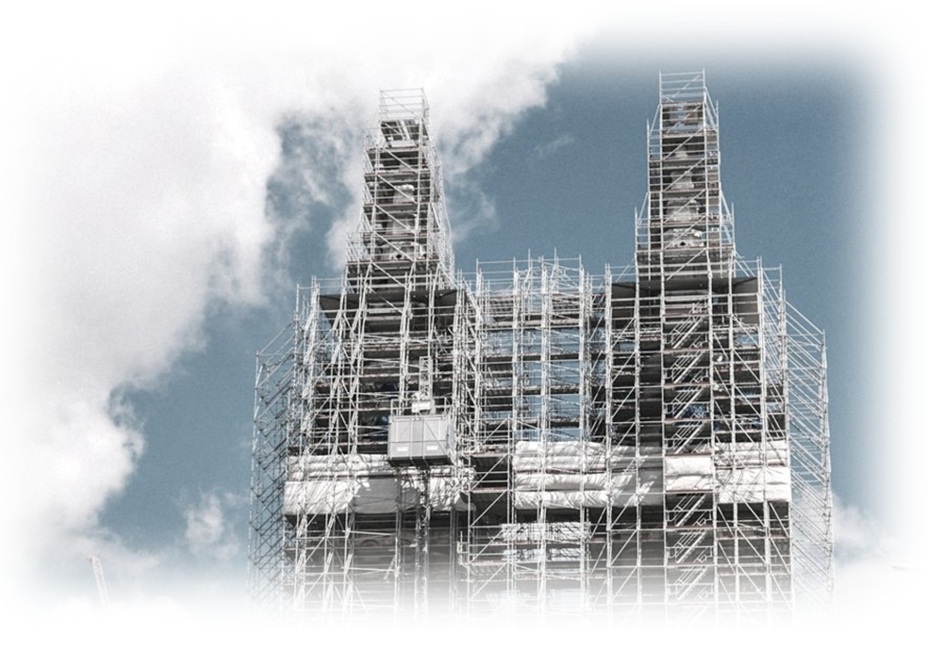
In a way, raising a cathedral was an Olympics in it’s own right and with a social return on investment to rival the games, at a point in time. In fact, as the church forgave sins in return for labour, workers of all skill levels contributed to the construction as congregation and community members, helped to fund the build. In addition, they were practically independent economies, too, with the pilgrimage industry a constant presence throughout the Middle Ages and beyond. So, motivation arrives in many forms and with questions like: are motivation and action empirically based? Are observations responsible for the drive, to push harder?
David Hume was an eighteenth-century Scottish philosopher, whose contributions to the discipline were immense. Amongst things, he wrote about causation and in a seminal work: ‘An Enquiry Concerning Human Understanding’, he talked about our view of cause and effect and the way in which it can be falsified. In another book, ‘Journey Into Philosophy: An Introduction With Classic and Contemporary Readings’, Stan Baronett, quotes him:
‘When it is asked, [sic] What is the nature of all our reasonings concerning matter of fact? [sic] the proper answer seems to be, that they are founded on the relation of cause and effect. When again it is asked, [sic] What is the foundation of all our reasonings and conclusions concerning that relation? [sic] it may be replied in one word, [sic] Experience. But if we still carry on and ask, [sic] What is the foundation of all our conclusions from experience? [sic] this implies a new question, which may be a more difficult solution and explication.’
In short, Hume was alluding to the belief that just because something draws a particular result doesn’t mean it’ll happen again, and this falsification in observation is important when it comes to motivation. In living our lives, we’re tied to things like effort and application while our duties and responsibilities may eventually defeat us. These experiences mark us before tailoring an approach the next time around and as our agent causation falters, event causations are usually blamed through incidents of a kind.
Causation shares a lot in common with the mind-body problem set out by ‘René Descartes in his 1641 treatise, ‘Mediations on First Philosophy’. Divided into six sections, part VI, ‘Of the Existence of Material Things and the Real Distinction Between Mind and Body’ looks at the idea of internal perceptions and external existence, insofar as the latter exists in relation to the former. He then turns his attention to a division between mind and body that seems predicated on the ability of a higher power to create things independently of each other which, in turn, leads to the crucial premise that where the brain occupies physical dimensions, the mind does not. At the same time, he’s interested in our physiology and the way that the brain works and our muscles contract.
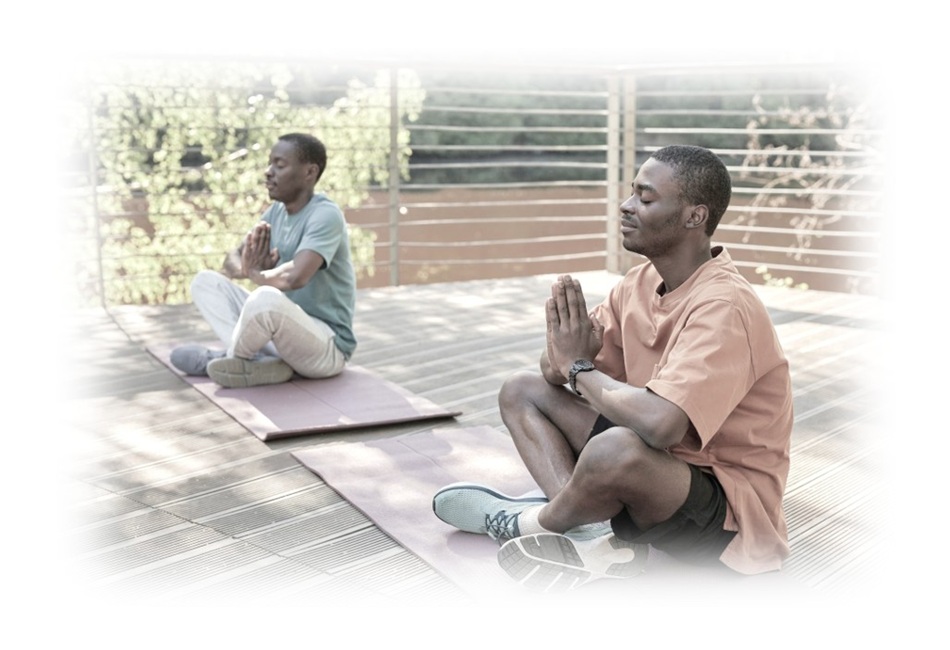
Obviously and with the passing of a few hundred years, he wasn’t to know that our thoughts and feelings are entirely based on the electrochemical signalling of neurons that are inseparable as physical elements. He also wasn’t to know that something like decision-making is fuelled by tiny physical things called hormones and molecules, that play specific and crucial roles in our consciousness. A sense of life allowing us to take part in a world that can distort causation while rewarding or destroying motivation, in a flash.
That feedback is important because whatever we tried before that worked can suddenly seem impotent and if it relates to personal development, fitness or weight loss, the consequences can be profound. So, it seems helpful to remember that trying a different approach is a successful evolutionary strategy and one that can boost your motivation and perhaps your position, too. It’s an important point that we sometimes forget, in the heat of a struggle or the fog of denial.
‘Without ambition, one starts nothing. Without work, one finishes nothing. The prize will not be sent to you. You have to win it.’
Ralph Waldo Emerson
Placing one stone block on another is cause and effect you can usually trust which in turn, helps to build confidence and the necessary inspiration.
You don’t have to build a cathedral, of course, but those are steps you can certainly apply to the continuous shaping of your life.
Copyright © 2024 | recoveryourwellbeing.com | All Rights Reserved
Images:
Cologne Cathedral, by Bea 61, Pixabay – Main Image
Scaffolded Turrets, by Jos Duy, Pixabay
Mind-Body Harmony, by Edmund Dantes, Pexels
References:
‘Amiens Cathedral Construction Sequence’, Youtube, Myles Zhang, 18th May 2017, accessed 5th April 2024, https://www.youtube.com/watch?v=b77XFALHNXw
‘Amiens Cathedral – UNESCO World Heritage Site’ Youtube, World Heritage Journey, 3rd June 2018, accessed 5th April 2024, https://www.youtube.com/watch?v=EbhY5efZ3y4
‘Behind The Scene At The Sistine Chapel With A Museum Director’, Youtube, Musuem Secrets By Kensiington Comr, 8th January 2011, accessed 5th April 2024, https://www.youtube.com/watch?v=ZQ–TSB6JHE
‘Determinism vs Free Will: Crash Course Philosophy #24’, Youtube, CrashCourse, 15th August 2016, accessed 5th April 2024, https://www.youtube.com/watch?v=vCGtkDzELAI
Mika Manninen, et al, ‘Self-determination’ Theory Based Instructional Interventions and Motivational Regulations in Organised Physical Activity: A Systematic Review and Multivariate Meta-analysis’, Psychology of Sport and Exercise, 2022, accessed 5th April 2024, https://www.sciencedirect.com/topics/social-sciences/self-determination-theory
‘Agent-causation’, Oxford Reference Online Dictionary, Oxford University Press, 2024, accessed 5th April 2024, https://www.oxfordreference.com/display/10.1093/oi/authority.20110803095355816?rskey=J0XANV&result=4
Emmet, D, ‘Event Causation’ chapter, The Effectiveness of Causes (London, Palgrave Macmillan, 1984), https://doi.org/10.1007/978-1-349-07165-4_4
Andrei Buckareff (Ed), ‘Action Theory’, The Philpapers Foundation, 2024, accessed 5th April 2024, https://philpapers.org/browse/action-theory
Jeff Malpas, ‘Donald Davidson’, Stanford Encyclopedia of Philosophy, The Metaphysics Research Lab, 28th April 2023, Para 7, accessed 5th April 2024, https://plato.stanford.edu/entries/davidson/
Walter Boechat, ‘The Collective Unconscious’, International Association For Analytical Psychology, 2024, accessed 5th April 2024, https://iaap.org/jung-analytical-psychology/short-articles-on-analytical-psychology/the-collective-unconscious-2/
‘Durham Castle and Cathedral’, Unesco World Heritage Site, 2024, Para 1, accessed 5th April 2024, https://www.durhamworldheritagesite.com/learn/architecture/cathedral/construction
Davies, Larissa, et al, ‘Social Return on Investment (SROI) in Sport: A Model For Measuring The Value of Participation in England’, Sheffield Hallam University, International Journal of Sport Policy and Politics, 2019, doi: 10.1080/19406940.2019.1596967, accessed 9th February 2024, https://shura.shu.ac.uk/24563/5/Davies-SocialReturnInvestment%28AM%29.pdf
‘Durham Castle and Cathedral’, Durham World Heritage Site, 2010-25, Para 2, accessed 5th April 2024, https://www.durhamworldheritagesite.com/learn/architecture/cathedral/construction
Bell AR, Dale RS, ‘The Medieval Pilgrimage Business’, Enterprise and Society, 2011; 12(3):601-627, doi: 10.1093/es/khr014, accessed 5th April 2024, https://www.cambridge.org/core/journals/enterprise-and-society/article/abs/medieval-pilgrimage-business/0A2BA1AF5ED713BD378EE45620ABA74E
Stan Baronett, ‘Journey Into Philosophy: An Introduction With Classic and Contemporary Readings’ (Oxfordshire, Routledge, 1st Edition, 2016) Page 37, https://www.amazon.co.uk/Journey-into-Philosophy-Introduction-Contemporary/dp/1138936472
Justin Skirry, ‘René Descartes: The Mind-Body Distinction’, Internet Encyclopedia of Philosophy and its Authors, ISSN 2161-0002, 2025, accessed 1st June 2024, https://iep.utm.edu/descartes-mind-body-distinction-dualism/
Michael Moriarty, ‘René Descartes, Meditations on First Philosophy: with Selections from the Objections and Replies’, Oxford World’s Classics’ (Oxford, OUP Classics, 2008), https://www.amazon.co.uk/Meditations-Philosophy-Selections-Objections-Classics/dp/0192806963/
‘Without Ambition’ Quote, Ralph Waldo Emerson, Goodreads, 2024, accessed 5th April 2024, https://www.goodreads.com/quotes/2731-without-ambition-one-starts-nothing-without-work-one-finishes-nothing

 recover your wellbeing