


winning or losing; it’s never the same when the stakes are metaphysical
Bill Shankly was the first in a post-war line-up of highly successful managers at Liverpool football club and in what was then, the English First Division. Yet, while being interviewed on Granada television, in 1981, he expressed deep introspection over his passion and commitment to the game which had come at a cost, to his family. So much so perhaps that his interviewer, Shelley Rohde, felt compelled to ask whether he regretted the choice. His answer was as intense and spirited as the drive taking Liverpool to the first of many European trophies, two F.A cups and three league titles, within fifteen years.
Later, John Toshack, one of Liverpool’s immortals as a former player, said of the quote:
‘He inspired us in every way; his belief in Liverpool Football Club, the standards he set for himself and for the club, the intensity that he went about his job. His quote about football being more important than life or death, he really felt that way. He rammed it into us how important it was to be playing for Liverpool, how privileged we were to be playing for these people. We really believed that.’
Even so, in watching the interview footage, it seems that Shankly never meant to portray the game as a supplant for real life but still, his famous quote went on to represent the game’s mass popularity, if not his innermost feelings.
BS: ‘Well, everything I’ve got out of football, I owe to football, and the dedication and what I put into the game. You only get out of the game what you put into it, Shelley, and I put everything into it I could and still do, for the people that I was playing for and the people I was managing for. I, didn’t cheat them out of anything; so, I put all my heart and soul to the extent that my family suffered.’
SR: ‘Do you regret that, at all?’
BS: ‘Oh, I do, oh, yeah, I regret it very much; yeah. Somebody, said that football’s a matter of life and death to you; I said: listen, it’s more important than that.’

It’s true, while on the one hand, it’s not entirely clear that the ‘it’ Shankly was referring to was life and not football, the possible misrepresentation embodies the way millions of people all over the world feel about the game. So, it’s arguably the most existential sports-related quote you’ll ever find and in that there’s something about the nature of it, sport, that continues to reflect who we are and not just as human beings but as sentient souls. It’s the fight to win, of course, but more so the fight to survive – be it a game, a race, a league table or literally. Take chess, for instance. The absence of physical contact and injury doesn’t negate the essence of tension or the desire in some to cheat perhaps, but it would be as odd to see a player in flame-retardant overalls as it would be to see a shirt and tie, on a 200mph straight.
Clearly, the levels are different but our needs are the same meaning questions exist like how do we transcend ourselves in unexpected moments, that are morally driven?
In 1936, Jesse Owens competed at the eleventh Olympiad in Nazi Germany and famously went on to scoop four gold medals but in true Olympic fashion, it wasn’t the main event. This was reserved for an astonishing piece of sportsmanship and humanity. As Owens struggled to find form in the long-jump qualifiers he faulted during the first two attempts, leaving the third and final jump as his only chance of proceeding. Seeing Owens’ obvious talent, Lutz (or, Luz) Long, his main rival suddenly offered advice. In the biography: ‘In Black & White,’ the story of the lifelong friendship between Owens and the boxer, Joe Louis, Donald McRae wrote:
‘In front of Hitler, the German offered advice as rudimentary as his English. Jesse was such a great jumper, [and] Long said, that he would easily clear the required distance if he took off even six or seven inches short of the board.’
So, Owens qualified before going on to repeatedly exchange the lead with Long, in a gripping final contest. Then, as the American prepared to collect his second gold medal: runner-up, Long embraced him in full view of the Nazi hierarchy before the two men walked around the stadium together, posing for photographs. As William C. Rhoden, a former sports columnist for the New York Times observed, in the American Experience film:
‘That was extraordinary when you think about it. There are these moments in history when the actors understand that moment and they just do the right thing. Lutz Long did the right thing and that was a very humanising moment for Owens and for Germany.’

It was remarkable and perhaps the enduring appeal of the Olympic Games lies in all that’s produced by the human spirit for the human spirit and writ large are memories of past Olympiads, that will live on forever. Moments like Anton Josipovic, the Yugoslavian boxer, pulling Evander Holyfield to the Gold medal podium in 1984, after a banal but technically correct decision had disqualified the American. Or the 1992 games in which Derek Redmond, crippled by a hamstring injury and hopping the final bend of the 400m semi-final was suddenly helped by his father, who had run on to the track. Then, of course, the sight of Muhammed Ali lighting the flame in Atlanta in 1996 as he braved Parkinson’s disease, moved all watching beyond description.
These are the real and raw moments, we crave as social animals. Not in the sense of gratuitous viewing, although by definition: the expense of injury and or disappointment to those competing is how these moments invariably arise. Instead, it’s through empathy as a result of our shared experience in being human.
So, a similar question arises in terms of how do we transcend ourselves in unexpected moments, that are mortally driven?
One of the most powerful examples of this struggle is recalled in a book by the mountaineer, Jon Krakauer. Into Thin Air, gives a personal account of the 1996 Mount Everest disaster in which eight climbers died, on a single day. It should be said that a long-running debate exists over the direction of Mr Krakauer’s book, particularly by another climber: the late Anatoli Boukreev and his co-author, G. Weston DeWalt.
In their 1997 book The Climb, they disagree with his version of events on the mountain that day. In return, Jon Krakauer tackled their charges in the postscript of a later edition of Into Thin Air, which had begun life as an article in Outside magazine: a publication some of the late climbers had been working for. This is what Anatoli Boukreev replied to in an open letter that in turn led to a response from Mr Krakauer, which itself was added to by a letter from Lopsang Jangbu, a sherpa on the expedition.
As one of the survivors recalls, in the trauma of the moment:
‘Everyone’s oxygen had long since run out, leaving the group more vulnerable to the wind-chill, which exceeded a hundred below zero. In the lee of a boulder no larger than a dishwasher, the climbers hunkered in a pathetic row on a patch of gale-scoured ice. “By then the cold had about finished me off” says Charlotte Fox. “My eyes were frozen. I didn’t see how we were going to get out of it alive. The cold was so painful, I didn’t think I could endure it anymore. I just curled up in a ball and hoped death would come quickly.”’
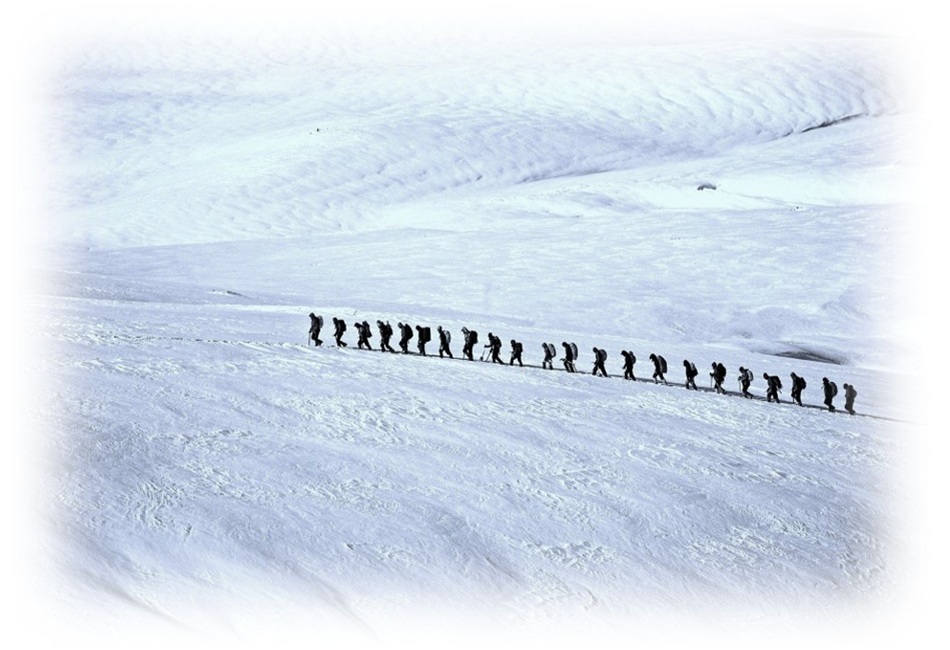
A lasting impact is clear and the book draws on how the fight for survival triggers an impetus and a desire to win, meaning that push to reach the summit is a transferable skill, too. So, they each had to find something to ensure victory and this is just as true for those struggling with poor health or mental health. Certainly, it goes without saying that with the exception of suicide: it’s of a different grade in terms of existential immediacy or putting it more simply, the closeness of death as you cling to the side of Mount Everest.
So, where physical activity can threaten life, sport and existential matters are inextricably linked as they meet at various crossings, including efforts to align at academic levels. In his book, ‘Existential Psychology and Sport’ Mark Nesti, a Sports Psychologist at Liverpool, John Moores University, wrote:
‘The challenges facing the sports psychologist hoping to use existential ideas to inform their practice or research in sport are many. They include little recognition (or even acceptance) for this perspective in psychology and sport psychology, a lack of literature in the area, few academic courses addressing existential psychology and the obscure and unfamiliar language associated with existential thought.’
Well, given time, the value of this link may change with athletes of the future benefitting from the dawn of two ideas, over two thousand years ago. One, led to the birth of existentialism in time to come, with the other honing the human spirit in its drive to compete, survive and win.
‘In their philosophical ruminations, Socrates, Plato and Aristotle considered the role of physical activity and sport in human life. Specifically, they advocated physical education as a key component of citizenship in the polis, debated the connection between bodies and minds, and counselled balance in developing physical and intellectual skills.’
Truly, and the economic value of sport is undeniable and to the point that studies show how increased social benefits from local facilities to professional events, lift communities in ways that are normally difficult. This social return on investment is crucial in planning for the future and as a 2013/14 study by Sheffield Hallam University showed, the return can be almost 100%.
So, across those two years, the social worth of sporting activity in England was £44.8 billion with financial and non-monetary contributions totalling £23.5 billion. This simple ratio gave an SROI of 1.91, meaning that for every pound spent, the return was £1.91. So, the uplifting nature of not just a financial profit but of the sporting narratives, as well, contributes to a sense of social wellbeing that’s hard to match.
Sport matters but relationships do, too, and so when Bill Shankly replied in context to the idea that football was a matter of life and death, to him: he in fact, exalted the importance of human connections, in saying:
“It’s more important than that.”
Copyright © 2024 | recoveryourwellbeing.com | All Rights Reserved
Images:
Football Stars, by Sasint, Pixabay – Main Image
Anfield, by Anwo00, Pixabay
Jesse Owens, by Material Scientist on Wiki Images – reproduced on recoveryourwellbeing.com with public domain licensing
Mountaineering Trek, by Aatlas, Pixabay
References:
Mark Jones, ‘Bill Shankly’s Famous ‘Life and death’ Misquote and What Liverpool Icon Really Meant’, The Mirror newspaper, Para 16, 31st March 2020, accessed 20th April 2024, https://www.mirror.co.uk/sport/football/news/bill-shanklys-famous-life-death-21784583
‘Honours’, Liverpool Football Club Official Website, Club History, 2024, accessed 20th April 2024, https://www.liverpoolfc.com/history/honours
James Corbett, ‘Bill Shankly: Life, death and Football’, The Guardian newspaper, 18th October 2009, accessed 20th April 2024, https://www.theguardian.com/football/2009/oct/18/bill-shankly-liverpool-manager
Bill Shankly Quote, ‘Life and Death’, Youtube, Ken Walsh, 21st February 2013, accessed 20th April 2024, https://www.youtube.com/watch?v=xodsnEQC-H0
History.com Editors, ‘Jesse Owens Wins 4th Gold Medal’, History.com, 21st July 2010, accessed 9th February 2024, https://www.history.com/this-day-in-history/owens-wins-4th-gold-medal
Donald McRae, ‘In Black & White: The Untold Story of Joe Louis & Jesse Owens’ (London, Simon & schuster, 2014)
Mike Rowbottom, ‘Great Olympic Friendships: Jesse Owens, Luz Long and a Beacon of Brotherly Love at the Nazi Games’, The Independent newspaper, 5th August 2016, accessed 9th February 2024, https://www.independent.co.uk/sport/olympics/jess-owens-anniversary-luz-long-rio-2016-olympics-berlin-1936-nazi-games-7166831.html
‘1984 Olympic Games – Boxing 81kg Awards Ceremony – Anton Josipovic Yug and Evander Holyfield USA, Youtube, Westnyacktwins, 10th July 2015, 4 mins, 20 seconds, accessed 9th February 2024, https://youtu.be/RWr-3HqBjfo?feature=shared&t=260
‘Derek Redmon at Barcelona 1992: Epic Olympic Moments’, Youtube, Official Olympics, 14th December 2015, accessed 9th February 2024, https://youtu.be/dYQ2IyMuPes?feature=shared
‘Muhammed Ali Lights The Olympic Flame at Atlanta 1996’, Youtube, Official Olympics, 1st March 2010, accessed 9th February 2024, https://youtu.be/80wMMFAcweQ?feature=shared
Jon Krakauer, Into Thin Air (New York, Villard Books, 1997) https://www.amazon.co.uk/Into-Thin-Air-Personal-Exploration/dp/0679457526
Anatoli Boukreev, G. Weston DeWalt, The Climb (London, Pan Publishing, 2002) https://www.amazon.co.uk/Climb-Tragic-Ambitions-Everest/dp/0330488961
Jon Krakauer, Into Thin Air (New York, Picador, 2011) Postscript, pp.302-328 https://www.amazon.co.uk/Into-Thin-Air-Personal-Disaster-ebook/dp/B005AV95Q4
Jon Krakauer, “What Really Happened In Thin Air”, Mountainzone.com, 29th August 1996, accessed, 4th April 2023, https://www.mountainzone.com/climbing/fischer/letters.html?utm_content=cmp-true
Jon Krakauer, Into Thin Air (New York, Villard Books, 1997) Chapter Fifteen, P222, https://www.amazon.co.uk/Into-Thin-Air-Personal-Disaster-ebook/dp/B005AV95Q4
Mark Nesti, ‘Existential Psychology and Sport’ Introduction, Existential Psychology (Oxfordshire, Routledge, 2006) https://www.routledge.com/Existential-Psychology-and-Sport-Theory-and-Application/Nesti/p/book/9780415393249
R. Scott Kretchmar, et al, ‘History and Philosophy of Sport and Physical Activity’ (Human Kinetics; First Edition, 2017) P75, Para 1, https://www.amazon.com/History-Philosophy-Sport-Physical-Activity/dp/1450424201
Davies, Larissa, et al, ‘Social Return on Investment (SROI) in Sport: A Model For Measuring The Value of Participation in England’, Sheffield Hallam University, International Journal of Sport Policy and Politics, 2019, doi: 10.1080/19406940.2019.1596967, accessed 9th February 2024, https://shura.shu.ac.uk/24563/5/Davies-SocialReturnInvestment%28AM%29.pdf

 recover your wellbeing