


it’ll come to us all at some stage or another: loss with its compass, referencing all else
Trying to walk in someone else’s shoes is a difficult thing for obvious reasons but despite the overused simplicity, the analogy is wise and clear. It’s also one of the more important things we’ll do as we navigate life and for the basic reason that it reminds us all, that we’re sharing a planet. So, whether it’s suffering or enjoying or bouncing between the two, a look into other lives helps to educate in truth. Naturally, we‘re not always interested in what the ‘other’ has to say, think or feel, leaving us to embrace familiarity once more in our fear. It’s a very human thing, with different repercussions.
Loss is a complicated thing as well and trying to manage grief alongside circumstantial anger and perhaps intense levels of guilt, regret and or hatred, seems impossible. The impulse to implode or explode may be overwhelming, too, with knock-on effects on those around you. In fact, by the time most of us pass on, we’ll have witnessed the impact of grief on somebody’s soul as it tore through them like a tornado in a hurry. It’s a torrid affair in which an overall reaction can be as unpredictable as mortality itself. As a result; it’s an adjuster, a leveller and a destroyer of character, too, in the way it can break someone down and take them from a life of charm to a life, on the streets. The gap, for instance, between one Christmas and the next is all it takes. 365-leaps from festive cheer, to abject fear.
‘The reality is that you will grieve forever. You will not ‘get over’ the loss of a loved one; you will learn to live with it. You will heal and you will rebuild yourself around the loss you have suffered. You will be whole again, but you will never be the same.’
Elizabeth Kubler-Ross & David Kessler
So, imagine the scene in working at a homeless hostel, as a Supported Housing Officer. The organisation is a force for good in helping rough-sleepers to rebalance before hopefully, turning things around. It’s a multi-occupancy unit for men and women, too, and with what are termed ‘wet’ and ‘dry’ licenses, for alcohol and drug rehabilitation. There are also a handful of dispersed properties in the locality where those who’ve managed to recalibrate are able to live semi-independently, before taking a bigger step back into the community.
Now; suppose that a normally quiet resident sits down to talk and reveals a path drawn from grief through to broke, in all the ways you might think. A former working professional enjoying his life with friends at home and a deep love, for his wife. Until, one day, she passes unexpectedly and he plunges into a bottle: just the first of too many. So, in numbing the grief, he loses sight of work which piles on the pressure in being managed by a boss.
Then, it’s the inevitable with no income, no home and no purchase on life’s ladder taking him all the way down to a crap shoot and no luck. An observer might be forgiven in feeling withered not by the tale but by life’s enormous hand. How had this man’s wonderful life hit such a brick wall? Sheer bad luck and the domino effect. That trail leading up to a mistake, a decision, a meltdown or a tragedy, and he’d endured a double-tragedy by the definition of suffering before turning into a socioeconomic unseen.

Naturally, homelessness comes in many forms be it a pavement, a vehicle or a decrepit, repossessed house. One with no carpets or wallpaper, furniture or heating and where the kitchen is unusable and the bathroom a health hazard. With binbags on the floor and holes in the windows, a sleeping bag and hat may get you through the night but when the meter runs out and with darkness your friend, a nice vision of the future is what wakes you each morning.
‘All through my bouts of homelessness, I held onto oil paints from art school in a red fishing tackle box. They were a connection to my life. And I felt that if I lost these things, I would be absolutely unmoored. I finally got rid of the red paint box a couple of months ago, but I still have some of the paint. I have the two license plates from the F10 truck and the van that I lived in. Those hang on my wall to remind me of where I was and where I don’t want to go back to.’
Shea Anderson, personal account – The New York Times
Of course, any loss, per se, can be large or small while a response to each may be inversely proportional. It doesn’t have to make sense when death as such makes none, at all. Whether a person; an animal; a career or an age; an object; a memory; a dream or belief, it’s the bond that mattered which guides the sorrow. For some, the process will be brief yet healthily resolved whilst for others, it may take more than some time. Still, another group struggles to find a way through as sadness turns pathological with all it entails.
In a moving article in The New York Times, in 2021, Ann Finkbeiner, a science writer, talked about ‘The Biology of Grief’ and its relationship to disease and further morbidity. Similarly, we’re all familiar with the adage: ‘dying from a broken heart’ and there are many accounts of the surviving partner in a long-term relationship succumbing, soon after losing a loved one. So, it’s been called ‘Brokenheart Syndrome’ and ‘The Widowhood Effect’, too, and no matter the label, the gulf left in the absence of a bond you’ve known for decades is unfathomable.
Of course, filtering experiences through someone else’s shoes takes us to places where Jung’s collective unconscious, works hard.
So, it’s early in the morning, for instance, and as you stand rooted to a driveway watching paramedics perform CPR on a family member, whose lifeless body fails to respond, a sense of distance takes over as the reality of a frontier becomes apparent. A bleak point where paramedics like doctors and nurses and the rest of the emergency services, patrol border crossings between life and death. You see, it’s they who’ll stamp passports to eternity in not witnessing a come back and that’s some burden, even for the healthiest of shoulders. Yet, while riding in an ambulance with your loved one called up, a surreality can’t deny their departure. So, as a siren wails with blue lights strobing off front doors: watching life wake up to yet another day reminds you: they were animated enough to hold on and stay.
‘Happiness is beneficial for the body, but it is grief that develops the powers of the mind.’
Marcel Proust
It’s the grief through millennia we’re loathed to embrace and in the end, it reverts to the same old story. Entire lives that come down to lying on a cold slab. Long lives in which people emigrated, married, parented and laughed and where they cried and talked and sang songs as they cooked. Working lives in which they loved and disliked and felt hope and fear along with all sorts of pleasure and pain, too. This is what grief so often wrestles with: the fact that they were here on Earth and alive. It’s a problem in accepting the tangibility of absence; yet, not always in terms of cartesian coordinates that are quite inseparable from philosophical thoughts.

Existentialism, adopts a form of loneliness in it’s embrace of anguish and absurdity as basic aspects of living while the absurdity itself, relates to the seemingly pointless nature of the universe and it’s unanswerable questions. The work of the French philosopher, Albert Camus, often reflects this as characters in his novels wrestle with the notion of death and an unconquerable futility. Equally, Jean Paul Sartre leans into the unknowable, too, with musings on an irrational existence carrying no aim or clarification while suggesting that our relative freedom is a burden, that may drive us to feelings of isolation, too.
So, for Camus, our inability to explain life is simply ridiculous whereas for Sartre our very presence in the universe, seems essentially stupid. Before their intellectual rise in the 1950s and 60s, though, Martin Heidegger, the German existential philosopher, famously described death as the ‘possibility of impossibility’, meaning that an inability to exist continuing beyond death, is a certainty. A simpler way of saying it, of course, is that death rules out the possibility of existence.
This misery often reflects grief before an ending and in the form of existential loneliness: a state of being which seems profoundly linked, to depression and bereavement. In a 1993 paper at the University of Texas, El Paso, it was said that:
‘Grief is a complicated emotion state which seems to vary among individuals in intensity and duration (Worden, 1991). Prior to the writings of Lindemann (1944) relevant to the Coconut Grove fire and more specifically the work of Kübler-Ross (1969) which identified the stages of grief, the grieving process received minimal professional attention or concern. In recent years, the importance of grief work as a key factor in the healing or recovery process has been explored widely in the professional literature (Rando, 1984; Margolis, 1985; James and Cherry, 1988; Worden, 1991). An understanding of the necessity of the grieving process is not entirely possible, however, without a knowledge of its relationship to existential concepts.’
Don C. Combs, An Existential View of Grief as Related to Aloneness
It seems true with the metaphysical point of grief and existentialism linked to religion and all it entails. So, the fact that worship evolved independently across the globe, for instance, suggests that its origins are tied to the human psyche, with our universal understanding of loss. Also, as we know, before science evolved as one view of the world, people had no way of answering questions, like: ‘Where have they gone?’ ‘Is there life, after death?’ Obviously, science still can’t answer these things, but it’s allowed some of us, at least, to process things differently. Particularly, through the stages of grief which seem more like guides than rigid phases.
‘Recent studies of the evolution of religion have revealed the cognitive underpinnings of belief in supernatural agents, the role of ritual in promoting cooperation, and the contribution of morally punishing high gods to the growth and stabilisation of human society. The universality of religion across human society points to a deep evolutionary past.’
Around the world, the nature of grief is expressed differently with philosophical and sociological needs as diverse as the languages spoken. To illustrate, much of the planet is probably familiar with the exuberant and celebratory tone of a New Orleans send off, in the USA. These incredible processions begin sombrely with measured marching before erupting into full-scale jazz performances, ‘on the hoof’ as they say. In fact, to European eyes and especially English ones, the sight of someone dancing on a coffin is just incredible. Yet, research has shown that those carrying firm spiritual beliefs process grief faster than those without.
Elsewhere on the planet and in many parts of Africa, approaches to death range from beliefs in wandering souls for all eternity in the absence of a funeral, to the wearing of white in much of Asia while mourning. In China, not adhering to customs based on age and status may just bring bad luck to a grieving family while in South America, rituals include festivities and the chewing of coca leaves in addition to celebrating the ‘Day of the Dead’.
With all this in mind, grief is undoubtedly a strange business and no-one can lay claim to which type of loss is harder. Of course, there’s an awful uniqueness to losing a young child with an expanse of life before them. Similarly, the ache in the eyes and heart of a mother whose adult daughter has passed in an untimely manner, is a crushing example. Again, in learning of anyone’s death, the first thing to come to mind is a grieving family and if you were able to sit down with that mother or any parent, they’d express things that stayed with you forever.
The way that they spoke might humble you, too, where the thought of life’s cruelty at times can’t help but make you wonder. They’d held a newborn at birth and no-one expects to cradle a child, in death. That’s a bitter irony which may never be accepted: managed, possibly, but accepted? Like the loss of a lifelong partner, it asks for more than many can deliver, and who amongst us can argue with that?
‘I think everyone understands grief, the journey it takes us on, whether it’s the death of a loved one, the end of a relationship, a disappointment. Some people don’t deal with it, the power of it. Some do. Some feel the weight of it and it informs their choices. I’ve had to open up to grief in different contexts.’
Tori Amos
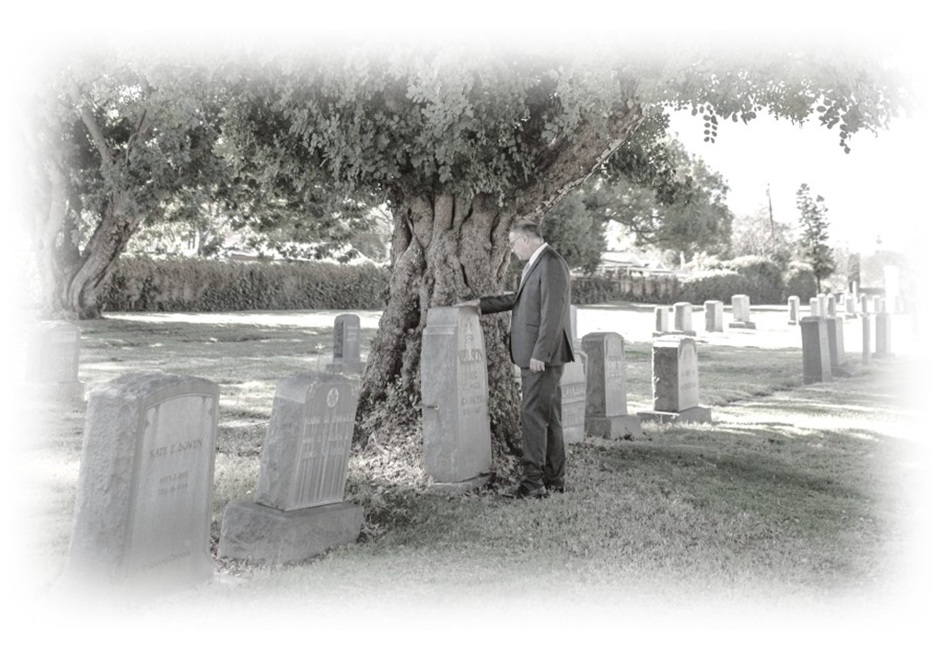
Sorrow is a powerful thing with the potential for lifelong derailment or worse, meaning when we mourn, we grieve for what will never happen as it leaves us stuck in time. It’s the worst kind of regret perhaps, where a border crossing between life and death, sees you wistfully staring past a checkpoint. Well, ashes-to-ashes and dust-to-dust seem as inscrutable as they were before; yet, it’s possible to see how the mind adjusts to the rupturing of bonds in our lives. It’s the price we pay to feel human, but for some, it’s an expense unworthy of the journey while sealing yourself off from the rest of the world, is little else but a false friend.
‘Grief is the agony of an instant; the indulgence of grief, the blunder of a life.’
Benjamin Disraeli
It’s hard to see it as an indulgence, but the thing about grief is that it looks different from the other side of a year while a year looks fresh, from the other side of grief.
Copyright © 2024 | recoveryourwellbeing.com | All Rights Reserved
Images:
Love Beyond Death’s Border, by Dieterich01, Pixabay – Main Image
Homelessness, by Mart Production, Pexels
Fractured Faces, by Mindworld, Pixabay
Grieving Man, by RDNE Stock Project, Pexels
References:
Elizabeth Kubler-Ross & David Kessler Quote – ‘The reality is that you will grieve forever…’, Goodreads, 2024, accessed 26th April 2024, https://www.goodreads.com/quotes/442107-the-reality-is-that-you-will-grieve-forever-you-will
‘Housing Support Officer’, SkillsforCare.org, 2024, accessed 26th April 2024, https://www.skillsforcare.org.uk/Careers-in-care/Job-roles/Roles/Housing-support-officer.aspx
Rebecca Smithers, ‘Homeless People ‘Drinking Themselves to Death’ With Super-strength Alcohol’, The Guardian newspaper, 16th October 2012, Para 9, accessed 26th April 2024, https://www.theguardian.com/society/2012/oct/16/homeless-alcohol-drinking-death-super-strength
‘Dispersed Properties’, YMCA Crewe, 2024, accessed 26th April 2024, https://ymcacrewe.org.uk/our-services/accommodation/dispersed-properties/
Jansen MO, et al, ‘Clinical Care Considerations for Bereaved Patients’ MO Med, 2022, Jan-Feb;119(1):9-13, PMID: 36033152; PMCID: PMC9312455, https://www.ncbi.nlm.nih.gov/pmc/articles/PMC9312455/
Susan Shain and Aiden Gardiner, et al, ‘What’s Homelessness Really Like?’ The New York Times, 10th February 2023, accessed 26th April 2024, https://www.nytimes.com/interactive/2023/02/10/headway/homelessness-mental-health-us.html
Ann Finkbeiner, ‘The Biology of Grief’ The New York Times, 22nd April 2021, accessed 26th April 2024, https://www.nytimes.com/2021/04/22/well/what-happens-in-the-body-during-grief.html
Dean Burnett, ‘Why Elderly Couples Often Die Together: The Science of Broken Hearts’, The Guardian newspaper, 9th January 2015, https://www.theguardian.com/lifeandstyle/shortcuts/2015/jan/09/why-elderly-couples-die-together-science-broken-hearts
Editorial Staff, ‘Is Broken Heart Syndrome Real?’ American Heart Association, 4th May 2022, accessed 26th April 2024, https://www.heart.org/en/health-topics/cardiomyopathy/what-is-cardiomyopathy-in-adults/is-broken-heart-syndrome-real
Editorial Staff, ‘The Widowhood Effect: Is It Real or a Myth?’ University Hospitals Cleveland, 2024, accessed 26th April 2024, https://www.uhhospitals.org/blog/articles/2018/05/the-widowhood-effect
Walter Boechat, ‘The Collective Unconscious’, International Association For Analytical Psychology, 2024, accessed 26th April 2024, https://iaap.org/jung-analytical-psychology/short-articles-on-analytical-psychology/the-collective-unconscious-2/
Marcel Proust Quote – ‘Happiness is beneficial…’, Brainy Quote, 2024, accessed 26th April 2024, https://www.brainyquote.com/quotes/marcel_proust_386054?src=t_grief
Richardson, L, ‘Absence Experience in Grief’, European Journal of Philosophy, 2022, 1-16. https://doi.org/10.1111/ejop.12778
‘Critical Essays Camus and the Absurd’, Cliff Notes, 2024, Para 2, accessed 26th April 2024, https://www.cliffsnotes.com/literature/p/the-plague/critical-essays/camus-and-the-absurd
‘Critical Essays Sartrean Existentialism: An Overview’, Cliffs Notes, 2024, Para 2, accessed 26th April 2024, https://www.cliffsnotes.com/literature/n/no-exit/critical-essays/sartrean-existentialism-an-overview
‘Big Thinker: Jean Paul Sartre’ The Ethics Centre, 15th February 2024, accessed 26th April 2024, https://ethics.org.au/big-thinker-jean-paul-sartre/
Mark Tanzer, ‘Heidegger on Death as a Deficient Mode’, Continental Philosophy Review, 55(1):1-15, March 2022, doi: 10.1007/s11007-021-09551-y, accessed 26th April 2024, https://www.researchgate.net/publication/355057803_Heidegger_on_death_as_a_deficient_mode
McKenna-Plumley, P.E, et al, ‘”It’s a Feeling of Complete Disconnection”: Experiences of Existential Loneliness From Youth to Older Adulthood’, BMC Psychol 11, 408 (2023), accessed 26th April 2024, https://doi.org/10.1186/s40359-023-01452-4
Combs, D.C, ‘An Existential View of Grief as Related to Aloneness’, Illness, Crisis & Loss, (1993) 3(2), 22-27, https://doi.org/10.2190/IL3.2.c
Ilkka Pyysiäinen and Marc Hauser, ‘The Origins of Religion: Evolved Adaptation or By-product’, Trends In Cognitive Sciences, Volume14, Issue 3, 2010, pp104-109, ISSN 1364-6613, accessed 27th April 2024, https://doi.org/10.1016/j.tics.2009.12.007.
‘Stages of Grief’, Marie Curie, 2024, accessed 27th April 2024, https://www.mariecurie.org.uk/help/support/bereaved-family-friends/dealing-grief/stages-of-grief
People HC, et al, ‘Hunter-Gatherers and the Origin of Religion’, Hum Nat, 2016, Sep;27(3):261-82. doi: 10.1007/s12110-016-9260-0. PMID: 27154194; PMCID: PMC4958132, accessed 27th April 2024, https://www.ncbi.nlm.nih.gov/pmc/articles/PMC4958132/
‘Second Line Following the Funeral of Lois Nelson-Andrews’, Youtube, WWOZ New Orleans, 20th November 2021, accessed 27th April 2024, https://www.youtube.com/watch?v=g0jadTL-MxE
Walsh K, et al, ‘Spiritual Beliefs May Affect Outcome of Bereavement: Prospective Study’, BMJ, 2002, Jun 29;324(7353):1551. Doi: 10.1136/bmj.324.7353.1551. PMID: 12089091; PMCID: PMC116607, https://www.ncbi.nlm.nih.gov/pmc/articles/PMC116607/
‘Cultural Perspectives on Death & Dying’, Youtube, Denver Museum of Nature & Science, 30th August 2023, accessed 27th April 2024, https://www.youtube.com/watch?v=ZISZk6M7n7c
Oluwatomiwa Ogunniyi, ‘Death and Dying Practices Around the World’, The Guardian Nigeria, 8th November 2022, accessed 27th April 2024, https://guardian.ng/life/death-and-dying-practices-around-the-world/
Tori Amos Quote – ‘I think everyone understands…’, Brainy Quote, 2024, accessed 27th April 2024, https://www.brainyquote.com/quotes/tori_amos_594990
Benjamin Disraeli Quote – ‘Grief is the agony…’, Goodreads, 2024, accessed 27th April 2024, https://www.goodreads.com/quotes/216726-grief-is-the-agony-of-an-instant-the-indulgence-of

 recover your wellbeing