

maintaining self-belief is a high-wire fact of life, we can get right
Perhaps, the first time you do something of note as a child is the moment you register the meaning of confidence but in the second stage of infancy where the first unrolls, in the approval of your parents. You see, it’s the external applause beyond the walls of a house that really sets the measure and it often comes, in a variety of ways. That swell of pride at school, for instance, in clapping eyes on another great grade. Or the admiring nods at your physical prowess in a pool, on a field or on a gymnastics beam. Whatever the route, the impact on your self-esteem, self-efficacy and self-confidence is organic and everlasting.
The first is often used as shorthand for self-confidence when, in fact, it refers to the broader whole. Your own perception of your intelligence; the way you see your physical appearance and your interpretation of the morals and ethics, serving your culture and society. Of those and while not entirely, maybe intellect is a more definable feature than say, relative beauty or integrity. The second, self-efficacy, concerns your ability to activate yourself. In other words, it’s about your motivation and emotional regulation; it’s about your determination and the extent to which you can control what happens to you. Then, self-confidence relates to a personal vision of your capabilities in a given scenario and as we all know, it fluctuates wildly in some but almost never in others.
The next stop is without doubt mental health and the implications chime, for us all. In fact, the relationship between a sense of stimulus and positive well-being has been widely examined, and in three research studies in China, Norway and Iran, the connection was as clear as you’d expect.
‘The present study provides evidence of the longitudinal relationship between self-efficacy, social rhythm and positive mental health among college students…Improving the positive mental health and keeping a regular social rhythm can further promote college students’ self-efficacy and let them have a better quality of life.’
Chinese study: ‘Relationship Between Self-efficacy and Rhythm…’
‘In our study, mastery experiences are operationalised by the items ‘felt that you are mastering things’ and ‘felt useful’. As a ‘feeling of mastering things’ has the strongest association with self-efficacy, it is important that adolescents are given tasks that are adapted to their proficiency.’
‘Mastery experiences and social support are important factors for strengthening self-efficacy, which may in turn have a positive impact on the mental health of adolescents.’
Norwegian study: ‘Explaining Variance in Self-efficacy Among Adolescents…’
‘This study supported the notion of a relationship between optimism, dimensions of psychological well-being, self-efficacy and resilience.’
Iranian Study: ‘Mediating Role of Self-efficacy in the Relationship Between Optimism…’
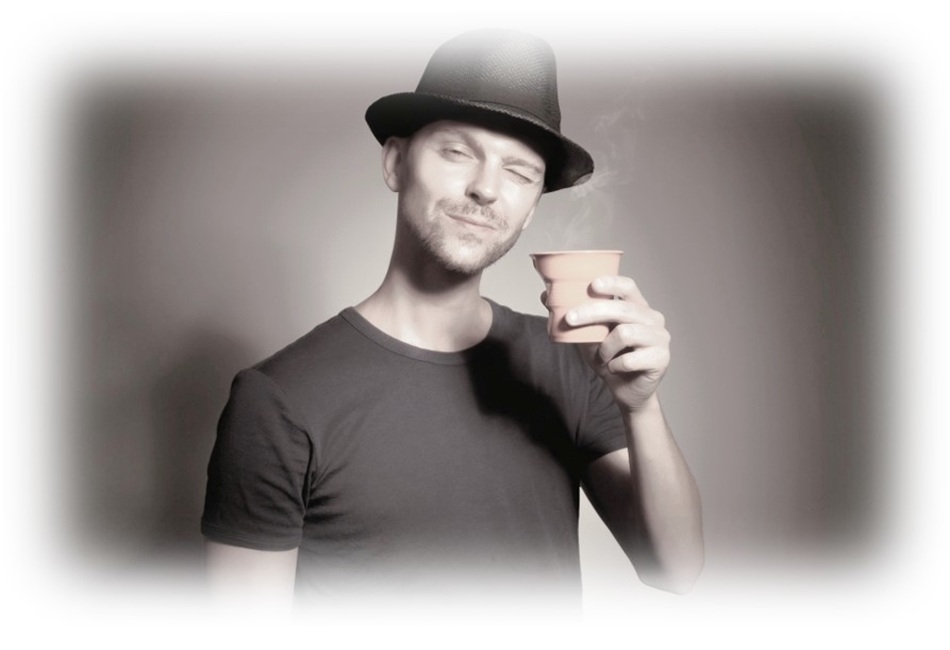
So, self-esteem relies on self-efficacy which in turn sits on self-confidence while the key to all of this and the latter in particular, lies in repetition. So, we’re familiar perhaps with the term ‘Practice makes perfect’ but maybe its revision in modern thought took place within the space of just two years. In 2009 and ‘10, three books emerged challenging the long-held assumption that high-level success arrives mostly, through the gene pool.
The socioeconomical part of our thinking embraced this wholeheartedly as ‘The Talent Code’ by Daniel Coyle; ‘Talent is Overrated’ by Geoff Colvin and ‘Outliers’ by Malcom Gladwell all shared the idea that victory is accessible to most if not all, through certain fundamentals. Chief amongst these, was the notion of 10-years of deliberate practice or 10,000 hours, whichever came first, and the concept swept popular culture at the time.
‘The idea has become really entrenched in our culture, but it’s an oversimplification,’ said Brooke Macnamara, a psychologist at Case Western Reserve University in Cleveland, Ohio. ‘When it comes to human skill, a complex combination of environmental factors, genetic factors and their interactions explains performance differences across people.’
Ian Sample, Science Editor, The Guardian newspaper, 2019
Well, offering a specific number to underpin an idea seems counter-productive in the absence of what appears to be verifiable data. Yet, on the other hand, it feels logical to connect those dots in looking at the habits of the highly-successful. Still, Anders Ericsson, a co-author on the research paper that looked into the training habits of violinists from childhood and which inspired aspects of ‘Outliers’, was less than happy with the way his work had been used. So, in 2012, he countered Gladwell’s claims through, ‘The Danger of Delegating Education to Journalists,’ while revealing:
‘The 10,000-hour rule was invented by Malcolm Gladwell who stated that “researchers have settled on what they believe is the magic number for true expertise: 10,000 hours.” Gladwell cited our research on expert musicians as a stimulus for his provocative generalisation to a magical number,” Ericsson writes.’
Ben Carter, BBC News, 2014
So, with the precision of 10,000 hours more or less discredited as thousands of unspecified hours still help to differentiate between success and failure, imagine the input required to maintain a firm line between life and death. Hundreds of thousands of people across the globe walk this gauntlet every day and they may be firefighters or police officers; medics or soldiers; they might be drivers or technicians, fishermen or working in construction. Still, other types of courage exist, too, in staring down a life-threatening illness through an existential will to survive or perhaps facing up to the bullies, whose concept of strength is singular.

Uniquely, though, on the 7th August 1974, something profound took place that to this day is arguably one of the most under-celebrated achievements, in history. Of course, people have travelled to the moon while invention after invention has changed our way of life. Equally, in negative terms we’ve topped one statistic after another in pursuit of wholesale slaughter, as we preside over the climatic destruction of the planet.
Yet, on a slightly cloudy morning in New York city, one man’s confidence and thousands of practice hours would redefine the perceived limits of human thought. Philippe Petit, a wiry Frenchman who’d spent his life juggling and climbing anything he could, launched a wire attached to an arrow across the one-hundred-and-fifty foot gap between the fated Twin Towers. Then, incredibly, he stepped on to the taut line to perform a wire walk for almost an hour during which time, he knelt and lay down a quarter-of-a-mile off the ground.
Think about this, for a moment.
Think about it beyond the explicit “that’s amazing,” where it requires so much more than that. Certainly, it was a complex act of physical daring, but it was also the outlying psychology of a different sort of outlier. An individual for whom, hours of neural growth had formed a rare take on life. So, where Einstein and Hawking peered beyond the realms of what we knew: Petit opened a door on how to embrace focus while at the same time, conquering fear. Where the other two stood upon shoulders, he un-simply danced along a wire.
This was a person, whose perception of the physically possible came from something else entirely. He may or may not see it that way, of course, in being himself, but it changed what we knew about potential in the real world of things and maybe, just maybe, he never actually saw the other side of what happened. To be clear, it’s not hero worship or the dynamic of faith; instead, it’s the realisation of what our minds are really capable of. Yes, it’s a minute percentage who’ll step on to a wire, too, but for the rest of us: he’s a lighthouse pointing the way, in expecting more of who we are.
In 2015, he was interviewed by Anthony Mason, on CBS television’s ‘This Morning’:
AM: ‘Please, tell me you were nervous, for a moment that morning.’
PP: ‘I am never nervous before a performance. First, I cannot afford to be. I always put myself on the wire departure with a feeling that is both mental and physical. The feeling of certitude.’
AM: ‘How do you make yourself do that: not see the city [below]?’
PP: ‘At the beginning, my concentration was simplistic. I will block the entire world and concentrate on the wire. So, this a lifetime of trying to find what I call the ‘Open focus’, that is completely closed and completely open…I have to be both.’
In 2008, this unbelievable tale was retold in a striking documentary called ‘Man on Wire’ and naturally, it was subsequently turned into a film, too, called ‘The Walk’, starring Joseph Gordon-Levitt. The film is lovely in places but it has to be said that inevitably, the movie industry over-stimulated the critical moment. You see, surely, one of the principle joys of Philippe Petit’s adventure was the serenity with which he undertook and performed the feat. It was the supreme contrast between absolute existential annihilation and the cryptic composure of his mind, body and soul. For those watching, it was the wonder of seeing another human being defy not only gravity but something more elemental and in a way that seemed beyond human. As one of the stunned police officers said, in an interview:
‘I personally figured, I was watching something that somebody else would never see again, in the world.’

Precisely, and no-one watching courtesy of television either is doing so without a racing pulse and their stomach flipped over. So, do we really need to be told that a mistake of a millimetre will send Mr Petit, to the ground below? What does the ‘dramatic’ effect of a potential technical failure add to the situation? Nothing at all perhaps, beyond deflecting from what is already a great piece of existential theatre. In fact, what took place on that wire was an act of beauty transcending the earthly horrors and maligned decisions of so many, on planet Earth. The fact that it was as close to any heaven as it’s possible to be without a plane ticket seems all the more fitting, too, and especially where that type of connection with himself benefits all, as a reference.
So, confidence is a many-tentacled thing whether it’s a stepping stone; an aphrodisiac; a form of protection or plain tenacity and there are others still sharing Philippe Petit’s quiet world. In fact, well beyond daredevil pioneers like Buster Keaton and Harold Lloyd, another Frenchman, Alain Robert, is known as the human spiderman and for good reason. He’s climbed over 150 of the world’s tallest buildings and often without any technical gear, at all.
Meanwhile, Freddy Nock has claimed Petit’s record for a high-wire act and let’s face it: it would have to be a spectacular stunt. So, how about walking up a cable-car line on a mountainside, at an angle of forty-five degrees. It’s true, it has to be seen to be believed just as no-one would have accepted without film: a human being walking on a wire, a quarter-of-a-mile into the air, in 1974.
‘This is probably the end of my life, to step on that wire.’
Philippe Petit
We live in a world of venerated everything. A place where it doesn’t take much to be noticed which, on the one hand, shouldn’t be a problem in giving some people their moment in time.
‘I was always looking outside myself for strength and confidence, but it comes from within. It is there all the time.’
Anna Freud
On the other, practising humility and self-belief for thousands of hours across a lifetime isn’t such a bad idea, in recognising exceptional mental health on a wire.
Copyright © 2024 | recoveryourwellbeing.com | All Rights Reserved
Images:
Young Wire Walker, by Wolfgang 1958, Pixabay – Main Image
Confident Chap, by Sammy Sander, Pixabay
Firefighters, by Benerott, Pixabay
Skyscraper, by Pixabay
References:
‘Self-esteem’, American Psychological Association, APA Dictionary of Psychology, 2024, accessed 10th May 2024, https://dictionary.apa.org/self-esteem
Michael P. Carey, PhD and Andrew D. forsyth, ‘Teaching Tip Sheet: Self-Efficacy’, American Psychological Association, 2009, accessed 10th May 2024, https://www.apa.org/pi/aids/resources/education/self-efficacy#:~:text=Self%2Defficacy%20refers%20to%20an,%2C%20behavior%2C%20and%20social%20environment.
‘Self-confidence’, American Psychological Association, APA Dictionary of Psychology, 2024, accessed 10th May 2024, https://dictionary.apa.org/self-confidence
Huang, Q, et al, ‘Relationship Between Self-efficacy and Rhythm and Mental Health Among College Students: A Three Year Longitudinal Study’, Curr Psychol 42, 9053-9062 (2023), Conclusion, https://doi.org/10.1007/s12144-021-02160-1
Kleppang, A.L, et al, ‘Explaining Variance in Self-efficacy Among Adolescents: The Association Between Mastery Experiences, Social Support and Self-efficacy’, BMC Public Health 23, 1665 (2023), Discussion, Para 3 & Conclusion, https://doi.org/10.1186/s12889-023-16603-w
Sabouripour, Fatemeh, et al, ‘Mediating Role of Self-efficacy in the Relationship Between Optimism, Psychological Well-being and Resilience Among Iranian Students’, Front. Psychol, 14th June 2021, Sec. Educational Psychology, Volume 12, https://doi.org/10.3389/fpsyg.2021.675645
‘The Talent Code’ (New York, Bantam Books, 2009) https://www.amazon.co.uk/Talent-Code-Greatness-Born-Grown/dp/055380684X
‘Talent Is Overrated’ (Middlesex, Portfolio Publishing, 2010) https://www.amazon.co.uk/Talent-Overrated-Separates-World-Class-Performers/dp/1591842948
‘Outlier’ (London, Penguin Publishing, 2009) https://www.amazon.co.uk/Outliers-Story-Success-Malcolm-Gladwell/dp/0141036257
K Anders Eriksson and Kyle W. Harwell, ‘Deliberate Practise and Proposed Limits on the Effects of Practice on the Acquisition of Expert Performance: Why The Original Definition Matters and Recommendations for Future Research’, Front. Psychol., 25th October 2019, Sec. Educational Psychology, Volume 10 2019, https://doi.org/10.3389/fpsyg.2019.02396
Nathan Colin Wong, ‘The 10,000-hour Rule’, Can Urol Assoc J, 2015, Sep-Oct; 9(9-10): 299, doi: 10.5489/cuaj.3267, PMCID: PMC4662388, PMID: 26644801, https://www.ncbi.nlm.nih.gov/pmc/articles/PMC4662388/
Ian Sample, ‘Blow to 10,000-hour Rule As Study Finds Practise Doesn’t Always Make Perfect’, The Guardian newspaper, 21st August 2019, Para 4, accessed 10th May 2024, https://www.theguardian.com/science/2019/aug/21/practice-does-not-always-make-perfect-violinists-10000-hour-rule
‘Anders Ericsson’, Biography – About the Author, Penguin Books, 2024, accessed 10th May 2024, https://www.penguinlibros.com/es/182297-anders-ericsson
Karl Ericsson, et al, ‘The Role of Deliberate Practice in the Acquisition of Expert Performance’, July 1993, Psychological Review 100(3):363-406 doi: 10.1037//0033-295X.100.3.363, https://www.researchgate.net/publication/224827585_The_Role_of_Deliberate_Practice_in_the_Acquisition_of_Expert_Performance
Ben Carter, ‘Can 10,000 hours of practice Make You An Expert?’ BBC News, 1st March 2014, Para 13, accessed 10th May 2024, https://www.bbc.com/news/magazine-26384712
Macnamara Brooke N, and Maitra Megha, ‘The Role od Deliberate Practice in Expert Performance: Revisiting Ericsson, Krampe & Tesch-Römer (1993), R. Soc, Open Sci, 6: 190327, https://royalsocietypublishing.org/doi/10.1098/rsos.190327
‘Man on Wire (2008) Offocial Trailer – Documentary’, Rotten Tomatoes Classic Trailers, Youtube, 21st November 2013, accessed 11th May 2024, https://www.youtube.com/watch?v=Cz6oddi0mts
‘High Wire movie: The Walk’, CBS Mornings, Youtube, 10th October 2015, accessed 11th May 2024, https://www.youtube.com/watch?v=ofY-_TjaVd8
‘Man on Wire – Full Documentary’, Discover History, Youtube, 26th February 2018, accessed 11th May 2024, https://www.youtube.com/watch?v=JWHZLRmu1ts
‘The Walk’, IMDb, Sony Pictures & TriStar Productions, 9th October 2015, accessed 11th May 2024, https://www.imdb.com/title/tt3488710/
‘Best of Buster Keaton’s Greatest Stunts’, Buster Keaton, Youtube, 19th August 2021, accessed 11th May 2024, https://www.youtube.com/watch?v=yOo_ZUVU_O8
‘Some of Harold Lloyd’s Most Amazing Stunts and Best Silent Comedy Gags’ Don McHoull, Youtube, 20th April 2021, accessed 11th May 2024, https://www.youtube.com/watch?v=zqzWurPE01Y
‘Alain Robert.com’, accessed 11th May 2024, https://www.alainrobert.com/
‘‘French Spiderman’ Scales Building With Son for 1st Time’, Inside Edition, Youtube, 3rd October 2022, accessed 11th May 2024, https://www.youtube.com/watch?v=hUhYc1Kbk-I
‘Freddy Nock.com’, accessed 11th May 2024, https://www.freddynock.com/?lang=en
‘Hochseil Artist Stunt Extremsportier Freddy Nock – Airshow Glacier 3000 High Wire’, Freddy Nock, Youtube, 23rd June 2020, accessed 11th May 2024, https://www.youtube.com/watch?v=WHQRXS77pOU

 recover your wellbeing