

delaying the necessary or the inevitable, brings you back to you
Of all the relationships you’ll meet in life, it’s your tie-up with time that reflects who you are and in knowing that, of course, it may need to change. For everyone else, it’s more of the same in hurrying it up or slowing things down or simply staying where you are. Yet, nothing underscores this more deeply than hearing about a tragedy, you’ve only just missed. It might be a train or a car accident or a plane that went down, a ship that sank or even a falling piano. Regardless of the fact, it’s a sobering thought for seconds or minutes to be a fine line. So, a last moment change in travelling plans sees a different motorway or a near-missed flight and if you gave up a ticket in 1912, the papers would really have stunned you.
With everything we do wrapped up in a clock it’s not hard to take time for granted. So much so, that it’s the milestones surprising us and forcing us to react and which makes ageing such a difficult thing. It could be a heart attack, a divorce or a child who’s left home while the measures are clear over what needs to change, in the script you’ve been carrying forever. Yet, for some people, the opposite problem keeps making life harder and no matter what’s tried the results are the same but in a way, it suits them to keep treading water. Well, the Cambridge online dictionary, defines procrastination as:
‘To keep delaying something that must be done, often because it is unpleasant or boring’
As true as that is, it’s also a sign of something much deeper and in looking back to an earlier challenge, what would you make of your thinking? Were you pumped and excited and filled with motivation in unleashing your ‘ready-to-go?’ Or was it ‘Umming and ah’ing’ as you kept reconsidering every possible approach? If it’s not decision theory as the latter prevails, then you probably know: you were laying down rules to hold off reality and in case it all led to failure. Still, lots of people are unaware of the trap and especially when it comes to themselves which simply begs another question, in terms of what exactly are you doing to yourself?
The New York Times quoted Dr Piers Steel, the author of ‘The Procrastination Equation: How To Stop Putting Things Off and Start Getting Things Done’, as saying:
‘It’s Self-harm.’
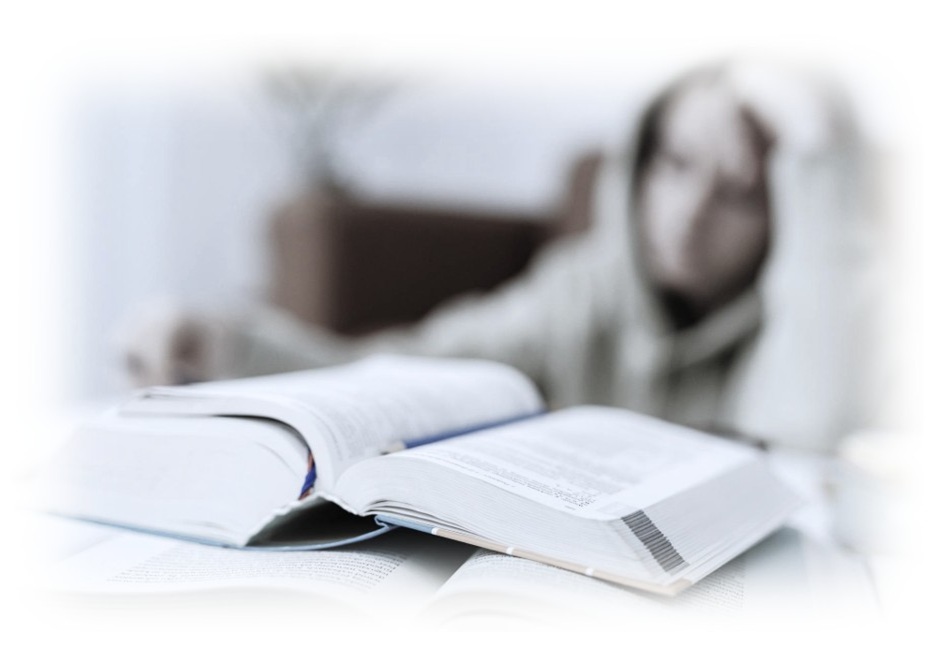
Admittedly, it seems that way when the things we put off are designed to help us. Take cleaning, for instance, the model of mañana as we pretend another day won’t matter. Or that difficult talk with a son or a daughter about anything, from sex to illness. It matters, too, where the examples we leave form a pattern for others to follow, meaning reflections in time may not please us too well if our offspring then prefers stalling. Meanwhile, theories are plenty when it comes to deferring but human nature is what it is and as The Washington Post quotes Professor Samuel McClure, a psychology and cognitive neuroscientist: the scale of the task seems steeper as we convince ourselves of magic.
‘You know it’s going stink in the future just as much as it’s going to stink doing it now, but internally you just can’t help yourself. It’s a fascinating phenomenon, that myopia you can’t escape, even though if you just stop and think about it, it’s ludicrous.’
Of course it is, and recent studies have shown how procrastination can affect your health in the most literal way possible. In 2019, 3,525 Swedish students were tracked over 36-weeks to see if there were correlations between prevarication and health developments. The results, were more than interesting:
‘In this cohort of Swedish university students, higher levels of procrastination were associated with worse subsequent mental health (depression, anxiety, and stress symptom levels), having disabling pain in the upper extremities, unhealthy lifestyle behaviours (poor sleep quality and physical inactivity), and worse levels of psychosocial health factors (higher loneliness and more economic difficulties) 9 months later.’
These results matched others in a 2021 study that looked at long-term ties between procrastination, sleep quality, mobile phone use and the symptoms of depression. Yet, before either study, another researcher in 2015 found links between procrastination and hypertension and cardiovascular disease. Clearly, these are important results and to add to the point: studies keep underscoring the fact that vacillation of physical activity and fitness, only counts as further self-harm.
It affects the economy, too, where people are thought to miscalculate the requirements of a task based on its complexity and or duration. This so-called ‘planning fallacy’ rests on the idea that some of us work as closely as possible to a deadline in believing, it’ll take less time than expected. This, in turn, offers a sense of utility or intense usefulness perhaps that ignores preparations of a timespan. So, this rational choice in pursuit of self-interest also points to delaying a task through fear of failure but either way, the economic costs are real.
Some costs, however, are higher than others.
At the beginning of 2019, the world gradually awoke to something serious. As news spread of a dangerous virus, politicians seemed to procrastinate in their response to what was a growing pandemic and where the socioeconomic results would prove costly. At the same time, ‘pay now or pay later’ was a concept taken from the imagination of early 20th Century financiers through to the staggering number of tragic deaths, worldwide.
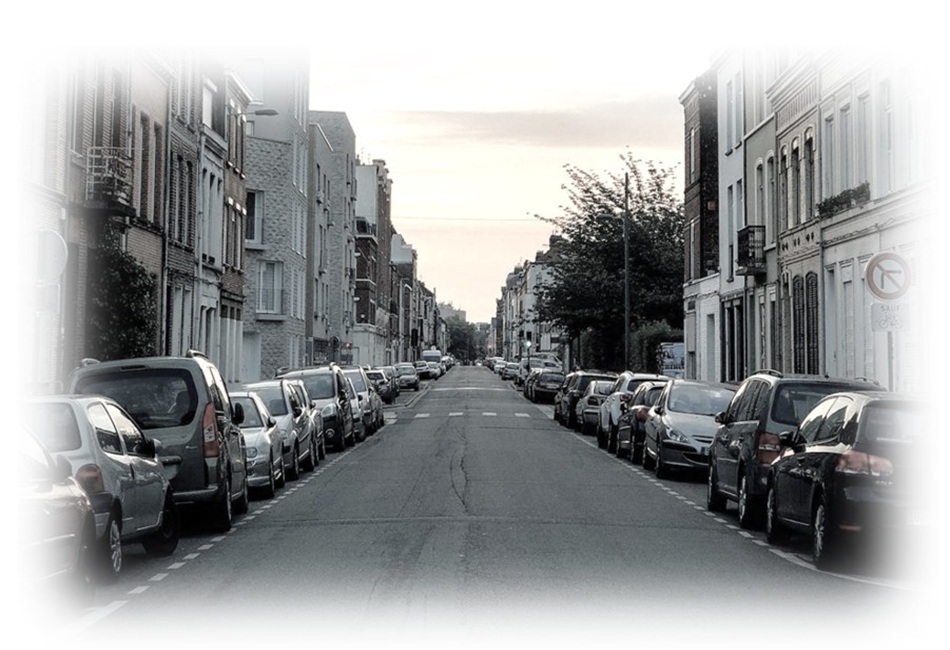
As a result of the historic event, though, our relationship with time really did change as people continued to work from home and priorities shifted, dramatically. Maybe, the existential awareness appearing in quiet streets gave something to Aristotle’s idea of time:
‘A number of motions in respect to before and after.’
Perhaps, ‘a day’ in itself before the impact meant something quite different afterwards and naturally, people won’t have forgotten. Yet, it’s hard to establish the true effect on dithering when during lockdown, stress and anxiety are said to have increased the problem. Other observers confirm the same, leaving little room for comfort in our drive to beat it.
‘In the early days of the pandemic, we struggled with what experts have dubbed quarantine fatigue, the exhaustion of adjusting to the restrictions associated with the virus. And as the pandemic has dragged on, more people found themselves vulnerable to the stress and uncertainty that drives procrastination.’
National Geographic Magazine, Nicole Johnson, 2021
As it fades into the near past, memories of feeling helpless and vulnerable to the ultimate enemy in being unseen, still ripple around the world. Yet, it’s evolutionary, it seems, to hold off and plan for the gains we can possibly make in the future. Meanwhile, for some, it keeps turning into something more crippling, with any yields lost to what happened.
As Dr Piers Steel also said of procrastination, in chapter one of his book:
‘We just don’t have much ability to endure short-term pain for long-term gain.’
Absolutely, and another way of saying it is to: pay now or pay later, which applies to training dogs and raising children, finishing homework or important projects: not to mention those incredible things on a much grander scale.
Copyright © 2024 | recoveryourwellbeing.com | All Rights Reserved
Images:
Cafe Time, by Brett Sayles, Pexels – Main Image
Time to Study, by Karolina Grabowska, Pexels
Quiet Street, by KXRZ, Pexels
References:
‘Procrastination’, Cambridge University Press & Assessment, 2024, accessed 29th June 2024, https://dictionary.cambridge.org/dictionary/english/procrastinate
‘Decision-making Theories: Normative vs. Descriptive Approaches’, The Business Learning Hub, Youtube, 24th July 2024, accessed 31st July 2025, https://www.youtube.com/watch?v=LpmjrV482-U
Dr Piers Steel, ‘The Procrastination Equation: How To Stop Putting Things Off and Start Getting Things Done’ (London, Pearson Life Publishers, 2012) https://www.amazon.co.uk/Procrastination-Equation-Putting-Things-Getting-ebook/dp/B01M8O8RF8/ref=sr_1_1?crid=2D3RUUQE35N6O&dib=eyJ2IjoiMSJ9.nFXaWPSAszO5_LAvm5fTYZZuxKlQuwrTsZFWo5ZCwgZ-cflGcEaMepCH2hmUkyAd239nAfSHfwytzTYDqdQuHg.
Richard Sima, ‘What Causes Your Brain to Procrastinate and How to Face It’, The Washington Post, 5th January 2023, Para 3, accessed 29th June 2024, https://www.washingtonpost.com/wellness/2023/01/05/procrastination-help-brain-tasks/
Johansson F, et al, ‘Associations Between Procrastination and Subsequent Health Outcomes Among University Students in Sweden’, JAMA Netw Open , 2023;6(1):e2249346, doi: 10.1001/jamanetworkopen.2022.49346, accessed 29th June 2024, https://jamanetwork.com/journals/jamanetworkopen/fullarticle/2800006
Cui, G., et al, ‘Longitudinal Relationships Among Problematic Mobile Phone Use, Bedtime Procrastination, Sleep Quality and Depressive Symptoms in Chinese College Students: A Cross.lagged Panel Analysis’, BMC Psychiatry 21, 449 (2021), accessed 29th June 2024, https://doi.org/10.1186/s12888-021-03451-4
Sirois, F.M, ‘Is Procrastination a Vulnerability Factor for Hypertension and Cardiovascular Disease? Testing an Extension of the Procrastination-Health Model’, J Behav Med 38, 578-589 (2015), https://10.1007/s10865-015-9629-2, accessed 29th June 2024, https://link.springer.com/article/10.1007/s10865-015-9629-2#citeas
Kelly SM and Walton HR, ‘”I’ll Work Out Tomorrow”: The Procrastination in Exercise Scale, Journal of Health Psychology, 2021;26(13):2613-2625, doi: 10.1177/1359105320916541, accessed 29th June 2024, https://journals.sagepub.com/doi/abs/10.1177/1359105320916541?journalCode=hpqa
Codina N, et al, ‘Procrastination at the Core of Physical Activity (PA) and Perceived Quality of Life: A New Approach for Counteracting Lowers Levels of PA Practice’, Int J Environ Res Public Health, 2020, May 14;17(10):3413, doi: 10.3390/ijerph17103413, PMID: 32422919; PMCID: PMC7277873, accessed 29th June 2024, https://www.ncbi.nlm.nih.gov/pmc/articles/PMC7277873/
‘Procrastination: An Economic Analysis’, Bureau of Labour Statistics, U.S Gov, September 2008, Paras 2 & 4, accessed 29th June 2024, https://www.bls.gov/opub/mlr/2008/09/precis.pdf
MacAulay, M, et al, ‘Analysing the ‘Follow The Science’ Rhetoric of Government Responses to Covid-19′, Policy & Politics, 51(3), 466-485, accessed 29th June 2024, https://bristoluniversitypressdigital.com/view/journals/pp/51/3/article-p466.xml
Martha L. Olney, ‘Buy Now, Pay Later’, (Chapel Hill, University of North Carolina Press, 1991) Page 183, accessed 29th June 2024, https://books.google.es/books/about/Buy_Now_Pay_Later.html?id=L_xQ1WnUjJsC&redir_esc=y
‘Covid.19 Epidemiological Update – 19th January 2024’, World Health Organisation, WHO, Edition 163, Emergency Situational Updates, accessed 29th June 2024, https://www.who.int/publications/m/item/covid-19-epidemiological-update—19-january-2024
Lily Rothman, ‘Our Relationship With Time Is Changing – Maybe for the Better’, Time Magazine, 7th March 2023, Para 4, accessed 29th June 2024, https://time.com/6260618/pandemic-relationship-with-time/
Mueller, Gustav E, ‘Experiential and Existential Time’, Philosophy and Phenomenological Research 6, No.3 (1946): 424-35, accessed 29th June 2024, https://doi.org/10.2307/2102698
Unda-López A, et al, ‘Procrastination During the Covid-19 Pandemic: A Scoping Review’, Behav Sci (Basel), 2022 Feb 6;12(2):38, doi: 10.3390/bs12020038, PMID: 35200289; PMCID: PMC8868816, Conclusion, accessed 29th June 2024, https://www.ncbi.nlm.nih.gov/pmc/articles/PMC8868816/
Nicole Johnson, ‘Are You Procrastinating More? Blame the Pandemic’, National Geographic Magazine, 3rd March 2021, Para 13, accessed 29th June 2024, https://www.nationalgeographic.com/science/article/are-you-procrastinating-more-blame-the-pandemic
Dr Piers Steel, ‘The Procrastination Equation: How To Stop Putting Things Off and Start Getting Things Done’ (London, Pearson Life Publishers, 2012) Chapter One, https://www.amazon.co.uk/Procrastination-Equation-Putting-Things-Getting-ebook/dp/B01M8O8RF8/

 recover your wellbeing