
it’s often said that it’s not about falling but sitting up, again and again
Getting up time after time and no matter what is the mark of one kind of strength. It’s a measure of hope and the way you see life, as well as a take on yourself. Yet, how you go about it depends on the training in the earlier parts of your life, as challenges write the exams that we sit on a rare and regular basis. In a way, it’s the adult world of a tantrum where if things go wrong sitting on the spot looks strange as a primary option but, of course, it’s not so simple when dealing with whatever life can throw at you. Still, what gets you there is just part of a spectrum with adaptation, a feature for life: if that is you’ve absorbed the rules somewhere along the way. So, it may have been taught with a, b and c or maybe it came unrelentingly but no matter the path a lack of defiance, ultimately lets in chaos.
No part of that continuum denies another, meaning war, an illness or chasing success is defining, for those involved. That’s evident where a hierarchy prevails and its impact travels in cruel or lucky and confusing ways. So, in the face of helplessness or threats to mortality, it’s down to you digging into places unseen and where the cumulative effect of previous situations, helps to predict an outcome. For those who’ve never dealt with adversity, at all, an upheaval of sorts can be more than a shock and without earlier references to lean on: the strategies found may be counterproductive, in trying to ward off a storm.
As with anything, definitions vary but in the end, the idea of resilience falls on a point:
‘Broadly, psychological resistance can be defined as the maintenance, recovery or achievement of positive mental health and functioning in the face of adversity.’
Lee Kum Sheung Center for Health and Happiness
‘When we ask widely “What does resilience mean?”, definitions include the sense of rebounding, of bouncing back from problems, but also confronting and changing those problems.’
What is Resilience Research? University of Brighton, UK
‘Resilience is the process and outcome of successfully adapting to difficult or challenging life experiences, especially through mental, emotional and behavioural flexibility and adjustment to external and internal demands.’
American Psychological Association
These are like words on a tin labelled ‘Each and Every Life’ and that should include our non-human friends, too. In fact, for every animal fleeing a predator or squaring up to one of its own, degrees of resilience are key under duress just as plants grow back from near or certain death. Meanwhile, as people find themselves wrestling with life, questions may spring from events in the past: where it’s not about blame depending on the facts but rather the creation of some kind of map. A journey from beyond straight through to the future taking in the dynamic of a familiar and familial system. Yes, bonds tried and tested over periods of time that shape individuals before reshaping again and for some that’s a healthy and positive thing, but less so for others in avoiding the same.
That’s not to say that mirroring the past is as certain as it seems, and where the potency of a family of origin is like the gravitational pull of the sun. Yet time after time, people find the escape velocity to career off on new bearings. People with difficult stories, for example, who’ve overcome pain and suffering to push on to brighter things. At the same time, there are others still struggling to move past despair, but just as no two pairs of shoes are worn in the same way, one person’s burden is someone else’s resilience.
Family resilience is a field in itself as it looks at the health and efficiency of those formative relationships and in relation to stress, adversity and ideas of recovery. So, as with personal resilience, the strength of any group differs from one to the next but by definition, the presence of input that’s external to you makes for a complex arrangement. It’s not news as the technical definition of any alliance while demanding levels of cooperation and compromise, that may run beyond the reach of its actors. For others, it’s a different story as the collective experiences of those at the helm reveal solutions built for repair.
Again, it’s an old tale as different cultures express resilience in unique ways. In 2008, for instance, Michael Ungar, the founder and director of the Resilience Research Centre in Canada, published a study on the durability of character across the world. On the shoulders of an incredible wealth of literature, his work combined qualitative and quantitative measures to examine the nature of tenacity in young people from China, the Middle East and Africa to Russia, South America and Australia:
‘Such efforts move us to thinking about resilience as context dependent. Whatever is outside the child is going to have to support resilience if the child is to experience well-being. Resilient children need resilient families and communities. This raises two important issues. First, assuming that a child successfully develops under adverse circumstances (a precondition for us to speak of the child as resilient) different families and communities under stress may offer a child very different resources that sustain the child’s well-being.’
Resilience Research, [Para 3]
It’s an important point while in another study, the idea of self-regulation as a precursor to resilience was looked into amongst young people, in Spain:
‘Findings from this research show progress in our understanding of resilient and self-regulatory behaviour in adolescent students at risk, and provide empirical support for the theoretical relations of association and interdependence between the two constructs.’
It seems like the word appears everywhere and for good reason because in trying to navigate who you are, it’s as well to remember that every day is a chance for renewal. It’s not always easy to see, of course, as chaos tumbles around but it’s there in some luck or a decision you’ll make with the end game, yours to create. So, it’s a chance to exercise tenacity in deciding to try and try again or at least perhaps, something different. That may lead to a host of questions one of them being: what exactly do you need from yourself?
The answer might be plural but then at least it’s in the right direction, meaning the odds on your self-guidance improve dramatically. Luckily, it’s a forever thing with a path to your own success as you build on yourself to keep things going, no matter what. At times, children spur you on in the natural drive to provide and protect while long-held goals can fuel resilience, in a variety of different ways. It’s exhausting, too, we all know that but the rewards are there as part of a journey, and so we’ll take what we get before turning it around if that’s what needs to happen.
Meanwhile, resilience and the economy are locked together as each impacts the other. Economic swings, for instance, fuelled by wars, pandemics, technology and disasters affect the supply and demand of living, with employment hit at all levels. So, as the Covid-19 virus took hold, productivity around the world declined with 55% of 6,200 women and 34% of 4,000 men across 40 countries, in one study, stating profound life changes, financially. Certainly, resilience during unemployment is a difficult thing to pin down and so the American Psychological Association offers a series of suggestions, to help with the strain:
- Accept that change is a part of life
- Allow yourself to have feelings and grieve your losses
- Make connections
- Keep things in perspective
- Look for the opportunities and helpers
- Be mindful of the good things in your life
- Maintain a hopeful outlook
- Identify your resources and strengths
- Talk to a psychologist
Torment and tenacity are just two sides of a coin which when flipped shape your day, week, month and a year. That’s just the way it is and we first marry uncertainty with no shotgun, religion or a rose in sight. It’s the root of who we are and the origin of our power struggles; so, a pence-piece, a pesos, a cent or a franc spins in the same way according to physics and certainly, human nature.
So, like courage, it’s a bankable skill, too, and just like courage there are so many types. In some cases, it’s secured through trial and error whilst for others, aspects of denial are caught up with a sense of belief. It may then be tested by an array of people and gods but all in all, it takes super-heroic strength not taking things personally, as we battle on and on. Having to interact with that person you don’t like; telling yourself that you’re truly loved; talking yourself into out of your depth and reaching for anything, to win on the field.
‘Someone said adversity builds character, but someone else said adversity reveals character. I’m pleasantly surprised with my resilience. I persevere, and not just blindly. I take the best, get rid of the rest, and move on, realising you can make a choice to take the good.’
Brooke Shields
The fact that we need resilience tells of a tired, everyman’s land where cynicism dwells in the subtle and the overt and places, in between. It’s life’s double protection, guaranteeing those power struggles don’t chisel us all the way down. Obviously, those conflicts emerge for everyone, whether in cost-of-living indices or the individuals in our orbits. Meanwhile, other clashes arise, too, in the circles of mental health and where negativity is as worthy an enemy, as any you’d care to resist.
Copyright © 2024 | recoveryourwellbeing.com | All Rights Reserved
Images:
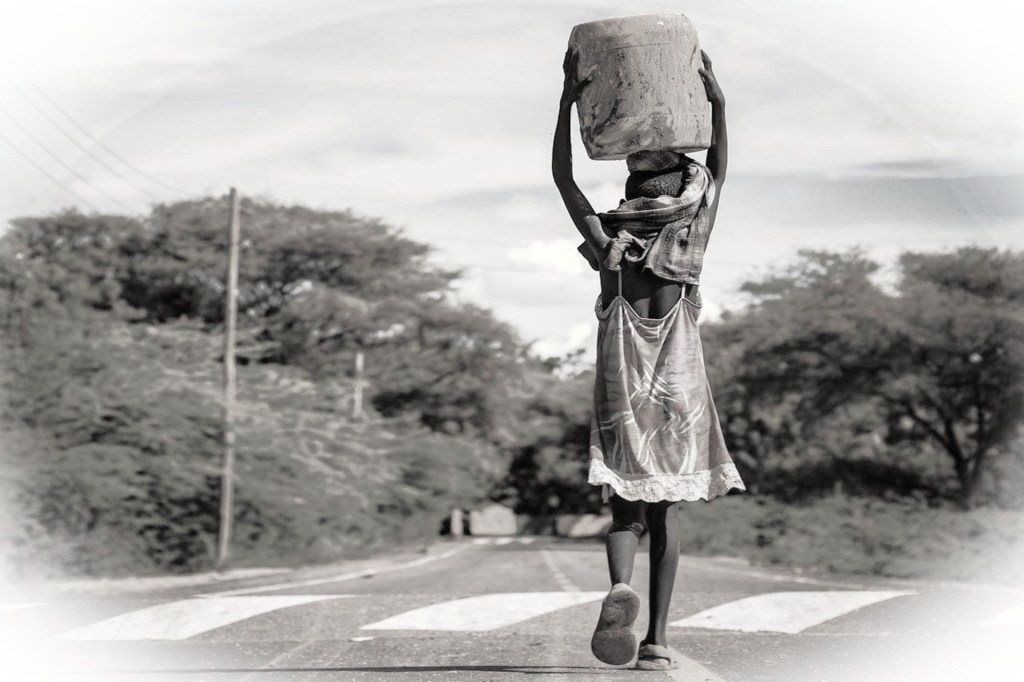
Water Carrier, by Artsy Solomon, Pexels – Main Image
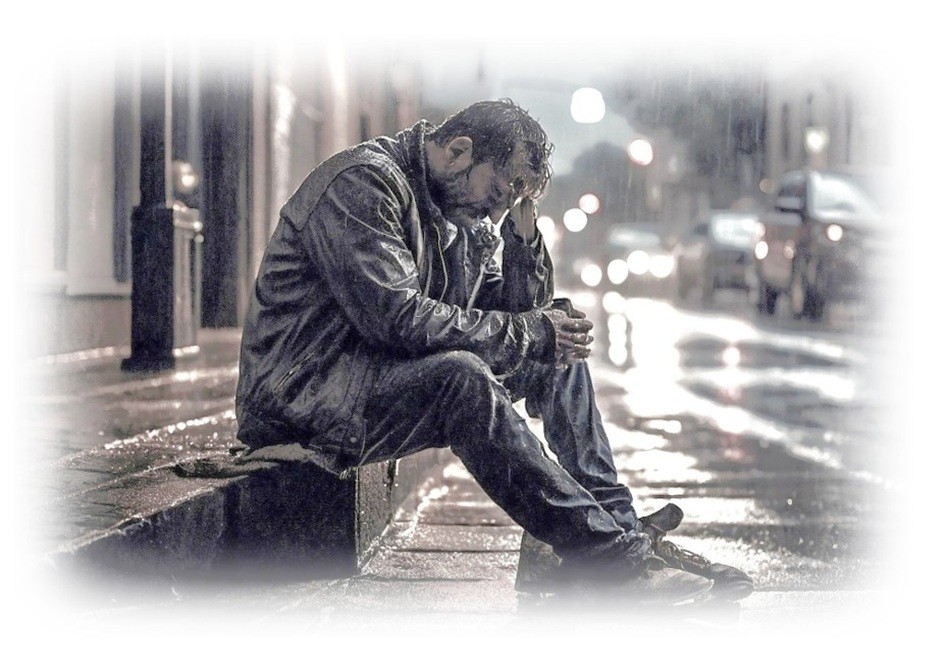
Lost All Hope, by Brigitte 182, Pixabay, AI Generated
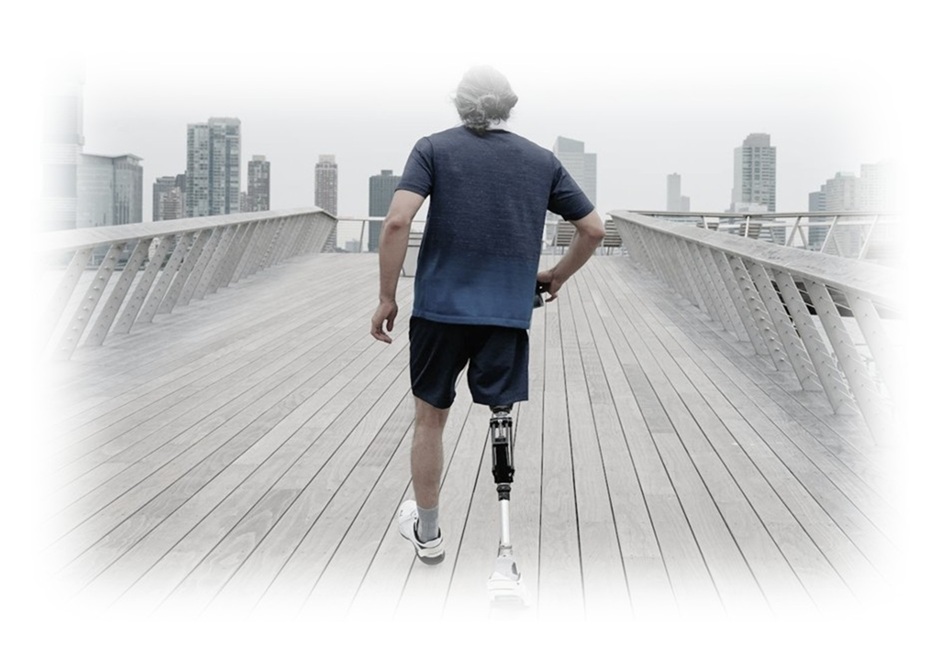
Prosthetic Power, Lara Jameson, Pexels
References:
Press Release, ‘When Stressful Situation is Perceived as a Threat, health and Wellbeing Suffer’, University of Bath, Para 4, 29th January 2024, accessed 4th July 2024, https://www.bath.ac.uk/announcements/when-a-stressful-situation-is-perceived-as-a-threat-health-and-wellbeing-suffer/#:~:text=The%20negative%20health%20and%20wellbeing,feeling%20overwhelmed%20or%20from%20a
Resilience Resources, ‘What is Resilience?’ Lee Kum Scheung Center for Health and Happiness, Harvard T.H. Chan, School of Public Health, The President and Fellows of Harvard College, 2024, Para 1, accessed 4th July 2024, https://www.hsph.harvard.edu/health-happiness/resilience-series-suggested-papers/
‘What is Resilience Research – Firstly, What is Resilience?’ Centre for Resilience for Social Justice, University of Brighton, 2024, Para 2, accessed 5th July 2024, https://www.brighton.ac.uk/crsj/what-is-resilience-research.aspx#:~:text=By%20conducting%20research%20into%20resilience,make%20changes%20towards%20social%20justice.
‘Resilience’, American Psychological Association, Psychology Topics, 2024, Para 1, accessed 5th July 2024, https://www.apa.org/topics/resilience
‘Resilience Lessons From Nature’ fRI Research, 6th July 2016, Youtube, accessed 4th July 2024, https://www.youtube.com/watch?v=kmtZMGaqYUE
‘Warring Elephants Deadly Instincts’, Nat Geo Wild, 11th November 2015, Youtube, accessed 4th July 2024, https://www.youtube.com/watch?v=KpN-P1OVzl4
‘Leopard Pulls Off Perfect Ambush on Baboon – But They Fight Back’, Latest Sightings, 4th June 2024, Youtube, accessed 4th Juky 2024, https://www.youtube.com/watch?v=2r0VgETbzIU
Henry, C.S., and Harrist, A.W. ‘Family Resilience Theory’, In: Adamsons, K, et al (eds), Sourcebook of Family Theories and Methodologies, Springer, Cham, https://doi.org/10.1007/978-3-030–92002-9_4
Walsh, F, ‘Family Resilience: Strengths Forged Through Adversity’, In F. Walsh (Ed), Normal Family Processes: Growing Diversity and Complexity (4th ed., pp.399-427), The Guilford Press, 2012, accessed 5th July 2012, https://psycnet.apa.org/record/2012-02536-017
Michael Ungar, PhD, 2024, accessed 5th July 2024, https://michaelungar.com/
Resilience Research Centre, Dalhousie University, 2024, accessed 5th July 2024, https://resilienceresearch.org/
Michael Ungar, ‘Resilience Across Cultures’, The British Journal of Social Work, Volume 38, Issue 2, February 2008, pp. 218235, Resilience Research – Para 3, accessed 5th July 2024, https://doi.org/10.1093/bjsw/bcl343
Raquel Artuch-Garde, et al, ‘Relationship Between Resilience and Self-regulation: A Study of Spanish Youth at Risk of Social Exclusion’, Front. Psychol, 20th April 2017, Sec. Educational Psychology, Volume 8 – 2017, Discussion – Conclusions, Implications and Prospects for Research, Para 1, https://doi.org/10.3389/fpsyg.2017.00612
‘Financial Insecurity, Hunger, Mental Health are Top Concerns for Women Worldwide’, Care International, 22nd September 2020, accessed 5th July 2024, https://www.care.org/media-and-press/financial-insecurity-hunger-mental-health-are-top-concerns-for-women-worldwide/
‘Staying Resilient Through Tough Economic Times’, American Psychological Association, 2010, accessed 5th July 2024, https://www.apa.org/topics/resilience/tough-economy
Brooke Shields Quote, ‘Someone said adversity builds…’, Brainy Quote, 2024, accessed 5th July 2024, https://www.brainyquote.com/quotes/brooke_shields_654974?src=t_resilience

 recover your wellbeing