


is the middle age of men and women really something to be feared?
Many things in life are real, like the breakdown of our climate or the impact of a money meltdown, systemically driven. In fact, 2008 was a year to remember as an economic shockwave ripped more than rippled its way around the world. As people woke up to frantic efforts by the Federal Reserve of the United States to catch a horse now bolted, they had little idea of what was to come. To put it into some sort of context, the IMF or the International Monetary Fund estimated, in 2018, that in the 12 months after the crisis began, economic activity around the world fell by 50%. That’s nearly as astonishing in scale as the natural threat we face and a diminishing value of common sense, too.
It leans back into the financial crisis of 1929 where with around $25 billion dollars wiped off the U.S stock market, it took until 1954 for the American economy to recover. Thankfully, for most people, the idea of a crisis bears little resemblance to national and global financial collapse but the urgency sticks at a personal level and of course it does. Just as a person’s bank account reflects elements of self-worth and the construction of an identity, the same process can lead to a rejection of self in losing it all. Hence, the 1929 crash was synonymous with men jumping to their deaths from window ledges. The truth of that method has been widely disputed but what has been recorded are the actual suicides, following the ruin. Similarly, the global impact of the 2008 financial crisis led to an increase in the number of intentional deaths and particularly amongst men. So, eighty years apart the cumulative effect is similar, when it comes to financial disaster.
Yet, for those in their forties or more, a sense of foreboding may have been amplified by an internal crisis unfolding as chaos waited with open arms. In fact, talk of a ‘midlife crisis’ has been around for decades since its introduction to popular culture by a Canadian psychoanalyst, Elliot Jaques. In what seems like a disconnect, though, there’s confusion over when he first used the term after he presented two papers at different times and in which, the phrase was used. Still, the point was that in looking at the lives of around 300 male writers, artists and scientists over a period of some 500 years, he began to notice something interesting. As Eleanor Sawbridge Burton noted, at the Melanie Klein Trust:
‘In a 1965 paper called ‘Death and the Midlife Crisis’, he [Jaques] traces this dramatic change in the internal lives and external creations of painters, writers and composers throughout history, noticing that their creative output becomes markedly different in both style and process at the bridge between early and mature adulthood. He calls this a ‘crisis’, though he posits three possible manifestations of it: creative and emotional breakdown, or death; the first expression of previously dormant creativity; or a substantial change in aesthetic and approach.’

So, having established a single-gendered theory for something that may have existed across time and in line with relative lifespans, questions arose over what it meant to hit the 50 or 400m mark: subject to the speed of your life. Suddenly, men and women were asking themselves and each other: what have I achieved? Why didn’t I do this or that? Can I still do this or indeed, that? Those compromises often made in love, began to look suspect as the clock ticked on. Well, regret is a hammer with an almighty swing once the grip of midlife takes hold of everything.
Both Carl Jung and Erik Erikson had lots to say on the matter, too, with the former writing about the transition of human consciousness, in his 1931 essay ‘The Stages of Life’. As he muses on the interminable crowing of men long past their physical powers as they slide inexorably towards the edges of a mind: he recognises the way in which childishness fears the future, just as those ageing fear the past. As with a lot of historical writing, though, some of Jung’s thinking is inevitably outdated, like his approach towards women when talking about ‘animus’ and ‘anima’: the forces of internalisation. There, he writes:
‘The more masculine his outer attitude is, the more his feminine traits are obliterated: instead, they appear in his unconscious. This [a very feminine woman has a masculine soul, and a very masculine man a feminine soul] explains why it is just those very virile men who are most subject to characteristic weakness; [reveal] their attitude to the unconscious [that] has a womanish weakness and impressionability.’
‘Whereas logic and objectivity are usually the predominant features of a man’s outer attitude, or at least regarded as ideals, in the case of a woman it is feeling.’
The Stages of Life, The Essential Jung: Selected Writings, pages 100 – 102
Clearly, it’s timebound and subject to questioning, where it’s important to look at not just equitable thinking versus bias but also the way we approach ideas about middle age and the sexes. Emma Beddington, for example, a Guardian newspaper columnist, wrote an excellent article on the changing backdrop to a present day midlife crisis and particularly, how contemporary women are experiencing it. As she points out, not only has the material landscape changed in terms of midlife milestones: the existential climate is such that a midlife crisis is probably the least of our problems.

Prior to that, the late Susan Sontag, a prolific writer and commentator, penned a now famous essay in The Saturday Review in 1972, called ‘The Double Standard of Aging’. In it, she discussed the implied scrutiny of asking a woman her age beyond ‘a certain age’, as society considers it normal. It’s a timeworn contrast with grey hair seen differently and where on men it’s a crowning glory whilst for women, it’s a crown of thorns. It’s possible this arose for evolutionary reasons making it no less palatable, but it may offer insight.
The fact that both sexes spend huge sums of money on grey-dyeing products, too, makes it a profound issue. Yet, it also ties in with what may be the biggest bell of all when it comes to midlife: the sound of a woman’s so-called ‘biological clock’. For some women that is and as a matter of choice but where fertility fades and for the unfulfilled, the wrench can be tough to process alongside unjustified feelings of failure. Less known and talked about, however, is the decline in male fertility carrying its own timepiece and which, society seems to ignore.
‘These facts [of male infertility] have been reported occasionally – almost always as news of a “male biological clock”. The need to append the adjective ‘male’ to the phrase ‘biological clock’ hints at why this data has mostly gone ignored: society speaks as if only women had bodies.’
Moira Wiegel, ‘The Foul Reign of the Biological Clock’, The Guardian newspaper, Para 25
For men, the process of midlife may have started wars which isn’t true, of course, but it may yet carry a kernel of something if not quite the truth. You see, men in middle age are more prone to suicide than any other age group of either sex, reflecting amongst things, difficulties in communication. Naturally, there are skeletal reasons, too, for such high rates of loss including and combining mental health, financial and relationship issues that involve children and that long-standing plinth for men: work. If the last part sounds gendered, it’s not to the exclusion of work’s importance to women: it couldn’t be. Rather, it’s centred on the way men are often defined by their work and to the point of regret.


It also suggests an existential review on the concept of time with conclusions defying hopes, dreams and sheer effort which could also be why, the suicide rate for men exceeds women, by far. Potentially, it comes down to a word that affects women, too, but which seems to draw something different from men and not to society’s good. In fact, ‘Failure’ can hit women hard precisely because elements of society and particularly some men are waiting for it to happen. Of course, not all masculinity is so-called ‘toxic’ but you only need to see a type of man watch a woman park a car, to see a microcosm of something larger. So, what does it suggest? Well, it implies a tremendous amount of pressure faced by men that’s present from birth and later leaned into. That’s not news and a 2017 survey of 4,573 people by the Pew Research Center in America, explained further:
‘When asked about the extent to which men and women feel pressure in different realms of their lives – from jobs to family responsibilities, to personal appearance – the public sees clear gender differences. In particular, far higher shares say men face a lot of pressure to support their family and to be successful at work. And while solid majorities say women face a lot of pressure to be an involved parent and to be physically attractive, about half or fewer see these as pressure points.’
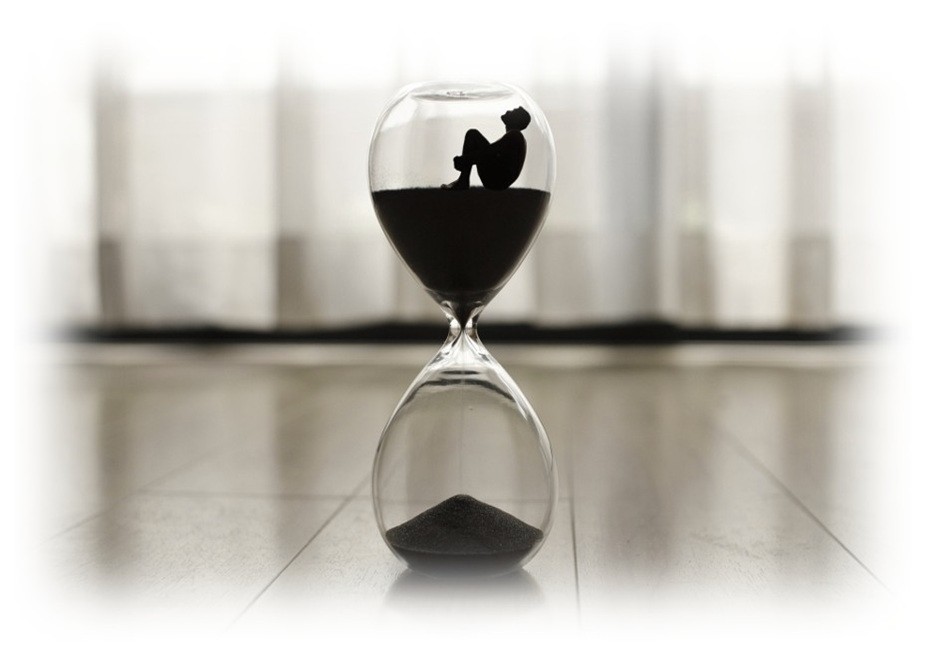
It’s inevitable that no matter how far we travel from our hunter-gatherer days, humans will need to carve out specific roles. Well, those functions were once written in stone and for thousands of years until the industrial, medical and other revolutions extended a midpoint in giving us room, to have a crisis. Obviously, the examples shown here are a snapshot of struggles for men and women, and it goes without saying that the complexities extend well beyond what’s written. Divorce, adult children, retirement plans and ageing parents are all in the mix as we know, leaving new plots and old to thicken again.


It could be that Susan Sontag said it best, in paragraph three of her essay ‘The Double Standard of Aging’:
‘After thirty-five, any mention of one’s age carries with it the reminder that one is probably closer to the end of one’s life than to the beginning. There is nothing unreasonable in that anxiety.’
Absolutely, and it’s precisely the point. That slow dawning or a flash of reckoning is a chill to remember when it first occurs because to think that one day, everything you’ve known will cease to exist to you is complicated. No more blue skies or green grass or brown rocks or whatever colour the seas and rivers happen to be where you are. No more birds singing or the sound of laughter, either, but equally for some: it’s a different process if the standard of living or the political climate make a natural ending, long overdue. Yet, for many if not most, it’s the faces you love that are tugging on bonds that are tied over time and which allow films like ‘The Notebook’, to say it all for us.
‘See, what you’re meant to do when you have a midlife crisis is buy a fast car, aren’t you? Well, I’ve always had fast cars. It’s not that. It’s the fear that you’re past your best. It’s the fear that the stuff you’ve done in the past is your best work.’
Robbie Coltrane
That’s also true but maybe and ultimately: the real fear lies in the realisation that every one of us is as insignificant as the man or woman living in Ancient Rome and who’ll never be known again. That’s a difficult thing to wrap one’s head around at first: that this journey of decades is all that we have to try and build and protect and let go of in the end.
Still, the middle of that voyage is a chance to reset and make the most of what you have because let’s face it, what else is there to do?
Copyright © 2024 | recoveryourwellbeing.com | All Rights Reserved
Images:
Seaside Pondering, by The Humantra, Pexels – Main Image
Life Trap, by Mart Productions, Pexels
Grandmother Love, by Sasint, Pixabay
Draining Hourglass, Xavian Drew, Pixabay
References:
‘Great Recession: What It Was and what Caused It’, The Investopedia Team, reviewed by Michael J Boyle, fact checked by Amanda Bellucco-Chatham, 18th December 2023, accessed 21st August 2024, https://www.investopedia.com/terms/g/great-recession.asp
‘How The 2008 Financial Crisis Crashed the Economy and Changed the World’, PBS NewsHour, Youtube, 14th September 2018, accessed 21st August 2024, https://www.youtube.com/watch?v=fXkeh8jiMdk
Wenjie Chen, et al, ‘Lasting Effects: The Global Economic Recovery 10 Years After The Crisis’, International Monetary Fund, 3rd October 2018, Para 1, accessed 21st August 2024, https://www.imf.org/en/Blogs/Articles/2018/10/03/blog-lasting-effects-the-global-economic-recovery-10-years-after-the-crisis
Claire Suddath, ‘The Crash of 1929’, Time Magazine, 20th October 2008, Para 8, accessed 22nd August 2024, https://time.com/archive/6913583/the-crash-of-1929/
Editorial, ‘Stock Market Crash of 1929’, Federal Reserve History, 22nd November 2013, Para 2, accessed 22nd August 2024, https://www.federalreservehistory.org/essays/stock-market-crash-of-1929
Lora E. Park, et al, ‘It’s All About The Money (For Some): Consequences of Financially Contingent Self-worth’, Personality and Social Psychology Bulletin, 2017, Vol. 43(5) 601-622, doi: 10.1177/0146167216689080 journals.sagepub.com/home/pspb, https://ubwp.buffalo.edu/selfandmotivationlab/wp-content/uploads/sites/91/2018/05/Park-Ward-Naragon-Gainey-2017-PSPB.pdf
Christopher Klein, ‘1929 Stock Market Crash: Did Panicked Investors Really Jump From Windows?’ History.com, A&E Television Networks, 7th March 2019, accessed 22nd August 2024, https://www.history.com/news/stock-market-crash-suicides-wall-street-1929-great-depression
Chang S, et al, ‘Imapct of Global Economic Crisis on Suicide: Time Trend Study in 54 Countries’, British Medical Journal, BMJ, 2013; 347 :f5239 doi:10.1136/bmj.f5239, https://www.bmj.com/content/347/bmj.f5239
Brendon John Lambe and Tomasz Piotr Wisniewski, ‘Stock Market Crashes Linked to Higher Rates of Suicide – New Research’, The Conversation UK, 13th September 2018, accessed 22nd August 2024, https://theconversation.com/stock-market-crashes-linked-to-higher-rates-of-suicide-new-research-101917
Pamela Druckerman, ‘How The Midlife Crisis Came To Be’, The Atlantic Magazine, 29th May 2018, Para 1, accessed 22nd August 2024, https://www.theatlantic.com/family/archive/2018/05/the-invention-of-the-midlife-crisis/561203/
Carlo Strenger and Arie Ruttenberg, ‘The Existential Necessity of Midlife Change’, Harvard Business Review, February 2008, Para 1, accessed 22nd August 2024, https://hbr.org/2008/02/the-existential-necessity-of-midlife-change#:~:text=In%20a%20paper%20published%20in,restricted%20possibilities%2C%20and%20our%20mortality
Susan Schmidt, ‘The Feminist Origins of the Midlife Crisis’, The Historical Journal, 61, 2 (2018), pp 503-523, Page 512, Para 2, accessed 22nd August 2024, https://www.cambridge.org/core/services/aop-cambridge-core/content/view/799BDF1A6AC508F006BF062AF7913F38/S0018246X17000309a.pdf/div-class-title-the-feminist-origins-of-the-midlife-crisis-div.pdf
Eleanor Sawbridge Burton, ‘Elliot Jaques’, Bio, The Melanie Klein Trust, 2020, accessed 22nd August 2024, https://melanie-klein-trust.org.uk/writers/elliott-jaques/
Editorial, ‘Middle Age Begins At 55 Years, Survey Suggests’, BBC News, 18th September 2012, accessed 23rd August 2024, https://www.bbc.com/news/education-19622330
C.G Jung Institute of Los Angeles, ‘The Institute’, 2024, accessed 23rd August 2024, https://junginla.org/about/
‘Erik Erikson’ Bio, Harvard University, Department of Psychology, The President and Fellows of Harvard College, 2024, accessed 23rd August 2024, https://psychology.fas.harvard.edu/people/erik-erikson
Kamala melik-Akhazarova, ‘Anima and Animus’, International Association of Analytical Psychology, June 2021, accessed 23rd August 2024, https://iaap.org/wp-content/uploads/2021/06/Anima-and-Animus.pdf
Carl Jung, ‘The Essential Jung: Selected Writings’ (London, Fontana Press, 1998) https://www.amazon.co.uk/Essential-Jung-Selected-Writings/dp/0006530656/
Emma Beddington, ‘The New Midlife Crisis is Hot, Female and Covered in Tattoos – Where Do I Sign?’ The Guardian Newspaper, 2nd June 2024, Paras 4 & 5, accessed 23rd August 2024, https://www.theguardian.com/commentisfree/article/2024/jun/02/new-midlife-crisis-hot-female-covered-in-tattoos-where-do-i-sign
Editors, ‘Susan Sontag’, Bio, Britannica Online, 2024, accessed 22nd August 2024, https://www.britannica.com/topic/University-of-Chicago
Susan Sontag, ‘The Double Standard of Aging’, The Saturday Review, Archived by the University of Warwick, 2024, accessed 23rd August 2024, https://warwick.ac.uk/fac/arts/english/currentstudents/undergraduate/modules/literaturetheoryandtime/susan_sontag_the_double_standard_of_aging.pdf
Editorial, ‘Why Women Love Men With Grey Hair’, Men’s Health Magazine – Australia, 1st May 2021, accessed 23rd August 2024, https://menshealth.com.au/why-women-love-grey-hair/
Alicia Clegg, ‘Push Back on Double Prejudice of Ageism On Top of Sexism’, Finanical Times Newspaper, 17th October 2019, accessed 23rd August 2024, https://www.ft.com/content/e3a89dc2-d08e-11e9-b018-ca4456540ea6
Verlin B. Hinsz, et al, ‘The Intermingling of Social and Evolutionary Psychology Influences on Hair Color Preferences’, Current Psychology, June 2013, 32(2), doi: 10.1007/s12144-013-9169-2, accessed 23rd August 2024, https://www.researchgate.net/publication/257772195_The_Intermingling_of_Social_and_Evolutionary_Psychology_Influences_on_Hair_Color_Preferences
Emma Elsworthy, ‘One in 20 Women Spend More Than £50,000 in Lifetime on Colouring Their Hair, Survey Claims’, The Independent Newspaper, 1st October 2019, accessed 23rd August 2024, https://www.independent.co.uk/life-style/hair-colour-dye-women-haircare-salon-a9128231.html
Moira Wiegel, ‘The Foul Reign of the Biological Clock’, The Guardian newspaper, 10th May 2016, accessed 23rd August 2024, https://www.theguardian.com/society/2016/may/10/foul-reign-of-the-biological-clock
Amanda Ruggeri, ‘Women’s Fertility Is More Complicated Than You Might Have Heard’, BBC News, 13th March 2024, accessed 23rd August 2024, https://www.bbc.com/future/article/20240313-the-fertility-myth-most-advice-says-womens-fertility-declines-after-35-the-truth-is-more-complicated
Editorial, ‘Male Infertility’, John Hopkins Medicine, The John Hopkins University, 2024, accessed 23rd August 2024, https://www.hopkinsmedicine.org/health/conditions-and-diseases/male-infertility#:~:text=Male%20infertility%20means%20a%20man,problem%2C%20such%20as%20cystic%20fibrosis.
John Barry, ‘Male Midlife Crisis: Causes, Coping and Meaning’, The Centre for Male Psychology, 2nd March 2024, Para 3, accessed 23rd August 2024, https://www.centreformalepsychology.com/male-psychology-magazine-listings/male-mid-life-crisis-causes-coping-and-meaning
‘Men’s Mental Health: 40% of Men Won’t Talk To Anyone About Their Mental Health’, Priory Group, 2024, accessed 23rd August 2024, https://www.priorygroup.com/blog/40-of-men-wont-talk-to-anyone-about-their-mental-health
Kate Morgan, ‘Why We Define Ourselves By Our Jobs’, BBC News, 13th April 2021, accessed 23rd August 2024, https://www.bbc.com/worklife/article/20210409-why-we-define-ourselves-by-our-jobs
Franklin Madison, ‘Men: Is Your Job Your Personal Identity, a Means to an End, or Your Life?’, The Good Men Project, 25th September 2018, accessed 23rd August 2024, https://goodmenproject.com/featured-content/men-your-job-your-personal-identity-means-end-your-life-lbkr/
Helen Schumacher, ‘Why More Men Than Women Die By Suicide’, BBC News, 18th March 2019, accessed 23rd August 2024, https://www.bbc.com/future/article/20190313-why-more-men-kill-themselves-than-women
Editorial, ‘Why Women Are Afraid of Failure’, Elle Magazine, 6th June 2016, accessed 23rd August 2024, https://www.elle.com/life-love/a36828/why-women-are-afraid-of-failure/
Kate Ratcliff and Shigehiro Oishi, ‘Men Feel Worse About Themselves When Female Partners Succeed, Says NewResearch’, Journal of Personality and Social Psychology, 5th August 2013, accessed 23rd August 2024, https://www.apa.org/news/press/releases/2013/08/men-self-esteem
Kim Parker, et al, ‘Americans See Different Expectations For Men and Women’, Pew research Center, 5th December 2017, accessed 24th August 2024, https://www.pewresearch.org/social-trends/2017/12/05/americans-see-different-expectations-for-men-and-women/
Susan Sontag, ‘The Double Standard of Aging’, The Saturday Review, Archived by the University of Warwick, 2024, Para 3, accessed 24th August 2024, https://warwick.ac.uk/fac/arts/english/currentstudents/undergraduate/modules/literaturetheoryandtime/susan_sontag_the_double_standard_of_aging.pdf
‘The Notebook’, New Line Cinema, et al, 25th June 2004, IMDb, accessed 24th August 2024, https://www.imdb.com/title/tt0332280/
Robbie Coltrane Quote, See, what you’re meant to do…’ Brainy Quote, 2024, accessed 24th August 2024, https://www.brainyquote.com/quotes/robbie_coltrane_214647?src=t_mid-life

 recover your wellbeing