


the cost of survival figures into everything as the cost of survival, figures into everything
The global figures around mental health are truly shocking in some ways while not at all in others, where trying to survive is the daily plan. So, as people rise to another day, personal projections shape everything in the here and now, while levels of awareness reinforce or weaken an outlook. It’s a troubling game as we hide from ourselves and that’s a false friend when a clear-sighted purpose moves things along and life has to win, if we are to as well. Still, any forecast requires a set of indicators just as predicting a weather pattern means knowing the prevailing wind conditions, that are driving atmospheric pressure.
In economic terms, these indices may fall into one of three areas. Leading indicators, like share prices, credit data and profit margins give instant figures in steering responses that help to move the economy, one way or another. Coincident indicators reflect the general moment with things like GDP and wage levels changing at roughly the same speed, as the economy. Meanwhile, Lagging indicators become visible after economic movement; so, unemployment rates, retail sector data and debt margins, for example, are responsive to changes elsewhere. Of course, these categories are not only debated but also part of a systemic process meaning a lagging indicator can eventually influence leading ones if say: unemployment falls or retail spending increases, ultimately affecting share prices.
‘Too may people think that economics is this subject that should wait until the university level, but it can’t wait that long.’
Robert Duvall, American actor
With people operating in systemic terms, as well, it’s usually possible to make forecasts that are more or less on target, when it comes to behaviour. If this were untrue: psychology would be a useless art as would marketing but they’re not and both wield enormous influence, in our day-to-day lives. So, what might be considered leading, coincident and lagging indicators of human functioning?

Well, it’s tenuous but emotions and feelings, the visceral and the labels are instantly measurable, too, as they push us to interact with the wider system of our environments. Yet, these leading indicators of emotional investment can be as fickle as share prices while signalling something of the future, nevertheless. A coincident indicator, on the other hand, might be the state of your relationship in the here and now and the manner of your conduct and what your partner says about you. Finally, a lagging indicator might appear as regret which is a responsive product, so to speak, as feelings of indebtedness seek out forgiveness. So, how many personal economies are waiting to crash is a data set of some proportion but to calculate the bigger deal, different approaches exist:
‘The cost-of-illness (COI) approach – is a commonly used method that sets out to capture the economic impact of disease. It views the cost of non-communicable disease, NCD, as the sum of several categories of direct and indirect costs.’
The value of lost output: the economic growth approach – method estimates the projected impact of NCDs on aggregate economic output (GDP) by considering how these diseases deplete labour, capital and other factors linked to production levels in a country.
The value of statistical life (VSL) approach – reflects a populations willingness to pay to reduce the risk of disability or death associated with NCDs.’
The Global Economic Burden of Non-communicable Diseases, Harvard School of Public Health
It’s all about guided action and the IZA-World of Labor is an online platform, offering data on the global labour-market. In a 2017 paper by a British economist, Lord Richard Layard, it noted that in 2008: 38% of all illness up to the age of forty-five in countries defined as rich was accounted for, by mental illness. If this is the case, can you imagine the situation elsewhere? The paper, ‘The Economics of Mental Health’ went on to say that 6% of adults who are of working age are in receipt of disability benefits while the UK’s ratio on spending in services relative to lost output, is just 1% against 7%, respectively.
These are incredible figures for any year, but what of more recently? Well, the UK’s National Health Service, NHS, has established a metrics ‘Dashboard’ so as to gauge service performance across the country. Therefore, things like ‘continued investment’ and ‘expanding services’ as well as improved ’emergency department links’ to ‘liaison services’ and ‘crisis support teams’ are primary indicators to watch. The point is to use a Long-Term Plan to gain the best delivery for people which is, of course, sorely needed and one example of an indicator is the ‘Access & Waiting Time’ (AWT) standard:
‘In Quarter three (Q3) of 2022/23, 77.5% (428 out of 553) of children and young people with an eating disorder started treatment within one week in urgent cases, compared to 67.9% (359 out of 529) in Q1 of 2022/23, and 80.7% (2,080 out of 2,577) started treatment within four weeks for non-urgent cases, compared to 69.1% (1,587 out of 2,297), in Q1 of 2022/23. Both, however, remain below the national standard of 95% and it is too early to comment on what this might mean for future performance.’
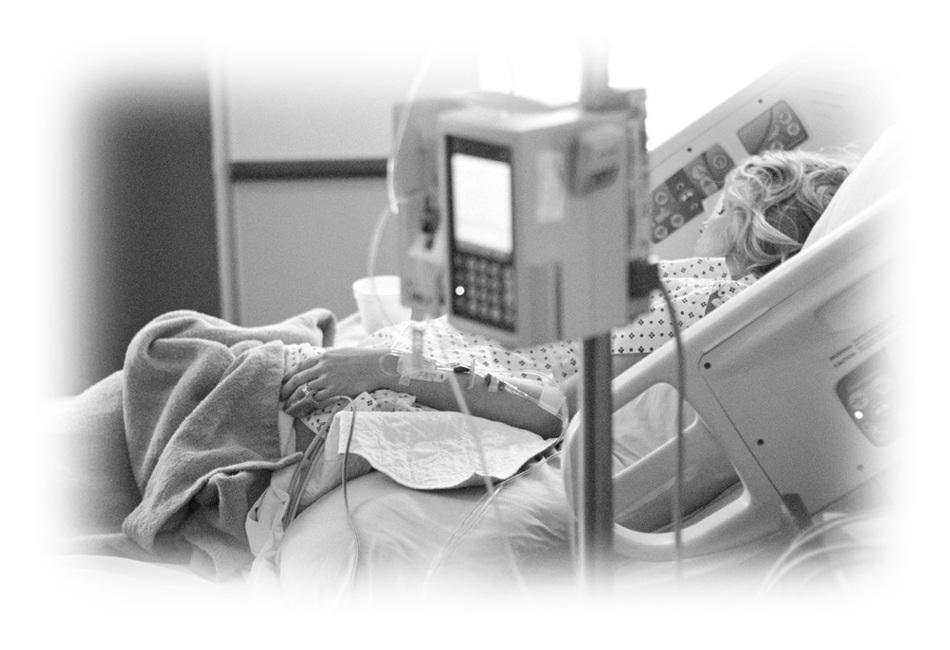
Still, with a recent change in government, the UK is now reassessing the capacity of the NHS to deliver its core and surrounding functions.
‘The new health and social care secretary, Wes Streeting, has appointed Ara Darzi to lead an independent review of NHS performance in England. The surgeon and former Labour health minister has been asked to provide a “raw and frank assessment” of the state of the health service that will help steer Labour’s forthcoming 10 year plan for the NHS.’
Gareth Lacobucci, British Medical Journal, BMJ, 2024
With the first release of the report delivered by Lord Darzi, last week, the NHS finds itself in a struggle over its provision of quality care. The reasons are many and varied but in turning to specific conditions like obsessive-compulsive-disorder or OCD, the economic costs are often astronomical and it’s easy to see why. Firstly, in terms of productivity, it can be hard to function at full capacity with a body consuming enormous amounts of energy as it tries to neutralise triggers. So, in the presence of colleagues, it can be in the form of so-called ‘Pure-O’ thinking which might be the mind’s version of compulsions. This can mean reciting a stock phrase or counting which hijacks your mind, just as your boss demands some attention. Physical subtleties may come into play, too, like: blinking, twitching or performing a voluntary tic. It’s the opposite of focus and in a 1995 U.S study: ‘Economic Costs of Obsessive-compulsive Disorder’, the following figures applied:
‘This study, using the human capital approach, estimated the direct and indirect costs of OCD. The total costs of OCD were estimated to be $8.4 billion, in 1990. 5.7% of the estimated $147.8 billion cost of all mental illness, and 18.0% of the costs of all anxiety disorders, estimated to be $46.6 billion. The indirect costs of OCD, reflecting lost productivity of individuals suffering from or dying from the disorder, were estimated at $6.2 billion.’
Again, this is quite staggering even if you consider that U.S GDP in that year was $5.963 trillion making the loss of output: 0.104% of GDP. No doubt, the longer a person lives with untreated OCD the more they’ll contribute to a negative balance, alongside thousands of others.
It all highlights the sheer scope of trying to deal with a significant slice of the mental-health pie. How many people worldwide are sitting at home, for example, as they continue to struggle with mental health? How many hopes and dreams of marriage, children, careers or travelling are scuppered by the effects of psychological woe? It’s all about impact and where it can be seen as a lagging indicator of structural failures, little compares to the devastating effect Covid-19 had on global mental-health and the legacy it left behind: as an indicator of all types and on all levels economically.
It’s enough to say initially that the shock of seeing the rising death toll on the news every day left a profound sense of calamity, in everyone. If you were medically trained, however, and you knew how these things work: it may have seemed a little less like Armageddon. To the lay-man, woman and child, though, it looked like nothing we’d ever conceptualised at any time before and it showed, in our mental health.
Of course, the economic impact was the second shockwave to hit people’s finances in just over a decade, following the 2008 financial crisis. As the World Bank points out there are parallels with both situations involving depressed growth and defaulting debts. Meanwhile, the United Nations reports that four times the number of working hours were lost during Covid, than in the fiscal crisis. That makes sense when so much of the planet was simply unable to get work with hard won lives and livelihoods lost, just like that.

Even so, fear not just of the economy but of the virus especially sent many of us into meltdown and an interesting study, in 2021, revealed some of the underlying mechanisms. In addition to obvious behavioural changes like panic buying and a constant suspicion of others: a literature review within the study found six fears, linked to the virus. The unknown; social isolation; disgust; hypochondriasis; information-driven fear and compliance. Again, these make sense although in light of early-stated symptoms like a fever, a cough and fatigue: surely, it was normal for people to be overly concerned about whether it was seasonal malaise or something more serious. Either way, whether an entrenched disorder or a direct threat to life, the need for help is never far away.
‘Research gathered from the UK and internationally shows the potential public health and economic benefit of programmes that target and prevent mental-health problems and empower people to live well. For example, by addressing issues such as perinatal depression, bullying and social isolation in older people. Other well-evidenced initiatives include promoting positive parenting, rapid access to psychological and psychosocial supports for people with identified needs and building supportive and inclusive workplaces.’
David McDaid, London School of Economics
If you’re lucky, you’ll gain access to these services and interventions that may transform you and your life as the pull of forces in a social utopia, lures you in. In fact, the idea of upgrading to one of life’s ‘normal’ people is the ultimate ticket in a lottery, it seems. Passage through to the other side where food tastes better, the birds sing more sweetly and the light adjusts in prisms, so clear. All you have to do is commit to a therapeutic version of hell as a line to be crossed, while shattering the illusions in your mind.
Poor mental health will continue to cause emotional and economic ruin for millions all over the world, meaning there’s so much more to do when it comes to treating the mind. In 2015, the World Health Organisation (WHO) released: ‘Depression and Other Common Mental Disorders – Global Health Estimates’, while stating that the number of people suffering with an anxiety disorder stood at 264 million. With a growing global population of 7.3 billion at the time, it represented 3.6% of all human beings.
Naturally, things change.
On the 17th June 2022, the United Nations revealed that some one-billion people now live with a mental-health disorder where it includes many other diagnoses, beyond anxiety. Even with the population jump accounted for that’s still a staggering leap up to 12.6% of 8 billion people, in just seven years.
‘Mental health can improve overall wellbeing and prevent other diseases. And since mental health problems have a serious economic impact on vulnerable communities, making them a priority can save lives and improve people’s quality of life.’
Vikram Patel, Professor and Chair of the Department of Global Health and Social Medicine,
Harvard Medical School
Whether we like it or not, everything’s connected from the micro to the macro and back again. So, literally: what on Earth are we doing?
Copyright © 2024 | recoveryourwellbeing.com | All Rights Reserved
Images:
Exhausted Woman, by Thirdman, Pexels – Main Image
Workplace Meeting, by Shimazaki, Pexels
Hospital Patient, by Parenting Upstream, Pixabay
Covid Fly-by, by Fernando Zhiminaicela, Pixabay
References:
Editorial, ‘Mental Disorders’, World Health Organisation, WHO, 8th June 2022, accessed 7th September 2024, https://wol.iza.org/articles/economics-of-mental-health/long
Staff Writers, ‘Measuring Winds to Help Predict the Weather’, National Environmental Satellite, Data and Information Service (NESDIS), 2024, accessed 7th September 2024, https://www.google.com/search?gs_ssp=eJzj4tFP1zc0TKnMzjIrK1FgNGB0YPBiy0stTsksBgBi_Qd4&q=nesdis&rlz=1C1UEAD_enES1083ES1083&oq=NESDIS&gs_lcrp=EgZjaHJvbWUqDQgBEC4YxwEY0QMYgAQyCggAEAAY4wIYgAQyDQgBEC4YxwEY0QMYgAQyBwgCEAAYgAQyBwgDEAAYgAQyBwgEEAAYgAQyBwgFEAAYgAQyBwgGEAAYgAQyBwgHEAAYgAQyBwgIEAAYgAQyBwgJEAAYgATSAQk3MzE2ajBqMTWoAgiwAgE&sourceid=chrome&ie=UTF-8
Staff Writers, ‘Economic Indicator: Definition and How to Interpret’, Investopedia, Reviewed by Michael J Boyle, Fact checked by Marcus Reeves, 22nd December 2023, Leading Indicators, accessed 7th September 2024, https://www.investopedia.com/terms/e/economic_indicator.asp
Staff Writers, ‘Economic Indicator: Definition and How to Interpret’, Investopedia, Reviewed by Michael J Boyle, Fact checked by Marcus Reeves, 22nd December 2023, Coincident Indicators, accessed 7th September 2024, https://www.investopedia.com/terms/e/economic_indicator.asp
Staff Writers, ‘Economic Indicator: Definition and How to Interpret’, Investopedia, Reviewed by Michael J Boyle, Fact checked by Marcus Reeves, 22nd December 2023, Lagging Indicators, accessed 7th September 2024, https://www.investopedia.com/terms/e/economic_indicator.asp
Einar H. Dyvik, ‘Global Economic Indicators – Statistics & Facts’, Statista, 3rd July 2024, Para 3, accessed 7th September 2024, https://www.statista.com/topics/5442/global-economic-indicators/#topicOverview
Robert Duvall Quote – ‘Too many people…’, Brainy Quote, 2024, accessed 7th September 2024, https://www.brainyquote.com/quotes/robert_duvall_391595?src=t_economics
Rachel Allyn, ‘The Important Difference Between Emotions and Feelings’, Psychology Today, 23rd February 2022, accessed 7th September 2024, https://www.psychologytoday.com/intl/blog/the-pleasure-is-all-yours/202202/the-important-difference-between-emotions-and-feelings
Bloom, D.E.., et al, ‘The Global Economic Burden of Noncommunicable Diseases’, Geneva, World Economic Forum, 2011, The Global Economic Burden of NCDs, Paras 2-4, accessed 9th September 2024, https://www3.weforum.org/docs/WEF_Harvard_HE_GlobalEconomicBurdenNonCommunicableDiseases_2011.pdf
‘About IZA World of Labor’, 2024, accessed 7th September 2024, https://wol.iza.org/about
‘Richard Layard.com’, 2024, accessed 7th September 2024, https://www.richardlayard.com/
Lord Richard Layard, “The Economics of Mental Health”, IZA World of Labor 2016: 321, doi: 10.15185/izawol.321, January 2017, Diagram & Para 4, accessed 7th September 2024, https://wol.iza.org/press-releases/economics-of-mental-health
‘Long Term Plan’, NHS England, 2023, accessed 7th September 2024, https://www.longtermplan.nhs.uk/
‘Children and Young People With An Eating Disorder Waiting Times’ National Health Service, NHS, UK, Statistical Press Notice, Q3 2022-023, accessed 8th September 2024, https://www.england.nhs.uk/statistics/wp-content/uploads/sites/2/2023/02/CYP-ED-Waiting-Times-Statistical-Press-Notice-Q3-2022-23-England-Imputed.pdf
Gareth Lacobucci, ‘Ara Darzi Is Charged With Uncovering “Hard Truths” of NHS Performance, British Medical Journal, BMJ, 12th July 2024, accessed 8th September 2024, https://www.bmj.com/content/386/bmj.q1552.full
‘What is OCD?’ Mind Mental Health Charity, UK, 2024, accessed 7th September 2024, https://www.mind.org.uk/information-support/types-of-mental-health-problems/obsessive-compulsive-disorder-ocd/about-ocd/
Simon D, Kaufmann, et al, ‘Autonomic Responses and Neural-cardiac Coupling During Individually Tailored Symptom Provocation in Obsessive-compulsive disorder’, J Anxiety Discord, 2013, Oct;27)7):635-44, doi: 10.1016/j.janxdis.2013.08.005, Epub 2013 Aug 27, PMID: 24064332, accessed 7th September 2024, https://pubmed.ncbi.nlm.nih.gov/24064332/
Staff Writer, ‘Does Pure O Exist?` OCD-UK, 2024, accessed 7th September 2024, https://www.ocduk.org/ocd/pure-o/
DuPont, RL, et al, “Economic costs of Obsessive-compulsive disorder”, Med Interface, 1995Apr;8(4):102-9, PMID: 10141765, accessed 7th September 2024, https://pubmed.ncbi.nlm.nih.gov/10141765/
‘Gross Domestic Product of the United States from 1990 to 2023’, Statista, accessed 7th September 2024, https://www.statista.com/statistics/188105/annual-gdp-of-the-united-states-since-1990/
Editorial, ‘Covid-19 Pandemic Triggers 25% Increase in Prevalence of Anxiety and Depression Worldwide’, World Health Organisation, WHO, 2nd March 2022, accessed 7th September 2024, https://www.who.int/news/item/02-03-2022-covid-19-pandemic-triggers-25-increase-in-prevalence-of-anxiety-and-depression-worldwide
‘The Financial Crisis – 10 Years On’, Bank of England, 2018, accessed 7th September 2024, https://www.bankofengland.co.uk/news/2018/september/the-financial-crisis-ten-years-on
Bjerde, Anna, “Can the Lessons of 2008 Spare Emerging Europe´s Financial Sector From the Covid-19 Cliff?”, The World Bank, 12th January 2021, Paras 4–6, accessed 7th June 2023, https://www.worldbank.org/en/news/opinion/2021/01/12/can-the-lessons-of-2008-spare-emerging-europes-financial-sector-from-the-covid-19-cliff
Development Data and Outreach Branch, “Sustained Development Goals Overview”, United Nations Statistics Division, New York, 2023, Para 1, accessed 7th September 2024, https://unstats.un.org/sdgs/report/2021/goal-08/
Hidaka Y, et al, ‘Changes in Fears and Worries Related to Covid-19 During the Pandemic Among Current Employees in Japan: a 5-month Longitudinal Study’, Public Health, Volume 198, 2021, Pages 69-74, ISSN 0033-3506, accessed 7th September 2024, https://www.sciencedirect.com/science/article/pii/S0033350621002511
David McDaid, ‘Mental Health Problems Cost UK Economy At Least £118 Billion A Year – New Research’, London School of Economics, 3rd March 2022, accessed 8th September 2024, https://www.lse.ac.uk/News/Latest-news-from-LSE/2022/c-Mar-22/Mental-health-problems-cost-UK-economy-at-least-118-billion-a-year-new-research
‘Depression and Other Common Mental Disorders: Global Health Estimates’, Geneva: World Health Organisation (WHO), 2017, Licence: CC BY-NC-SA 3.0 IGO, Global and Regional Estimates of Prevalence Anxiety Disorders, Page 10, Para 4, accessed 7th September 2024, https://apps.who.int/iris/handle/10665/254610
Department of Economic and Social Affairs: Population Division, ‘World Population Prospects: Key Findings and Advanced Tables’, United Nations, 2015 Revision, Working Paper No. ESA/P/WP.241, Page 1, Para 2, accessed 7th September 2024, https://population.un.org/wpp/publications/files/key_findings_wpp_2015.pdf
WHO, World Health Organisation, “Transforming Mental Health for All”, 2022, ISBN: 9789240049338, Foreword, Para 1, accessed 7th September 2024, https://www.who.int/publications/i/item/9789240049338
Vikram Patel quote, ‘Mental health can improve…’, Brainyquote, 2024, accessed 8th September 2024, https://www.brainyquote.com/quotes/vikram_patel_784588?src=t_mental_health
‘Vikram Patel’, Bio, Harvard Medical School, 2024, accessed 8th September 2024, https://mentalhealthforalllab.hms.harvard.edu/people/vikram-patel

 recover your wellbeing