

the reasons are many, varied and compelling: so, what are you waiting for?
Of the things we treat ourselves to in what may be a long and fruitful life, the choice to invest in our physical health is the ultimate mark of respect. It’s a love of self, stretching beyond a least resistance found in so many paths while the benefits that are long-term evolve in the short bursts of discipline, from one sweaty minute to the next. It’s a complex relationship fraught with betrayal, guile and self-recrimination as a day becomes a week, a month and then forever. For some, life intervenes through illness, an accident or the impact of another but regardless of the route at least things are moving, in the right direction.
When it comes to our mental health, signs for an intervention may be more acute where the potential for a breakdown let alone a crash looms large, in the face of life’s stressors. Yet, at times, merely spending energy with a walk or a run can be enough to lift your mood in the immediacy of time whereas something more prolonged can help to reshape chemicals, that are constantly letting you down. So, what is happening? The American Psychological Association offers the following about the impact of exercise, on the brain:
‘It may seem counter-intuitive that exercise, a form of physical stress, can help the body manage general stress levels. But the right kind of stress can actually make the body more resilient. Research shows that while exercise spikes the stress response in the body, people experience lower levels of stress hormones like cortisol and epinephrine after bouts of physical activity.’
In addition to this, exercise naturally forces your heart to work harder and the increase in cardiovascular activity improves the blood supply to your brain, as well:
‘This increase in cardiac output also increases cerebral blood flow, which is linked to heightened neural activity and reduced oxidative stress (or an improved ability to detoxify agents in the body).’
Stanford University Lifestyle Medicine
So, we know about the mental-health benefits of exercise and fitness but it seems strange that so many of us take it for granted. It’s the human way in terms of ‘If it ain’t broke, don’t fix it,’ but as ever, it’s the unseen that challenges thinking and habits and it can strike those for whom fitness has been important, too. Take something like carbon monoxide poisoning. Like stress, it’s known as the silent killer and every year it claims thousands of lives. So, in a quantitative systematic review, The Lancet Public Health, revealed that in 2021, 28,900 people worldwide died as a result of unintentional carbon monoxide poisoning. It can happen to anyone, and the link here is that like any health crisis, your current state of fitness determines your level of resilience, and I speak from personal experience. You see, a lifetime of keeping fit and healthy couldn’t prevent years of recovery from what had been a chronic situation, with a faulty old gas cooker.
Well, a long time ago, the ancient Greek philosopher, Epicurus, is said to have mused on how ‘pleasure is the absence of pain’ and presumably most types of suffering, too, but also specifically: that mental pleasure and pain pass through the revolving doors of the past, present and future. That makes sense in terms of what we know, feel and expect, but how can we use it to improve our general health and wellbeing?

As mentioned, an unexpected health crisis can be a leading indicator for future problems and so using what we already know, feel and expect in certain situations can push us to do what we can, in building up our defences. So, to avoid Epicurus’ pain, endorphins are the go-to chemicals or hormones that are produced in your brain with exercise and other satisfying activities. They’re also the body’s natural painkiller which is where an absence of pain, leads to Epicurus’ pleasure. Still, as ever there’s division over whether or not the joy produced by exercise is the result of endorphins parading as a painkiller or by the presence of endocannabinoids, a natural substance similar to cannabis that increases in the body, with exercise.
It’s all to play for and in another example of contrariness, a long-running debate exists over the role of dopamine in the mind’s reward-processing factory. For some, the hormone and neurotransmitter is a prerequisite to ‘liking’ something or someone whereas for others it facilitates the ‘learning’ process, by raising or lowering in volume, according to success or failure. A third group sees it as a function of the cues associated with ‘wanting’, so the issue is as complex as it is interesting, with interpretations on exercise waiting patiently.
Elsewhere, too, because in 2023, the renowned journal of the American Association for the Advancement of Science, AAAS: published an article highlighting the lack of consensus over the brain’s real gains when it comes to health and fitness. In fact, the literature review poses parallel questions in areas such as sample sizes, levels of physical activity and advisory conclusions. Still, while researchers sound a note of caution around detailed benefits to the brain, they’re also at pains to remind us that exercise is always good for us.
‘We don’t want to put the general population off from doing exercise.’
Pamela Shaw, Psychologist at the University of Sheffield
‘We need more research, better practises, and probably a different approach [in attributing exercise to brain health]’
Daniel Sanabria Lucena, neuroscientist at the University of Granada
Meanwhile, the impact of exercise on the signalling protein BDNF seems unassailable as study after study shows a direct and positive relationship in which Brain-derived Neurotrophic Factor rises, alongside fitness regimes. So, at this point it’s as well to labour the importance of this protein and the following might be a good way, to think about it.
When we’re born, a midwife is often on hand to help see us into this world and then later, teachers help to nurture us in guiding academic and personal growth. If we’re damaged in an accident paramedics will quickly come to our aid and if it goes too far and we’re in danger of dying, doctors may shock us back to life. It might sound like a stretch but the BDNF protein does all of this and more. It facilitates neurogenesis through physical movement and supports growth, it repairs cellular damage and delays death via signalling pathways relating to protein synthesis and neuronal plasticity. It’s involved in the formation of long-term memories and your motor skills, and you’ll find it all over your body from your eyes to your nervous system as it determines not only the number of neuronal connections but their signalling strengths, too.
In short, it’s your ‘Best Damn Neuronal Friend’ and it needs protection throughout a lifetime, where sleep quality and stress can affect it negatively.
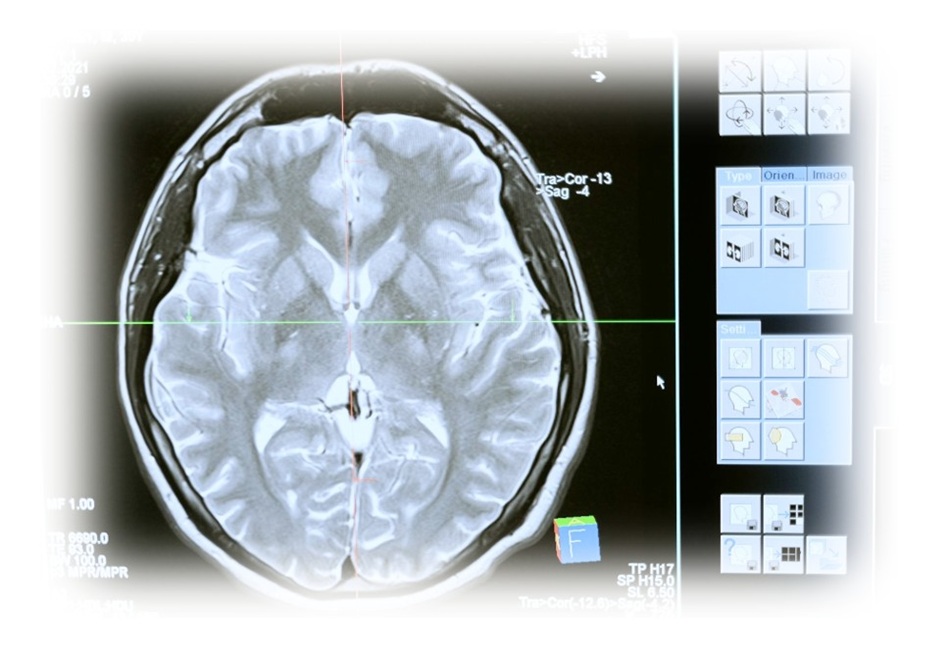
So, what about mental health and the overall impact of exercise?
Well, firstly, questions go beyond being in the gym: like whether you’re facing barriers to fitness that are familial; environmental; financial or time-bound; personal in the form of motivation; injury or low self-esteem. The reasons may be as real as they are many with efforts to overcome, repeatedly thwarted. So, what can you do? Well, an ancient Chinese philosopher named Lao Tzu said:
‘A journey of a thousand miles must begin with a single step.’
It’s so true in every way, but with health and fitness it can feel impossible if we’ve never trained in measure and patience. Obviously, there are other reasons, too, and if for instance you’re physically unable to exercise properly due to low energy levels or a chronic illness or both: there are other ways to go. So, in channelling Lao Tzu, if there are two routes of a thousand miles to getting fit but one is more costly in whatever way you choose then surely, it makes sense to go with the other? It’s a variation on ‘Occam’s Razor’, the principle attributed to the 14th Century monk whose wisdom saw that with two competing solutions to a problem, the simplest might be the best answer.
So, if you can move your toes then wriggle them while watching television or eating or washing up or even as you fall asleep. If your legs are bent at 90° while sitting at a desk for work, gently bounce them up and down providing there’s no pre-existing condition or lower body injury. Even doing this for a short period of time is better than not moving, at all. The wider point is that rather than invite poor circulation as you lose fitness, through barriers to exercise: try something or anything to keep your body moving and the conversation going between your skeletal muscles and your brain and those BDNF proteins.
‘Exercise helps memory and thinking through both direct and indirect means. The benefits of exercise come directly from its ability to reduce insulin resistance, reduce inflammation, and stimulate the release of growth factors – chemicals in the brain that affect the health of brain cells, the growth of new blood vessels in the brain, and even the abundence and survival of new brain cells. Indirectly, exercise improves mood and sleep, and reduces stress and anxiety. Problems in these areas frequently cause or contribute to cognitive impairment.’
Heidi Godman, Executive Editor, Harvard Health Letter
The brain is truly a remarkable piece of equipment and the BDNF protein is a workhorse amongst many. It’s limited presence has been linked to various neurodevelopmental conditions including ADHD, OCD and PTSD while those diagnosed with Alzheimers have been found to carry lower levels, too.
‘We are all now connected by the internet, like neurons in a giant brain.’
Stephen Hawking
It seems we are, and so maybe if we had a giant-sized BDNF protein to help us grow and operate in the healthiest of ways: the hardware that is Planet Earth would find itself deteriorating less, in a variety of ways.
Copyright © 2024 | recoveryourwellbeing.com | All Rights Reserved
Images:
A Friendship Ride, by Mabel Amber, Pixabay – Main Image
Flowing Endorphins, by Nappy, Pexels
Brain Scan, by Mart Production, Pexels
References:
Arash Javanbakht, ‘The Exercise Pill: How Exercise Keeps Your Brain Healthy and Protects It Against Depression and Anxiety’, The Conversation, 25th February 2021, Paras 5–7, accessed 27th September 2024, https://theconversation.com/the-exercise-pill-how-exercise-keeps-your-brain-healthy-and-protects-it-against-depression-and-anxiety-155848
Rod K Dishman, et al, ‘Working Out Boosts Brain Health’, American Psychological Association, APA, 4th March 2024, Paras 5 & 6, accessed 27th September 2024, https://www.apa.org/topics/exercise-fitness/stress
Carly Smith, ‘The Impact of Exercise on Brain Health and Preservation’, Stanford Lifestyle Medicine, Stanford University, 29th November 2023, accessed 27th September 2024, https://longevity.stanford.edu/lifestyle/2023/11/29/the-impact-of-physical-exercise-on-brain-health-and-preservation/
Moberg, Madeleine E, et al, ‘Global, regional and National Mortality Due to Unintentional Carbon Monoxide Poisoning, 2000 – 2021: Results From The Global Burden of Disease Study 2021’, The Lancet Public Health, Volume 8, Issue 11, e839 – e849, https://www.thelancet.com/journals/lanpub/article/PIIS2468-2667%2823%2900185-8/fulltext
University of Bonn, ‘’Runners’ High Demonstrated: Brain Imaging Shows Release of Endorphins In Brain’, Science Daily, 6th March 2008, accessed 27th September 2024, https://www.sciencedaily.com/releases/2008/03/080303101110.htm
Philip Mitis (ed), ‘Oxford Handbook of Epicurus and Epicureanism’, Oxford Academic, Oxford University Press, 2024, accessed 27th September 2024, https://academic.oup.com/edited-volume/34518
Tim O’Keefe, Georgia State University, ‘Epicurus (341-271 B.C:E)’, Internet Encyclopedia of Philosophy, 2024, Para 38, accessed 27th September 2024, https://iep.utm.edu/epicur/
David J. Linden, ‘The Truth Behind ‘Runner’s High’ and Other Mental Benefits of Running’, John Hopkins Medicine, 2024, Paras 4 & 5, accessed 27th September 2024, https://www.hopkinsmedicine.org/health/wellness-and-prevention/the-truth-behind-runners-high-and-other-mental-benefits-of-running
Berridge, K.C, ‘The Debate Over Dopamine’s Role in Reward: The Case for Incentive Salience’, 2007, Psychopharmacology 191, 391-431, Introduction, accessed 27th September 2024, https://link.springer.com/article/10.1007/s00213-006-0578-x#citeas
Allan R. Wang, et al, ‘The Role of Dopamine in Reward-related Behaviour: Shining New Light on an Old Debate’, Journal of Neurophysiology, 24th July 2020, accessed 27th September 2024, https://journals.physiology.org/doi/full/10.1152/jn.00323.2020
Claudia López Lloreda, ‘Is Exercise Actually Good for the Brain?’, Science Magazine, American Association for the Advancement of Science, AAAS, 30th June 2023, accessed 27th September 2024, https://www.science.org/content/article/exercise-actually-good-brain
Claudia López Lloreda, ‘Is Exercise Actually Good for the Brain?’, Science Magazine, American Association for the Advancement of Science, AAAS, 30th June 2023, Para 19, accessed 27th September 2024, https://www.science.org/content/article/exercise-actually-good-brain
Claudia López Lloreda, ‘Is Exercise Actually Good for the Brain?’, Science Magazine, American Association for the Advancement of Science, AAAS, 30th June 2023, Para 20, accessed 27th September 2024, https://www.science.org/content/article/exercise-actually-good-brain
‘What Is BDNF?’, Active Brain & Body Inc, 4th January 2022, Youtube, accessed 27th September 2024, https://www.youtube.com/watch?v=APPsORURCTA
Samoon Ahmad, M.D, ‘The Link Between BDNF and Neuroplasticity’, Psychology Today, 10th January 2020, accessed 27th September 2024, https://www.psychologytoday.com/us/blog/balanced/202001/the-link-between-bdnf-and-neuroplasticity
Brattico, et al, ‘Putting Cells in Motion: Advantages of Endogenous Boosting of BDNF Production’, Cells, 2021, 10, No.1: 183, Figure 1, Para 26, accessed 27th September 2024, https://doi.org/10.3390/cells10010183
‘Reproduction, the genome and gene expression – Protein Synthesis’, BBC Bitesize, 2024, accessed 27th September 2024, https://www.bbc.co.uk/bitesize/guides/z3mbqhv/revision/6
Michael Rugnetta, ‘Neuroplasticity’, Britannica online, Fact-checked by The Editors of Encyclopedia Britannica, 29th August 2024, accessed 27th September 2024, https://www.britannica.com/science/neuroplasticity
Pedro Bekinschtein, et al, ‘BDNF and Memory Processing’, Neuropharmacology, Volume 76, Part C, 2014, Pages 677-683, ISSN 0028-3908, Abstract and Conclusion, accessed 27th September 2024, https://doi.org/10.1016/j.neuropharm.2013.04.024
Kowiański. P, et al, ‘A Key Factor With Multipotent Impact on Brain Signalling and Synaptic Plasticity’, 2018, Cell Mol Neurobiol 38, 579-593, accessed 27th September 2024, https://doi.org/10.1007/s10571/s10571-017-0510-4
Eckert A, et al, ‘The Link Between Sleep, Stress and BDNF’, European Psychiatry, 2017;41(S1):S282-S282, doi:10.1016/j.eurpsy.2017.02.132, Abstract, accessed 27th September 2024, https://www.cambridge.org/core/journals/european-psychiatry/article/link-between-sleep-stress-and-bdnf/50C4545EF511D93148DB7188D899252B#
Lao Tzu Quote, ‘A journey of a thousand miles…’, Brainy Quote, 2024, accessed 27th September 2024, https://www.brainyquote.com/quotes/lao_tzu_137141
Chris Simms, ‘Occam’s Razor’, New Scientist Magazine, 2024, accessed 27th September 2024, https://www.newscientist.com/definition/occams-razor/
University of Missouri-Columbia, ‘Toe-tapping to Better Health: Fidgeting Helps Prevent Arterial Dysfunction From Sitting’, ScienceDaily, 2016, accessed 27th September 2024, https://www.sciencedaily.com/releases/2016/08/160804141254.htm
Heidi Godman, ‘Regular Exercise Changes the Brain to Improve Memory, thinking Skills’, Harvard Health Letter, Harvard Health Publishing, The President and Fellows of Harvard College, 9th April 2014, Paras 4 & 5, accessed 27th September 2024, https://www.health.harvard.edu/blog/regular-exercise-changes-brain-improve-memory-thinking-skills-201404097110
Shih-Jem Tsai, ‘Role of Neurotrophic Factors in Attention Deficit Hyperactivity Disorder’, Cytokine & Growth Factor Reviews, 2017, Volume 34, Pages 35-41, ISSN 1359-6101, accessed 27th September 2024, https://doi.org/10.1016/j.cytogfr.2016.11.003
Lin-Shuai Hao, et al, ‘Brain-derived Neurotrophic Factor As A Biomarker For Obsessive-compulsive Disorder: A Meta-analysis’, Journal of Psychiatric Research, 2022, Volume 151, Pages 676-682, ISSN 0022-3956, accessed 27th September 2024, https://doi.org/10.1016/j.jpsychires.2022.05.026
Francesco Angelucci, et al, ‘BDNF Serum Levels in Subjects Developing or Not Post-traumatic Stress Disorder After Traumatic Exposure’, Brain and Cognition, 2024, Volume 84, Issue 1, Pages 118-122, ISSN 0278-2626, accessed 27th September 2024, https://doi.org/10.1016/j.bandc.2013.11.012
Heikki Tanila, ‘The Role of BDNF in Alzeimer’s Disease’, Neurobiology of Disease, 2017, Volume 97, Part B, Pages 114-118, ISSN 0969-9961, https://doi.org/10.1016/j.nbd.2016.05.008
Stephen Hawking Quote, ‘We are all now connected…’, Brainy Quote, 2024, accessed 27th September 2024, https://www.brainyquote.com/quotes/stephen_hawking_696272?src=t_brain

 recover your wellbeing