

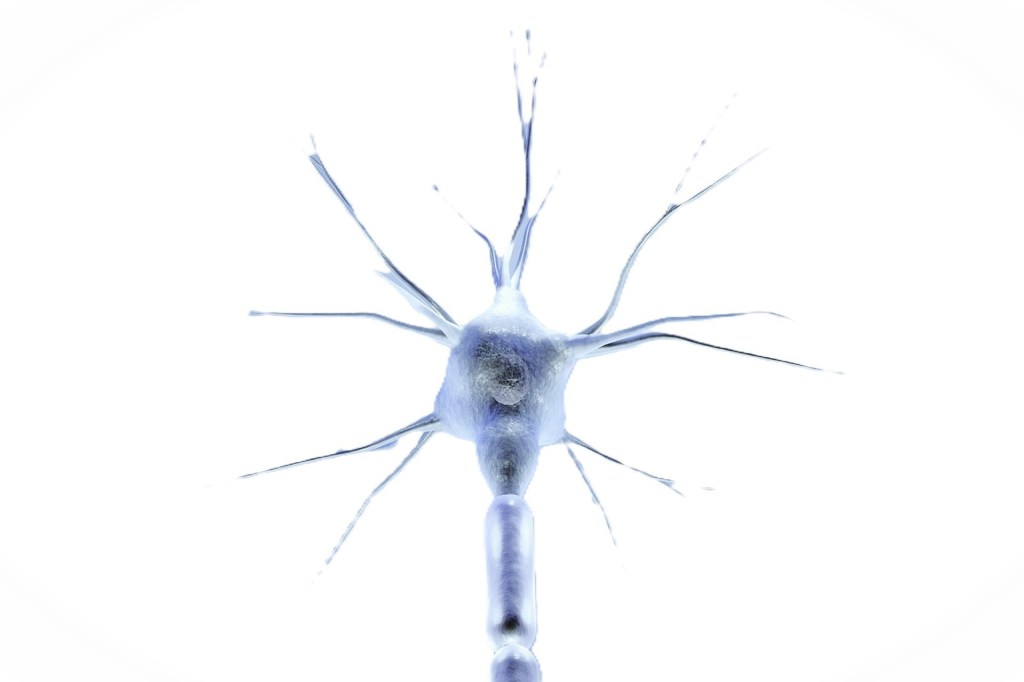
looking both ways in crossing the juncture of mental health, is a micro and macro affair
Unless you’ve won a financial lottery or a spiritual one in cheating death, it’s difficult to imagine a billion of anything. So, maybe serendipity offers a take as you bump into your neighbour in a far off land or your name was Frederick Smith as you gambled a Hail Mary, before making a fortune. Any which way, it’s a fairly long look where the idea of so many stretches beyond the reach of our minds. So, we’ll imagine the rest as we luck it through life while reacting to the one, emerging from nowhere.
Now, imagine taking a long walk: a distance so vast that starting is forgotten and events along the way have merged into one. Yet, everything comes naturally because it’s all you’ve known where a hundred thousand of this or a few million of that have made you an expert in things that are unseen. A particular thought here or a certain trait there, identifying you in a world that looks different inside, but then it’s okay if you put it to good use. Yet, your habits are still a cause for concern and the billionth and one step in dysfunctional terms as the signalling strength of your mind raises doubts, in the quality and rate of its firing.
So, how often do you think about the cells in your mind and in a truly biological way?
Can you imagine a chemical messenger or the electrical charges moving around? It’s not a natural thing to do, of course, but it’s a way of looking at our lives and from a reductive point-of-view, in explaining who we are. Take trying to change a habit that’s been present, for a long time. You’re a billion steps down the line and just thinking about a reversal is enough to blow your mind. No; there’s nothing new to see here but our struggles with change bring us back to the same point, time and again. Why, can’t I move things? Why, can’t I think positively? Why, can’t I just behave differently? Well, it turns out you can and for a number of reasons.
‘There is no health without mental health; mental health is too important to be left to the professionals alone, and mental health is everyone’s business.’
Vikram Patel, Professor and Chair of the Department of Global Health and Social Medicine,
Harvard Medical School
The biology of mental health is as complex as it sounds and neuroplasticity is no fad where suggestions and nuance pass, for the facts. Instead, it’s the real deal where our capacity for change sits in our hands while at the same time challenging what it means to be causally determined or free-willed. It’s an age-old back and forth with the likes of Laplace, Locke and Leibniz preferring the former and Aristotle, Epicurus and Popper, the latter. The so-called ‘hard’ determinists see no other option while ‘soft’ determinists like Hume, known as compatibilists, too, align with free will albeit in a causally-defined universe. Meanwhile, the idea of thought before action is another long-running debate in the history of philosophy making us think harder about ‘mental causation’ and the direction of travel.

So, when it comes to neuroplasticity, time reflects technological leaps from our old assumptions to a synaptic cleft as cause in the mind and effect, beyond it. Again, it’s reductionism but with mental health at different scales and our view still out of reach. It’s always about perspective, though, as we go about our business with the conversations we’re having and the choices we’re making. Equally, lighting a cigarette or downing a percentage has bearing on the cells working hard in your body and working is the word that comes to mind, when you see them moving so industriously.
In the Netflix documentary, ‘Human: The World Within’, Dr Alok Patel discusses the 37-trillion machines or cells and the fuel required to power them.
‘And every single one of those cells contains an engine that runs on oxygen. Think of it like a fire that’s always burning. Oxygen is the wood or coal and to keep the fire stoked all we have to do is breathe in. But getting a supply of oxygen is actually the easy part. Once it’s inside the body, all that fuel has to somehow find it’s way into those 37-trillion engines – and that requires a system that never rests.’
Dr Alok Patel, ‘Human: The World Within’
It’s remarkable and for some, theological as the body’s mechanisms demand a blueprint or at least confirmation of some kind of process. An answer to the seemingly impossible idea that ingenuity sprang from nowhere but then as with everything else, it’s often a matter of viewpoint. So, what if, for example, our DNA had given us three arms, instead of two? It’s a question that’s been asked before and from that position it would have been easy to state biological perfection, as the idea of two arms seemed strange. In other words, the range of possible solutions to the utility of our appearance offered equal amounts of perfection. Having said so, it seems the laws of physics and gravity in particular influenced our apparatus to maintain balance; so, three arms may have evolved under different physical laws, much like Richard Dawkins’ fictional notion of The White Cloud.
In 1976, the evolutionary biologist published a ground-breaking book called ‘The Selfish Gene’ and in it proposed that DNA replication is the albeit unconscious driver in our survival at the individual level and consequently as a species, too. It lines up with the economic principle of Rational Choice Theory which sees our decision-making as logically consistent, in so far as it benefits self-interest. The reaction to it was widespread as people from all walks of life, took him to task. For starters, the belief that our presence on Earth amounted to little more than spectatorship on inner workings stung and at the front of that queue, was the clergy.
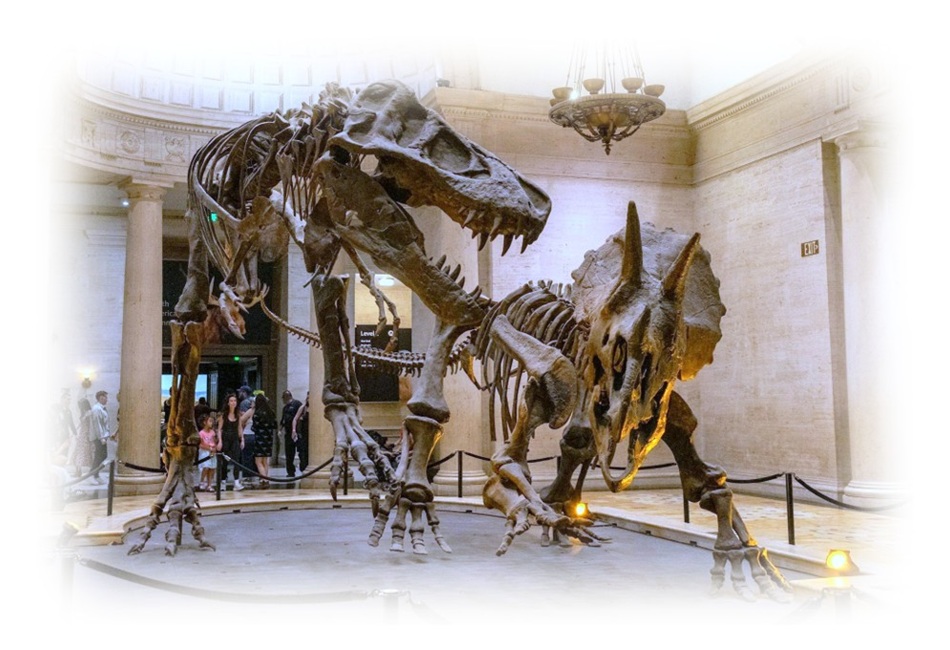
A decade later, in 1986, and in case they were all minimally annoyed, he published a second book called ‘The Blind Watchmaker’ as he set out to challenge the notion of a divine creator. In doing so, he shared a thought experiment underscoring the idea of natural selection and whatever came before, and his launchpad was a familiar phrase. If you give a monkey (or a chimpanzee) enough time with a typewriter, eventually the complete works of Shakespeare will emerge. An ever dubious claim, certainty of failure was confirmed recently when mathematicians calculated that the remaining time of the universe isn’t enough for Simian Shakespeare, to make a mark. In chapter 3 of his book, Richard Dawkins, said:
‘Although the monkey/Shakespeare model is useful for explaining the distinction between single-step selection and cumulative selection, it is misleading in important ways. One of these is that, in each generation of selective ‘breeding’, the mutant ‘progeny’ phrases were judged according to the criterion of resemblance to a distant ideal target, the phrase: Methinks it is like a weasel. Life isn’t like that. Evolution has no long-term goal. There is no long-distant target, no final perfection to serve as a criterion for selection, although human vanity cherishes the absurd notion that our species is the final goal of evolution.’
In other words, it’s a matter of perspective again because if two-armed human beings were on some sort of blueprint as an evolutionary target, like a string of characters typed out by a monkey or a chimpanzee on its way to a preconceived sentence: it would be easy to gaze astonishingly at the result. Putting it differently, we need oxygen to breathe and incredibly or thanks to a god, there happens to be an abundance of it: or conversely, oxygen is present and cellular organisms evolved to use what was there.
So, over the relatively long period of time that we’ve been on Earth, our behaviours and habits formed in line with local conditions and that phrase ‘local conditions’ is important in the study of evolutionary psychology, EP. This child of psychology and evolutionary biology helps to explain some of the differences, between species on Earth. Contrasts that are products of adaptation or natural selection in specific environments before spreading across generations to form the process of evolution. Underscoring this is the idea that a foremost strategy for survival is unlikely in most species on the planet and for the simple reason that what works in one environment, might not replicate in another.
In fact, the central idea in evolutionary psychology suggests that beneficial cognitive and behavioural traits are passed on due to the advantages conferred while non-beneficial features die out, due to ineffectiveness and vulnerability. So, an example of the former would be opposable thumbs and of the latter, an inability to sprint bipedally in the presence of a predator. Meanwhile, in modern humans, parts of the body no longer carrying any meaningful function are called vestigial and they’re accompanied by the usual intellectual back and forth. In another example, a trait might have been ‘too costly to maintain’ where for instance, it placed itself in direct competition with an equally valid trait offering slightly more advantage, in survival or reproduction.
As is often the case, a scientific theory brings censure with it and there are many criticisms of evolutionary psychology, ranging from claims of reductionism and non-falsifiablity to political and religious objections. Still, widespread consensus sees value in its approach, meaning the early pioneering work of Darwin and Dawkins, David Buss, Leda Cosmides, John Tooby, Martin Daly and Margo Wilson continues to inform a variety of topics in everyday life.
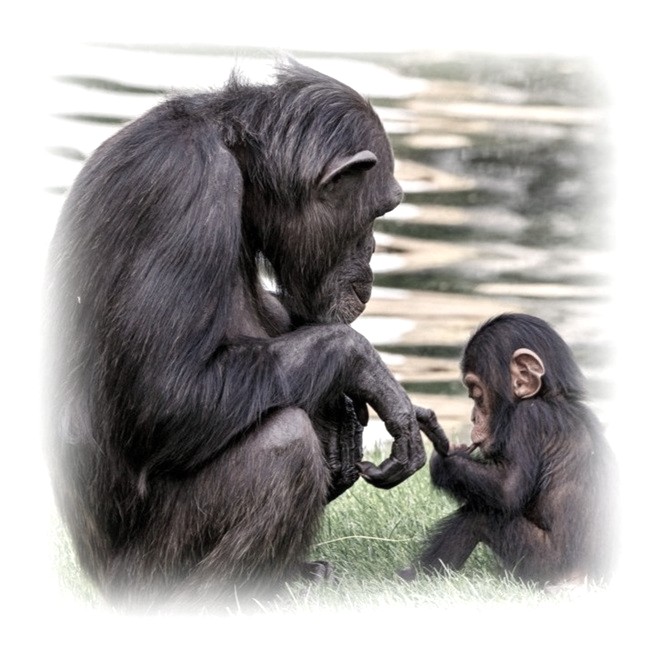
On mental health, different views believe that certain disorders are on the edges of a bell curve regarding population numbers which may be the case, however, the sheer quantity of people living with things like anxiety and depression seems statistically relevant. From the same angle in an article published in Evolution, Medicine and Public Health, an interesting idea emerges:
‘At the other end of the adaptationism spectrum, some evolutionary psychologists have postulated that common mental ilnesses are useful. By this view, depression is not a disorder at all, but rather an adaptation for bargaining, conflict avoidance, problem-solving, disease avoidance or other purposes.’
It’s intriguing to say the least, but it raises questions in that depression contains elements that are hard to square with the word ‘useful’. For instance, a loss of interest in almost everything would leave an early dweller exposed to danger, as attention towards personal security decreased. Also, the potential for group hostility towards a sufferer increases because their usefulness for work and community security, reduces at the same time. Obviously, in those days, an absence of knowledge and maybe empathy, too, presented a major problem which in turn, reflects some of the contemporary complaints.
You see, if in today’s world of hyper-weaponised-wording, those afflicted with depression are seen to be coercing bargaining and avoidance: the repercussions could be disastrous. So, where progress has been made over decades in reframing stigma around poor mental health, suddenly the torches and pitchforks are bearing down on a chemical imbalance cloaked with a target. It’s a conflict where on the one hand, the simplicity of a theory that puts mental illness into a framework is without doubt, beautiful. On the other, it’s fraught with danger as the real issue of an ancient mind in modern times plays out, yet again.
‘Regrettably, these scientific advances have a dark side. As a recent review shows, people who hold biogenetic (biological and genetic) explanations of mental health disorders tend to have some negative perceptions of those who experience them. They see these people as relatively dangerous, unpredictable and unlikely to recover, and seek greater distance from them. The consequences of these perceptions extend beyond stigma; they also have troubling implications for treatment.’
Nick Haslam, Professor of Psychology, The University of Melbourne
As true as this is and depending on your point-of-view, evolutionary psychology offers a great deal when it comes to mate selection, reproduction and parenting and specifically, investment. The time, energy and resources spent on finding someone to reproduce with; going through the intensities of pregnancy that naturally differ for men and women and the long haul of raising offspring, is a basic instinct for most people. Yet, none of it’s possible in a healthy way, without investments in your mental health. In fact, there may or may not be evolutionary reasons for the state of your thinking but the fact remains that links between the environment, synaptic firing and your behaviour is irrefutable with today’s knowledge.
‘It’s too soon to say whether we’ll someday have a blood test for schizophrenia or a brain scanning technique that identifies depression without any doubt. But scientists and patients agree: The more we understand about our brain and behaviour, the better. “We have a good beginning of understanding of the brain,” says [Professor Eric] Kandel, “but boy, have we got a long way to go.”
Kirsten Weir, The Roots of Mental Illness, American Psychological Association
So, the real question is always the same. What are you going to do about your mental health with what you know, right now?
Copyright © 2024 | recoveryourwellbeing.com | All Rights Reserved
Images:
Sparking Neuron, by Iffany, Pixabay – Main Image
Judge, by Ekaterina Bolovtsova, Pexels
Natural History Museum, by Allan Ramirez, Pexels
Chimpanzee Bonding, by Guerrero De La Luz, Pexels
References:
Juan Francisco Alonso, ‘Fred Smith, The Businessman Who Saved FedEx From Bankruptcy By Betting Everything He Had on Cards in Las Vegas’, BBC World News, 24th June 2024, accessed 2nd December 2024, https://www.bbc.com/mundo/articles/cjrrk8ngv8jo
University of Zurich, ‘Size of Connections BetweenNerve Cells Determines Their Signalling Strength’, ScienceDaily, 21st January 2021, accessd 2nd December 2024, https://www.sciencedaily.com/releases/2021/01/210121131729.htm
‘How I rewired My Brain In Six Weeks’, BBC News, 1st October 2023, Youtube, accessed 2nd December 2024, https://www.youtube.com/watch?v=pi9Xvh-Dva4&t=188s
Kormas, P, et al, ‘Implications of Neuroplasticity to the Philosophical Debate of Free Will and Determinism’, In: Vlamos, et al, (eds) Handbook of Computational Neurodegeneration, Springer, Cham, 2022, Abstract, accessed 2nd December 2024, https://link.springer.com/referenceworkentry/10.1007/978-3-319-75479-6_21-1#citeas
Editors of Encyclopaedia Britannica, ‘Determinism’, 15th November 2024, accessed 2nd December 2024, https://www.britannica.com/topic/determinism
Editors of Encyclopaedia Britannica, ‘Free Will’, Britannica Online, 15th November 2024, accessed 2nd December 2024, https://www.britannica.com/topic/determinism
Dr Craig Ross, ‘Compatibilism’, Philosophy Now, Personal Identity and Time, 2007, accessed 2nd December 2024, https://philosophynow.org/issues/62/Compatibilism
David Robb, et al, ‘Mental Causation’, Stanford Encyclopedia of Philosophy’, 2nd February 2023, accessed 2nd December 2024, https://plato.stanford.edu/entries/mental-causation/
‘Cells of the Nervous System, Neurotransmitters at Synapses’, BBC Bitesize, 2024, accessed 4th December 2024, https://www.bbc.co.uk/bitesize/guides/zrgyt39/revision/2
Editors of Encyclopaedia Britannica, ‘Reductionism’, Britannica Online, 2024, accessed 4th December 2023, https://www.britannica.com/topic/reductionism
Ingo Brigandt and Alan Love, ‘Reductionism in Biology’, 10th April 2023, accessed 4th December 2024, https://plato.stanford.edu/entries/reduction-biology/
‘Migrating Neuronal Cells’, ASTARmicroscopy, 2nd November 2012, Youtube, accessed 8th December 2024, https://www.youtube.com/watch?v=SczOfOXY17U
‘Human: The World Within’, Stephen David Entertainment, et al, for PBS, 5th May 2021, Netflix, 3m 2s, accessed 5th December 2024, https://www.netflix.com/es-en/title/81139212
‘Human: The World Within’, Stephen David Entertainment, et al, for PBS, 5th May 2021, IMDb, accessed 5th December 2024, https://www.imdb.com/title/tt14574154/
‘Richard Dawkins’, at richarddawkins.com, 2024, accessed 5th December 2024, https://richarddawkins.com/
Richard Dawkins, ‘The Selfish Gene’ (Oxford, Oxford Publishers, 2016) Anniversary Edition, https://www.amazon.co.uk/Selfish-Gene-Anniversary-Landmark-Science/dp/0198788606/
Akhilesh Ganti, ‘Rational Choice Theory: What It Is in Economics, With Examples’, Investopedia, Reviewed by Somer Anderson, Fact-checked by David Rubin, 29th June 2024, accessed 5th December 2024, https://www.investopedia.com/terms/r/rational-choice-theory.asp
Tim Radford, ‘The Selfish Gene by Richard Dawkins – Book Review’, The Guardian newspaper, 31st August 2012, Para 8, accessed 5th December 2024, https://www.theguardian.com/science/2012/aug/31/the-selfish-gene-richard-dawkins-review
Richard Dawkins, ‘The Blind Watchmaker’ (London, Penguin Publishers, 2006) 1st Edition, https://www.amazon.co.uk/Blind-Watchmaker-Cover-image-differ/dp/0141026162/
Andy Gregory, ‘Mathematicians Have Spoken: Monkeys Will Never Be Able To Write Shakespeare’, The Independent newspaper, 5th November 2024, accessed 5th December 2024, https://www.independent.co.uk/news/science/monkeys-shakespeare-typewriter-math-study-b2641600.html
Richard Dawkins Quote, ‘Although the monkey/Shakespeare model…’, The Blind Watchmaker, Chapter 3, (London, Penguin Publishers, 2006) 1st Edition, accessed 6th December 2024, https://www.amazon.co.uk/Blind-Watchmaker-Cover-image-differ/dp/0141026162/
Glass, D.H, ‘Parameter Dependence in Cumulative Selection’, In: Corchado, et al, (eds) Intelligent Data Engineering and Automated Learning – IDEAL 2014. Lecture Notes in Computer Science, vol 8669. Springer, Cham, accessed 7th December 2024, https://doi.org/10.1007/978-3-319-10840-7_26
‘What is Evolutionary Psychology?’ PHILO-notes, 6th September 2024, Youtube, accessed 8th December 2024, https://www.youtube.com/watch?v=reJAR9f1UUc
‘How Does Natural Selection Work?’ American Museum of Natural History, 2024, accessed 8th December 2024, https://www.amnh.org/exhibitions/darwin/evolution-today/natural-selection-vista
Sara Chandros Hull, PhD, ‘Evolution’, National Human Genome Research Institute, 8th December 2024, accessed 8th December 2024, https://www.genome.gov/genetics-glossary/Evolution
Zachary Hohman and Bruce Ellis, ‘Evolutionary Psychology’, Oxford Bibliographies, 29th November 2011, doi: 10.1093/OBO/9780199828340-0025, accessed 8th December 2024, https://www.oxfordbibliographies.com/display/document/obo-9780199828340/obo-9780199828340-0025.xml
Kara Rogers, ‘7 Vestigial Features of the Human Body’, Fact checked by the Editors of Encyclopdaedia Britannca, 2024, accessed 8th December 2024, https://www.britannica.com/list/7-vestigial-features-of-the-human-body
Erin L McCullough, et al, ‘Cost of an Elaborate Trait: A Trade-off Between Attracting Females and Maintaining a Clean Ornament’, Behavioural Ecology, Volume 31, Issue 5, September/October 2020, Pages 1218-1223, accessed 8th December 2024, https://academic.oup.com/beheco/article/31/5/1218/5880214
Dr Richard J. Siegart, ‘Evolutionary Psychology: Origins and Criticisms’, Australian Psychologist, Australian Psychological Society, 2nd February 2011, Abstract, accessed 8th December 2024, https://aps.onlinelibrary.wiley.com/doi/abs/10.1080/00050060210001706636
Gannon, Linda, ‘A Critique of Evolutionary Psychology’, Psychology, Evolution & Gender, 4 (2): 173-218, doi: 10.1080/1461666031000063665, Abstract, accessed 8th December 2024, https://www.tandfonline.com/doi/pdf/10.1080/1461666031000063665
Jonason, P.K and Schmitt, D.P, ‘Quantifying Common Criticisms of Evolutionary Psychology’, Evolutionary Psychological Science 2, 177-188 (2016), Abstract, accessed 8th December 2024, https://link.springer.com/article/10.1007/s40806-016-0050-z#citeas
Glenn Geher, PhD, ‘A Brief History of Evolutionary Psychology’, Psychology Today, Reviewed by Tyler Woods, 14th November 2023, accessed 8th December 2024, https://www.psychologytoday.com/intl/blog/darwins-subterranean-world/202311/a-brief-history-of-evolutionary-psychology
Carl T. Bergstrom and Frazier Meacham Quote – ‘Depresion and Anxiety: Maladaptive Byproducts of Adaptive Mechanisms’, Evolution, Medicine and Public Health, Volume 2016, Issue 1, January 2016, Pages 214-218, accessed 8th December 2024, https://academic.oup.com/emph/article/2016/1/214/2802659
‘Major Depression’, John Hopkins Medicine, The John Hopkins University, 2024, accessed 8th December 2024, https://www.hopkinsmedicine.org/health/conditions-and-diseases/major-depression
Nick Haslam, ‘Blame It On Biology: How Explanations of Mental Illness Influence Treatment’, The Conversation, 8th October 2015, Para 3, accessed 8th December 2024, https://theconversation.com/blame-it-on-biology-how-explanations-of-mental-illness-influence-treatment-48578
Pazhoohi, F, ‘Parental Investment Theory’, In: Shackleford TK, ed. The Cambridge Handbook of Evolutionary Perspectives on Sexual Psychology, Cambridge Handbooks in Psychology, Cambridge University Press; 2022:137-159, accessed 8th December 2024, https://www.cambridge.org/core/books/abs/cambridge-handbook-of-evolutionary-perspectives-on-sexual-psychology/parental-investment-theory/3FF01CF8AF3B165BF1F09B4A25246F2F
Kirsten Weir, ‘The Roots of Mental Illness’, American Psychological Association, June 2012, Vol 43, No. 6, Print Version: page 30, accessed 8th December 2024, https://www.apa.org/monitor/2012/06/roots

 recover your wellbeing