


the firework display in your mind can shower you with change, if that’s what you want
When it comes to evolution and mental health, a question appears over: what is the purpose of a psychological imbalance?
If you’re dealing with one, it’s not hard to settle on feelings of torment as life takes you this way or that but on zooming out to a macroscopic edge, the picture becomes a little clearer. Not much, perhaps, but comfort sits in a universal suffering and we know this cognitively some of the time: yet, more questions follow like why are we so quick to forget this? What is it that traps us inside while along with others, we keep asking why? In the U.S, the Society of Clinical Psychology is a division of the American Psychological Association and in an article on their website, they ask a series of important questions:
‘Would you feel better or worse, after being given a biological explanation for your disorder? As a patient and a consumer, do you want to be informed about the most recent science, about what is happening in your brain? Would learning this information change your beliefs about what has happened to you and why? Would it speed your recovery, or slow it down? Would it help prevent future episodes, or might it increase your vulnerability to relapse and recurrence?’
These are superb questions where a lack of knowledge may be a bigger problem than we realise. Why? Because information changes your relationship to any problem while offering greater control of the matter and some targeted motivation, too.
‘Information forces you into this uncomfortable position where you have to kind of say, okay, I don’t get it, but I know that the real world is more complicated than the way I’m thinking about it.’
Jeff Lichtman, Professor of Molecular and Cellular Biology, Harvard University

It’s true and the information lattice of the mind is a beautiful structure when seen in imagery and with junction points of data literally crossing as a focal point, in our studies. So, yes, we’ve all heard of neurons and what they do for us, but how much do we know about the fundamental workings? Well, as with virtually anything scientific, the complexity is mind-bending and there’s little to make people run faster than the prospect of looking at it. So, there’s no pretence in writing about a scratch on the surface of an immense subject, and the knowledge found and conveyed here is done so with the help of excellent online resources.


A neuron looks like a sperm cell but with an array of tentacles flowing off its bulbous head and tail. Then, connected to between 80-100 billion others in the brain, an incredible network forms with electrochemical impulses travelling and conversing constantly. So, whatever we think, do and say is governed by these tiny structures as they determine our breathing, moving and day-to-day living through electrical and chemical messaging. The former carries ions that are positively or negatively charged atoms flowing from the pre-synaptic point on one neuron to the post-synaptic point on another and via a gap called the synaptic cleft. It’s here that interesting things occur, too, because those chemical messages help to expedite our memories, habits and so much more including our ability to change.
‘The brain is like a muscle. When it is in use we feel very good. Understanding is joyous.’
Carl Sagan
This is neuroplasticity and in particular, it seems our experience of change comes down to a matter of seconds and milliseconds, to be precise. Just, 20 of them. How? Well, firstly, we need to look at two things: action potentials, AP, and depolarisation. In simple terms, an AP is like a courier with lightning quick feet as it prepares to explode off the mark. Before doing so, it takes a deep breath to change its energy potential before releasing it to carry a message along the axon from one end of a neuron to the other and in order to pass on electrochemical signals. On route, further ‘breaths’ are taken to reinforce the potential but in real terms and using sodium, potassium and calcium amongst others: the polarities (or electrical ‘push’ or ‘pull’ changes) within and between neurons switch to create energy allowing neurotransmitters, to move around smoothly. In fact, when we think of neurons ‘firing’, it’s the action potential we’re referring to.
Meanwhile, at the end of the axon and before the gap is an area called the pre-synaptic terminal which faces a post-synaptic terminal, on the other side. So, think of it as two airports on either side of a canyon, called the synaptic cleft: hence the terminal names.
In line with that and while trying to improve our understanding of the mind: something called ‘Spike-Timing-Dependent-Plasticity’ or STDP was first proposed in 1973, by a scientist called Martin M. Taylor. In a paper published in the South African Journal of Psychology, he wrote:
‘When an object moves across the visual field, it successively excites analytic cells of the same kind, one after the other, in sequence. According to the analysis of network growth, if such motion happens often, the earlier cell will come to have a faciliatory effect on the later since the earlier will fire as input to the later, shortly before the later fires of its own accord.’
This led to a great deal of research into cellular links around learning, and to date there’s a lot of discussion about evidence over mechanisms and timescales between synapses and behavioural learning. As ever, nothing is certain but it stands on the shoulders of Donald Hebb, the neuropsychologist who gave us Hebbian theory, or in short: ‘Cells that fire together, wire together.’ A concept placing so much strength in the hands of ordinary people.
So, with energy-rich neurotransmitters burning roughly 20% of your body’s daily blood cycle, STDP states that if a pre-synaptic terminal fires (to release) neurotransmitters in the 20-milliseconds prior to the post-synaptic terminal firing (to receive): an established connection called Long-term Potentiation or LTP is made. If, on the other hand, the post-synaptic terminal fires (to receive) first, and the pre-synaptic terminal fires (to release) in the 20-milliseconds after the post-synaptic terminal has fired, then a poor link develops as Long-term Depression (as in, reduced). In other words, it’s like trying to run through a door that someone’s opening and shutting and where if you start running in the 20-milliseconds before it opens, you get through. Run, in the 20-milliseconds after opening and you miss your chance. Well, the most natural question from here is: what decides the timing?
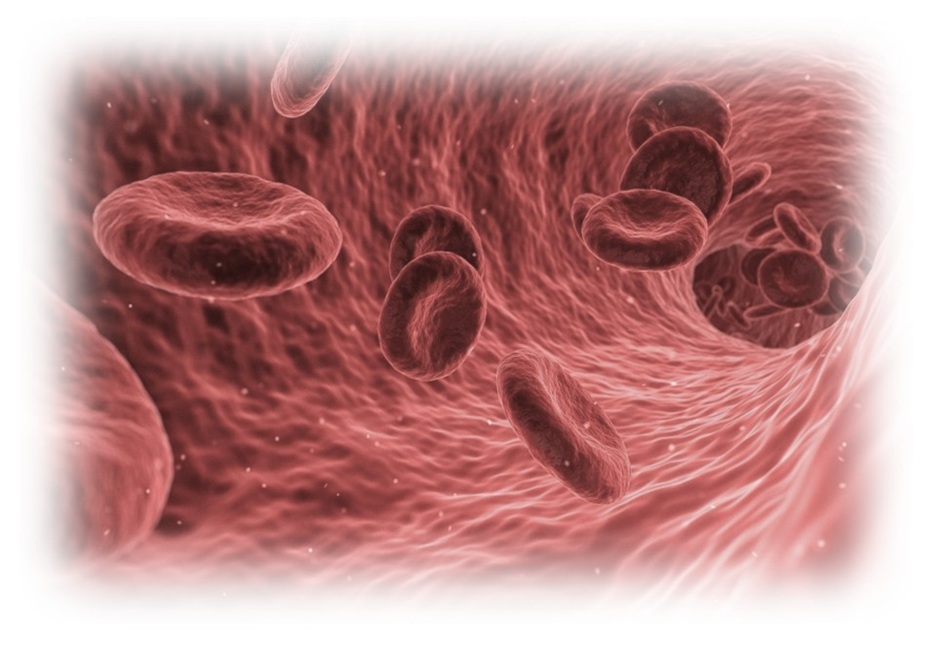
Glutamate, the neurotransmitter. As an excitatory rather than inhibitory messenger, it carries information from the brain’s neurons to cells in the rest of the body as it supports learning, immunity function, memory storage and emotional regulation amongst things. With respect to timing, it concerns glutamate receptors (or gateways) that channel potassium, sodium and magnesium that in turn release calcium if the pre-synaptic terminal fired first (to release), thus triggering STDP. However, the questions are endless because what determines the quality of glutamate?
Experience. Real world, experience.
‘This brief review has highlighted the widespread impact of glutamate throughout brain health. Glutamate is critical for maintenance of ideal energy levels, necessary for most CNS functions and neuroplasticity, which is critical for adaptation to changes in the environment. Rather than being delegated as a sidenote as in the past, glutamate is deserving of main focus in future neuroscience research and clinical studies. Additionally, efforts should be made to educate the lay public as to the importance of glutamate in everyday functioning and how to maintain healthy levels for increased resiliency in times of stress.’
Mia Michaela Pal, ‘Glutamate: The Master Neurotransmitter and it Implications in Chronic Stress and Mood Disorders’
So, while exercise increases glutamate levels and acute stress invites release, transmission and metabolism: chronic stress brings depletion. Real-world experience also applies to another neurochemical called Brain-derived Neurotrophic Factor or BDNF, as it, too, forms through exercise while contributing to memory formation and neuronal plasticity.
All of this speaks volumes in terms of what we as lay people see as the locus of control, because without basic knowledge of the most fundamentally important tool in our lives: where do we place our decision making? It doesn’t make sense, where suddenly knowing that the thing you’ve been using to undermine yourself is the same thing you can use, to stop it. Similarly, if on the back of synaptic firing, long-term potentiation plays a critical role in our learning, memory and crucially – habit formation: why, wouldn’t we try and understand that? Well, to begin with, it takes a change in perspective where again picturing the electrical activity in your mind isn’t easy. Of course, these days there are stunning images to help with that but relating the sparks to everything you do on a daily basis, takes work.
‘I have a neuroscience background – that’s what my doctorate is in – and I was trained to study hormones of attachment, so I definitely feel my parenting is informed by that.’
Mayim Bialik, American actor
The result, however, could be habit-changing because if, as a negative thought or self-reproach took hold, you were to see that spark in knowing you were strengthening your own weaknesses: what would you do? You’d stop, instantly, and only for it to return soon afterwards, no doubt, but therein lies a billion steps. Each time you saw the spark and did something about it, you’d take a ‘step’ towards the moment it first appeared. It’s a case of weakening bad habits and it’s a metaphor, naturally, and maybe, you wouldn’t need to walk so far, but the idea of taking control of your mind is always compelling at the very least. So, perhaps imagining synaptic images can remind you of an inner world: an exciting frontier, in need conquering.

One way to influence that journey and the neural patterns of your mind is through meditation. Once considered a backwater in the context of Western-based medicine, it has over time moved to a position of respectability and intervention. In particular, Mindfulness as described on the website of the UK’s National Health Service, NHS, is a leading form of practise worldwide and to the point of adoption in some schools as a strategy for mental and behavioural de-escalation. Similarly and specifically, as part of an evidence-based complimentary protocol, Mindfulness Based Stress Reduction, MBSR, tackles a reduction in stress hormones produced by the sympathetic nervous system. There are many variations on mindfulness, too, from Mindfulness-based Cognitive Therapy, MBCT, to focused, guided and mantra meditations: making the field as broad as it is deep.
Separately and interestingly, a long-term study by the University of Oxford found that over eight years and across a relative sample of 28,000 school students and 650 teachers, mindfulness hadn’t been effective but for certain reasons:
‘The findings from [the ] MYRIAD [ study] confirm the huge burden of mental health challenges that young people face, and the urgent need to find a way to help. They also show that the ‘idea’ of mindfulness doesn’t help, it’s the ‘practice’ that matters. If today’s young people are to be enthused enough to practice mindfulness, then updating training to suit different needs and giving them a say in the approach they prefer are the vital next steps.’
It seems that repetition is everything when it comes to changing behaviour that, in turn, depends on the signalling strength between neurons. These basic units of truth by-pass political and religious partisanship and anyone doubting the reality of that may be ignoring the long-established link, between a sympathetic nervous system in overdrive and adverse health and socioeconomic outcomes. So, when you meditate, things are happening behind your eyes and between your ears that need persistence across time. Change is taking place as the world itself, changes around you.
At the beginning of the article, a question was asked:
When it comes to our mental health, a query follows as to what is the fundamental purpose of a psychological imbalance? Well, a possible answer relates to an idea mentioned near the end of part one where depression was seen as being evolutionarily useful. In fact, Adrian Woolfson writing in nature magazine, had this to say:
‘Evolutionary psychologist, Randolph Nesse, offers insights that radically reframe psychiatric conditions. In his view, the roots of mental illnesses, such as anxiety and depression, lie in essential functions that evolved as building blocks of adaptive behavioural and cognitive function. Furthermore, like the legs of thoroughbred racehorses – selected for length, but tending towards weakness – some dysfunctional aspects of mental function might have originated with selection for unrelated traits, such as cognitive capacity. Intrinsic vulnerabilities in the human mind could be a trade-off for optimising unrelated features.’
That’s a stunning thought, on all levels. To think that so much suffering through incapacity and a loss of time, relationships and self-regard might exist on an evolutionary whim, is exciting and terrifying at the same time. Yet, life is multi-scaled where looking back and within offers a chance for insight as we target motivation. The only direction to make no sense is up and out towards the stars but imagine if those stars were the neural connections, in something else’s brain. It’s as unfathomable as the little sparks in our minds but no less intriguing as we question it forever.
Copyright © 2024 | recoveryourwellbeing.com | All Rights Reserved
Images:
Mountaineering, by The Digital Artist, Pixabay – Main Image
Broken Car, by Pexels-Pixabay
Blood Cells, by Qimono, Pixabay
Meditation, by Engin Akyurt,
References:
American Psychological Association, 2024, accessed 6th December 2024, https://www.apa.org/
Kate MacDuffie and Tim Strauman, ‘Do Beliefs About Biology Matter for Mental Health?’, Society of Clinical Psychology, American Psychological Association, 2024, accessed 6th December 2024, https://div12.org/do-beliefs-about-biology-matter-for-mental-health/
‘Driving Habits That Damage Your Car’, Royal Automoble Club, RAC, 18th January 2024, accessed 6th December 2024, https://www.rac.co.uk/drive/advice/driving-advice/driving-habits-that-damage-your-car/
Catherine Caruso, ‘A New Field of Neuroscience Aims to Map Connections in the Brain’, Harvard Medical School, Research, 19th January 2023, Para 1, accessed 17th September 2025, https://hms.harvard.edu/news/new-field-neuroscience-aims-map-connections-brain#:~:text=In%20the%20human%20brain%2C%20some,the%20human%20brain%20to%20fathom.
‘Beautiful 3-D Brain Scans Show Every Synapse’, National Geographic, 30th January 2014, Youtube, accessed 6th December 2024, https://www.youtube.com/watch?v=nvXuq9jRWKE
‘Brain Basics: The Life and Death of a Neuron’, National Institute of Neurological Disorders and Stroke, 2024, Para 1, accessed 6th December 2024, https://www.ninds.nih.gov/health-information/public-education/brain-basics/brain-basics-life-and-death-neuron#:~:text=In%20some%20parts%20of%20the,cord%2C%20and%20the%20entire%20body.
‘How A Synapse Works’, Harvard Online, Harvard University, 19th April 2017, Youtube, accessed 6th December 2024, https://www.youtube.com/watch?v=OvVl8rOEncE
‘GCSE Chemistry – Formation of Ions #13’ Cognito, 15th February 2019, Youtube, accessed 6th December 2024, https://www.youtube.com/watch?v=PCZtnbxtXqE
‘2-Minute Neuroscience: Synaptic Transmission’, Neuroscientifically Challenged, 22nd July 2014, Youtube, accessed 6th December 2024, https://www.youtube.com/watch?v=WhowH0kb7n0
‘Synaptic Plasticity’, Brains Explained, 17th February 2014, Youtube, accessed 6th December 2024, https://www.youtube.com/watch?v=tfifTUYuAYU
Carl Sagan Quote – ‘The brain is like a muscle…’, Brainy Quote, 2024, accessed 6th December 2024, https://www.brainyquote.com/quotes/carl_sagan_125868?src=t_brain
Editors of Encyclopaedia Britannica, ‘Action Potential’, 7th November 2024, accessed 7th December 2024, https://www.britannica.com/science/action-potential
Editors of Encyclopaedia Britannica, ‘Depolarisation’, 7th November 2024, accessed 7th December 2024, https://www.britannica.com/science/nervous-system/The-neuronal-membrane#ref606371
‘Axons: The Cable Transmissions of Neurons’, University of Queensland, 2024, accessed 8th December 2024, https://qbi.uq.edu.au/brain/brain-anatomy/axons-cable-transmission-neurons
Bzosko Z, et al, ‘Neuromodulation of Spike-Timing-Dependent Plasticity: Past, Present and Future’, Neuron, 21st August 2019; 103(4):563-581, doi: 10.1016/j.neuron.2019.05.041, PMID: 31437453, accessed 7th December 2024, https://pubmed.ncbi.nlm.nih.gov/31437453/
Martin Taylor, ‘The Problem of Stimulus Structure in the Behavioural Theory of Perception’, Researchgate, South African Journal of Psychology, 3:23-45, January 1973, Stimulus Structure, Page 42, accessed 7th December 2024, https://www.researchgate.net/publication/298214719_The_Problem_of_Stimulus_Structure_in_the_Behavioural_Theory_of_Perception
Andrade-Talavera, Y, et al, ‘Timing To Be Precise? An Overview of Spike-Timing-Dependent-Plasticity, Brain Rhythmicity and Glial Cells Interplay Within Neuronal Circuits’, Mol Psychiatry 28, 2177-2188 (2023), accessed 7th December 2024, https://www.nature.com/articles/s41380-023-02027-w#citeas
Dominique Debanne, et al, ‘Spike-Timing-Dependent-Plasticity and Memory’, Current Opinion in Neurobiology, Volume 80, 2023, 102707, ISSN 0959-4388, accessed 7th December 2024, https://www.sciencedirect.com/science/article/abs/pii/S0959438823000326
‘Donald O Hebb’, Bio, Canadian Medical Hall of Fame, 2024, accessed 7th December 2024, https://www.cdnmedhall.ca/laureates/donaldhebb
Dong Il Choi & Bong-Kiun Kaang, ‘Interrogating Structural Plasticity Among Synaptic Engrams’, Science Direct, Current Opinion in Neurobiology, 2022, accessed 7th December 2024, https://www.sciencedirect.com/topics/neuroscience/hebbian-theory#:~:text=In%201949%2C%20Donald%20Hebb%20proposed,activated%20together%20during%20memory%20recall.
Sheikh BN, et al, ‘Neural Metabolic Imbalance Induced by MOF Dysfunction Triggers Pericyte Activation and Breakdown of Vasculature’, Original Publication, Nature Cell Biology, 15th June 2020, doi: 10.1038/s41556-020-0526-8, accessed 7th December 2024, Max Planck Institute of Immunology and Epigenetics, https://www.mpg.de/14953239/0615-immu-110988-the-brain-and-its-blood-vessels
J. David Sweatt, ‘Chapter 7 – Long-Term Potentiation – A Candidate Cellular Mechanism for Information Storage in the Central Nervous System’, Editor(s): J. David Sweatt, Mechanisms of Memory (Second Edition), Academic Press, 2010, Pages 150-189, ISBN 9780123749512, accessed 7th December 2024, https://www.sciencedirect.com/science/article/abs/pii/B978012374951200007X
N. H. Woo and B. Lu, ‘BDNF in Synaptic Plasticity and Memory’, Editor(s): Larry R. Squire, Encyclopedia of Neuroscience, Academic Press, 2009, Pages 135-143, ISBN 9780080450469, accessed 7th December 2024, https://www.sciencedirect.com/topics/biochemistry-genetics-and-molecular-biology/long-term-depression#:~:text=Long%2Dterm%20depression%20(LTD),away%20from%20the%20synaptic%20junction.
Purves. D, et al, (eds) ‘Long-term Synaptic Depression’, Neuroscience, 2nd Edition, Sunderland (MA): Sinauer Associates, 2001, accessed 6th December 2024, https://www.ncbi.nlm.nih.gov/books/NBK10899/
Carolyn Farnsworth, ‘What To Know About Glutamate’, Medical News Today, Medically Reviewed by Sade Meeks, 29th June 2022, accessed 6th December 2024, https://www.medicalnewstoday.com/articles/glutamate
‘What Are Neurotransmitters?’ The University of Queensland, 2024, accessed 6th December 2024, https://qbi.uq.edu.au/brain/brain-functions/what-are-neurotransmitters
Mia Michaela Pal, ‘Glutamate: The Master Neurotransmitter and it Implications in Chronic Stress and Mood Disorders’, Front. Hum. Neurosci, 29th October 2021, Sec. Brain Health and Clinical Neuroscience, Volume 15 – 2021, accessed 7th December 2024, https://www.frontiersin.org/journals/human-neuroscience/articles/10.3389/fnhum.2021.722323/full
Popoli, M, et al, ‘The Stressed Synapse: The Impact of Stress and Glucocorticoids on Glutamate Transmission’, Nat Rev Neurosci 13, 22-37 (2012), Paras 4 & 5, accessed 8th December 2024, https://www.nature.com/articles/nrn3138#citeas
Samoon Ahmad, M.D, ‘The Link Between BDNF and Neuroplasticity’, Psychology Today, 10th January 2020, accessed 8th December 2024, https://www.psychologytoday.com/us/blog/balanced/202001/the-link-between-bdnf-and-neuroplasticity
Brattico, et al, ‘Putting Cells in Motion: Advantages of Endogenous Boosting of BDNF Production’, Cells, 2021, 10, No.1: 183, Figure 1, Para 26, accessed 27th September 2024, https://doi.org/10.3390/cells10010183
Pedro Bekinschtein, et al, ‘BDNF and Memory Processing’, Neuropharmacology, Volume 76, Part C, 2014, Pages 677-683, ISSN 0028-3908, Abstract and Conclusion, accessed 27th September 2024, https://doi.org/10.1016/j.neuropharm.2013.04.024
Michael Rugnetta, ‘Neuroplasticity’, Britannica online, Fact-checked by The Editors of Encyclopedia Britannica, 29th August 2024, accessed 27th September 2024, https://www.britannica.com/science/neuroplasticity
Abraham, W.C, et al, ‘Is Plasticity of Synapses The Mechanism of Long-Term Memory Storage?’, npj Sci, Learn 4, 9 (2019), accessed 7th December 2024, https://www.nature.com/articles/s41539-019-0048-y#citeas
Mayim Bialik Quote – ‘I have a neuroscience…’, Brainy Quote, 2024, accessed 7th December 2024, https://www.brainyquote.com/quotes/mayim_bialik_486739?src=t_neuroscience
‘Meditation’, Overview, Mayo Clinic, 2024, accessed 7th December 2024, https://www.mayoclinic.org/tests-procedures/meditation/about/pac-20385120
‘What is Mindfulness?’ National Health Service, NHS, 2024, accessed 7th December 2024, https://www.nhs.uk/every-mind-matters/mental-wellbeing-tips/what-is-mindfulness/
Anya Kamenetz and Meribah Knight, ‘Schools Are Embracing Mindfulness, But Practice Doesn’t Always Make Perfect’, National Public Radio, NPR, 27th February 2020, accessed 8th December 2024, https://www.npr.org/2020/02/27/804971750/schools-are-embracing-mindfulness-but-practice-doesnt-always-make-perfect
‘Mindfulness-based Stress Reduction (MBSR)’, Overview, Guy’s and St Thomas’ NHS Foundation Trust, 2024, accessed 7th December 2024, https://www.guysandstthomas.nhs.uk/health-information/mindfulness-based-stress-reduction-mbsr
‘Mindfulness-based Cognitive Therapy’ Society of Clinical Psychology, Empirical Review Status, 2022, accessed 8th December 2024, https://div12.org/treatment/mindfulness-based-cognitive-therapy/
Peter Morales-Brown, ‘What Is The Best Type of Meditation?, Medical News Today, Medically reviewed by Cheryl Crumpler, PhD, 24th May 2023, accessed 7th December 2024, https://www.medicalnewstoday.com/articles/320392
Editorial, ‘How Effective is School-based Mindfulness Training?’ University of Oxford, 13th July 2022, Para 9, accessed 8th December 2024, https://www.ox.ac.uk/news/2022-07-13-how-effective-school-based-mindfulness-training
Rachel Lit, ‘What Happens When You Meditate?’, Stanford Magazine, 13th March 2023, accessed 8th December 2024, https://stanfordmag.org/contents/what-happens-when-you-meditate
Alvin Powell, ‘When Science Meets Mindfulness’, The Harvard Gazette, 9th April 2018, accessed 8th December 2024, https://news.harvard.edu/gazette/story/2018/04/harvard-researchers-study-how-mindfulness-may-change-the-brain-in-depressed-patients/
Adrian Woolfson, ‘The Biological Basis of Mental Illness’, Nature Magazine, Books and Arts, 11th February 2019, Paras 1 & 2, accessed 7th December 2019, https://www.nature.com/articles/d41586-019-00521-2
‘Randolph Nesse’, Bio, Arizona State University, 2024, accessed 7th December 2024, https://search.asu.edu/profile/2288778

 recover your wellbeing