

pacing the way we grow old in life is a fundamental on every level
It’s often said that older generations are invisible to the rest of society, from workplace discrimination and healthcare inequality to social funding and overall representation. Of course, it makes some economic sense to prioritise investment at the potential and highly productive end of a spectrum, in education, training and employment. On the other hand, it’s important to recognise the contributions an older demographic makes from physical and mental activity, to shared life experiences. So, why do some people see the elderly, in such negative terms?
As human beings, we’re skilled in projecting our fears on to others; so, when it comes to an upper age limit, it’s possible that the glaring mortality around us triggers a terror disguised as apathy or for some people, annoyance. A fit of pique over the uncontrollable and especially humiliating as our powers and skills decline, to the point of pre-infancy and bowel care. How you deal with this depends on a lot, from your inner-make-up to external achievements both of which fuel the other while the love you hold for your grandparents, balances empathy, as well.
So, ageing seems like a frightening thing where it involves the great unknown and where at the same time, we know exactly what’s coming. In fact, until you get to an age where you can appreciate the shock or the reality of things taking longer with a sigh of frustration, it feels like an invention or a fiction of sorts. Naturally, those with means can spend their way through it in trying to delay the inevitable but in the end, to fade is just a part of life and another type of levelling. Still, for others, it seems less pressured as relationships flourish and activities surround them, while challenges are dealt with efficiently.

Meanwhile, the news reminds us of another famous face retiring into the stars as our measure of frailty, dementia or the pain of weak bones prompts us to set out a plan. Well, being astute in our youth we ate well and kept fit as it helped to put units of time in the bank but ignoring what’s best is a very human trait paying out, in line with the greys. So, in the end, testing your options alongside the pressure is the only way to get ahead and in October of last year, the World Health Organisation released the following facts:
- All countries face major challenges to ensure that their health and social systems are ready to make the most of this [ageing] demographic shift.
- In 2050, 80% of older people will be living in low- and middle-income countries.
- The pace of population ageing is much faster than in the past.
- In 2020, the number of people aged 60 years and older outnumbered children younger than 5 years.
- Between 2015 and 2050, the proportion of the world’s population over 60 years will nearly double from 12% to 22%.
These are interesting figures and unless you know a teenager, you’re not really ‘old’ by the time you’re sixty in a developed country, but this spike in numbers increases demand for tailored mental-health services, for the elderly. Nowhere is this felt more keenly perhaps than with loneliness, which can affect you at any age and for a number of reasons. So, Age UK, the charity, estimates that over 2-million people in the British Isles, aged 75 or over, are living alone. At the same time, over a million say that four weeks can pass before speaking to anyone, at all. This must be intimidating as the speed of the world changes while you yourself slow down with the existential worry of not keeping up or crossing a road, sitting like a shadow before you.
They feel like sizeable problems made worse with the gradual loss of independence many old people face as their acuity decreases, while at the same time and as with all loss, it’s a process of grief, too. Why, wouldn’t it be? Nobody wants to swap the fluidity of mind and body for the rigidities that follow unless you takes steps, to minimise the impact. Even so, it’s about more than being able to get up without a groan. At source, it’s an identity crisis which can be navigated successfully as you try and understand what’s happening but then ultimately, it’s about acceptance, too. We all know this, but it’s hard not to resist the attrition.
‘”We grew up on the cult of youth,” says [Terry] Apter, who is 46 and a social psychologist and fellow at Clare Hall, Cambridge. “We didn’t realise that older wasn’t an option.”’
Joan Kelly Bernard, The Los Angeles Times, on Terry Apter, Secret Paths: Women in the New Mid-Life
So, with people living longer, the growing impact on socio and health economics in particular, is set to rise. Spain, for instance, is a good example where rural areas are now heavily populated with the elderly following the migration to urban areas and cities, by a younger generation in search of work. Of course, that brings with it the greater challenge of providing care to a demographic remotely located and with related expenses.
No matter where you are, though, the costs of medical interventions are set by a number of things including a well-known problem, in geriatric medicine. The clustering of health issues comes as we grow and where hearing loss, for one, is a predictor of cognitive decline. This increases the amount of contact and spending by patients and practitioners on travel amongst things, as well as pharmaceutical costs that may or may not be subsidised to greater or lesser degrees. It’s a challenge for governments everywhere as a United Nations population projections report, underscores:
‘Between 1974 and 2024, the worldwide share of people aged 65 almost doubled – increasing from 5.5% to 10.3%. Between 2024 and 2074, this number will double again, increasing to 20.7%. During the same time, the number of persons aged 80 and above is projected to more than triple.’
Still, it seems we can help both the economic climate and ourselves, first and foremost, by taking care of our minds and bodies to the best of our abilities. That’s not news and with changes in stability, strength and coordination, we can delay the advancing cellular and molecular decay of our muscles, joints and bones by exercising regularly and eating healthily. The words are almost redundant in ubiquity and yet, we seem to need reminding on a regular basis, too, which is surprising with mortality an ever-present motivator.
So, there are so many different ways to age, meaning we can switch lanes at any time and particularly where motivation changes as we move through life. In fact, what was once an imperative built on survival, reputation and inevitably sex, yields to life staying just as comfortable as possible. Needless to say, all of those things can be in the mix well beyond middle age but your relationship to an ego has bearing on the outcome, as you decide on how to let go. It’s a way of accepting the illusion wrapped tightly because there’s no choice in the matter when all’s said and done, meaning your choices are limited if not running out.
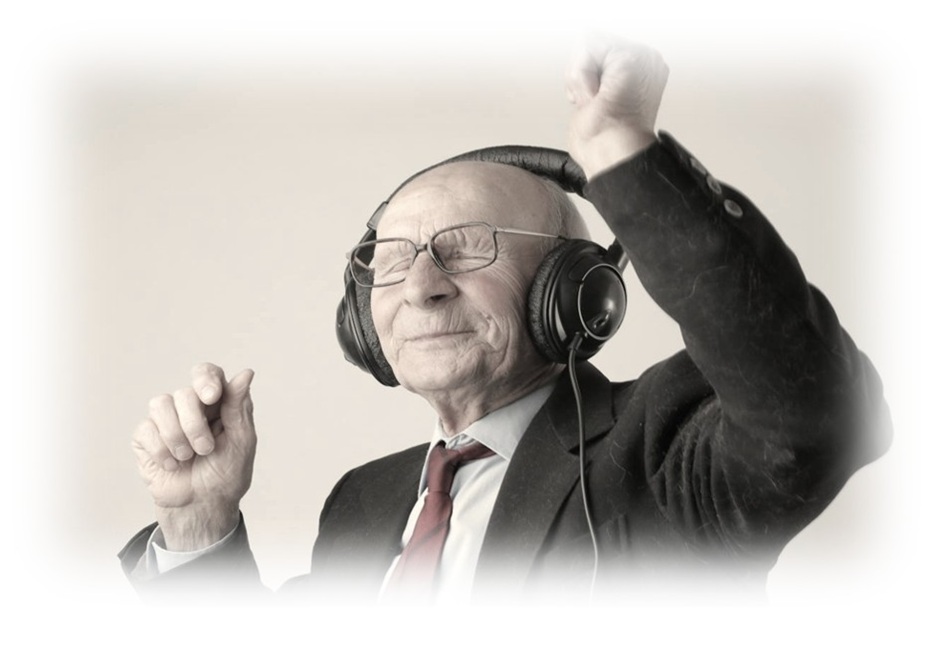
Naturally, it doesn’t have to be all doom and gloom. Ageing can be a celebration of life over loneliness and achievements of all kind. So, whether generations of offspring are gathering around or the simplicity of living is what makes you happy, the so-called golden years can be brighter. A long marriage, for example, brings its own weight with the fear of life and death still testing a bond, but if you’re lucky enough to spend decades in love then that’s the real lottery, gift-wrapped to you.
‘It is essential to a person’s wellbeing and dignity that they are seen as an individual with experiences, aspirations and opinions. Each person should feel valued and be offered opportunities and support to express themselves. They should be able to continue to develop a sense of who they are and what they want.’
National Institute for Health and Care Excellence, 2025
In the end, each day is a chance to adapt but as cataracts diminish a field of view and lifelong habits are entrenched, the reality is harder with the reflections deeper, leaving you with time to come to terms with you. There may be certain economic barriers to change, of course, but within boundaries that are unique to your life, something may well be viable. Often, the biggest hurdle is really psychological which is good news where change is always possible.
For a long time, younger generations have thrown around a popular acronym over the fear of missing out, FOMO. Well, it seems ageing has made the grade, too, with FOGO, the fear of getting older.
‘Forty is the old age of youth; fifty the youth of old age.’
Victor Hugo
Of course, there are other acronyms around the fear of dying out which applies to a host of things from celebrity relevance to planetary annihilation. Well, with the potential for the latter at some stage, FOGO will be as pointless as FODO; so, make the most of what you have now, no matter how old you are.
Copyright © 2025 | recoveryourwellbeing.com | All Rights Reserved
Images:
Ageing Dancers, by Rdne, Pexels – Main Image
Loneliness, by Cottonbro, Pexels
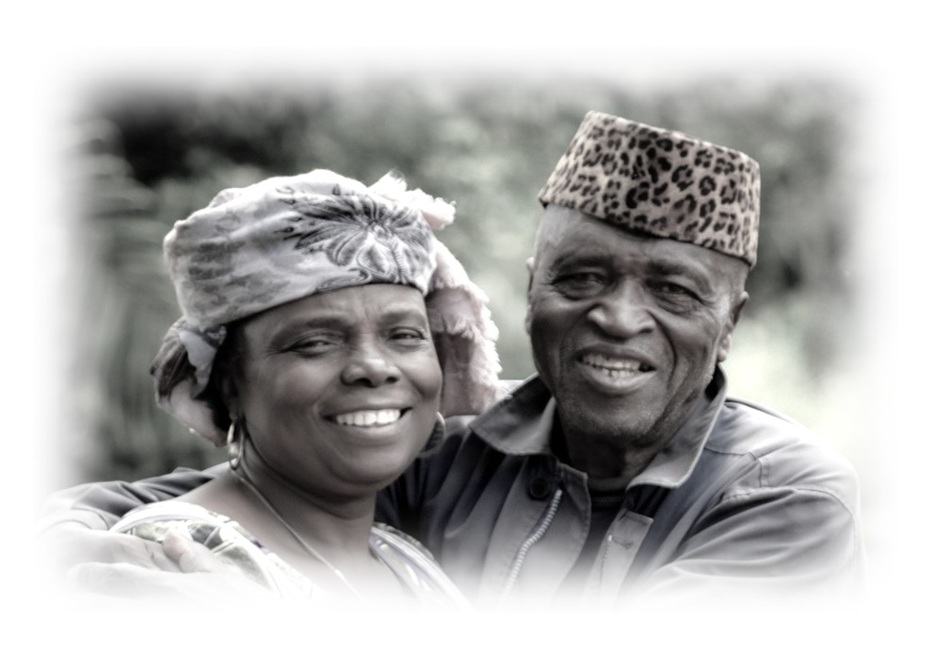
African Couple, by Bertin23, Pixabay
Joyful Ageing, by Olly, Pexels
References:
‘Understanding Systemic Ageism’, HelpAge International, 2025, Paras 9-22, accessed 24th February 2025, https://www.helpage.org/what-we-do/challenge-ageism/understanding-systemic-ageism/
Helen Coffey, ‘I Just Hit My ‘Scary’ Age – Here’s How To Conquer The Fear’, The Independent newspaper, 1st April 2024, accessed 24th February 2025, https://www.independent.co.uk/life-style/scary-age-old-fear-ageing-b2519554.html
Editorial, ‘Ageing and Health’, World Health Organisation, WHO, 1st October 2024, accessed 4th February 2025, https://www.who.int/news-room/fact-sheets/detail/ageing-and-health
‘Loneliness in Older People’, National Health Service, NHS, 2025, accessed 4th February 2024, https://www.nhs.uk/mental-health/feelings-symptoms-behaviours/feelings-and-symptoms/loneliness-in-older-people/
Joan Kelly Bernard, ‘Commitments: With Midlife, New Priorities and a Mourning of Lost Youth’, Los Angeles Times, 28 th August 1995, Para 6, accessed 4th February 2024, https://www.latimes.com/archives/la-xpm-1995-08-28-ls-39663-story.html
Camarero, Luis., and Del Pino, Julio A, ‘Impacts of Ageing on Scoioeconomic Sustainability in Spanish Rural Areas’, National University of Distance Education, Department of Theory, Methodology and Social Change, 2013, accessed 4th February 2024, https://www.uned.es/universidad/docentes/dam/jcr:351c02d5-3955-42d3-9184-55d3135a28a5/EURUFU2_Proceedings_v18.pdf
Joel R. Sneed and Susan Krauss Whitbourne, ‘Identity Processing and Self-consciousness in Middle and Later Adulthood’, The Journals of Gerontology: Series B, Volume 58, Issue 6, November 2003, pp313-319, accessed 4th February 2024, https://academic.oup.com/psychsocgerontology/article-abstract/58/6/P313/597427?redirectedFrom=fulltext&login=false
Roy L Soiza, ‘Editor’s View – Clustering of Multiple Problems in Individual Patients’, Age and Ageing, Vol 54, Issue 1, January 2025, afaf012, accessed 4th February 2024, https://academic.oup.com/ageing/article/54/1/afaf012/7979177?searchresult=1
Editorial, ‘Ageing’, United Nations Population Fund, 19th June 2024, accessed 4th February 2024, https://www.unfpa.org/ageing#readmore-expand
Andrew E. Budson, MD, ‘How to Stay Strong and Coordinated As You Age’, Harvard Health Publishing, Harvard Medical School, 2nd December 2021, accessed 4th February 2024, https://www.health.harvard.edu/blog/how-to-stay-strong-and-coordinated-as-you-age-202112022651
Tim Newman, ‘Exercise Prevents Cellular Aging By Boosting Mitochrondia’, Medical News Today, 8th March 2017, accessed 4th February 2024, https://www.medicalnewstoday.com/articles/316229
Quote – ‘It’s essential to a person’s wellbeing…’, ‘Promoting Positive Mental Wellbeing for Older People’, National Institute of Health and Care Excellence, NICE, Social Care Institute for Excellence, SCIE, Personal Identity, Para 1, 2020, accessed 4th February 2024, https://www.nice.org.uk/about/nice-communities/social-care/quick-guides/promoting-positive-mental-wellbeing-for-older-people
Meg Selig, ‘Do You Have “FOGO?” Taming The Fear of Getting Old’, Psychology Today, 29th June 2021, accessed 4th February 2024, https://www.psychologytoday.com/intl/blog/changepower/202106/do-you-have-fogo-taming-the-fear-of-getting-old
Victor Hugo – Quote, ‘Forty is the old age…’, Brainy Quote, 2025, accessed 4th February 2024, https://www.brainyquote.com/quotes/victor_hugo_103906?src=t_age

 recover your wellbeing