

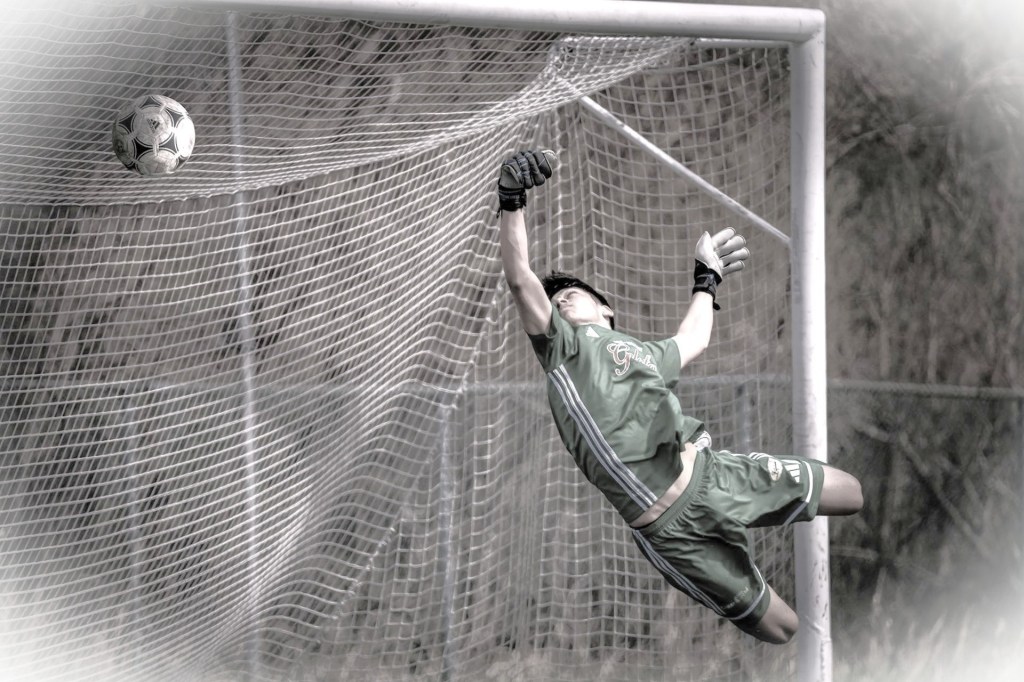
digging deeper to get out is an irony not lost on those in the moment.
As the seconds evaporate, players on both sides of a contest wrestle with competing narratives as well as the scoreline, as sport prepares to deliver another thrilling event. In a team game, shared responsibilities drive one another in particular ways while solo duels, draw a different kind of pressure. Regardless, it’s the ultimate face-off within and the changing dynamics around you as a measure of what you believe, think and do, writes an ending. Added to that is a legacy birthed by the final whistle, pouring disappointment and scorn or ecstasy and praise over two sets of exhausted people.
In English football, two games with different kinetics leap from the folklore of turning fortunes and the cauldron of a UEFA Champions League final, to repeat the seemingly impossible. In 1999, Manchester United scored twice in the allocated three minutes of injury time to sink a stunned Bayern Munich who’d led the game from the sixth minute, onwards. With the goals just 120-seconds apart, the first effectively dismantled Milan’s momentum while allowing United to capitalise on the collapse. Then, in 2005, Liverpool scored three times in six minutes during a second-half fightback following AC Milan’s first half domination and three-goal lead. With the Italians equally derailed, the ensuing extra time and penalty shoot-out saw Anfield’s heroes, lift the cup.

It’s an incredible thing throughout the spectrum of sport and as the final whistle or a winning point approaches, competitors know that long after the stadium empties, reconciling an old defeat in the good-natured mirth of a pizza advert is something they’d rather avoid. So, whether it’s the 2012 Ryder Cup dubbed the ‘Miracle at Medinah,’ or the astonishing rescue of The Ashes notably by Ian Botham and Bob Willis, in 1981, or the Minnesota Vikings overturning a 33-0 deficit to win a game near the end of the 2022 season, or the University of Notre Dame’s women’s basketball team reversing a 23-point drop, to beat their opponents by six points: we love these moments.
‘Champions keep playing until they get it right.’
Bille Jean King, former women’s world No.1 tennis player
It’s the representation, perhaps, of a bigger fight engaging us all on a daily basis and where life is the eternal competitor. It’s a David and Goliath narrative in which our paltry selves face off against a universe so massive, we can’t even process the dimensions of our rival. Of course, the fact that we’re also a part of and in contest with life makes the competition harder in sensing a kind of betrayal of the self. Yet, to win is to survive and play another day as we curse the very thing we’re sewn into, making it a love-hate relationship of epic proportions as reflected in our sporting passions. In this way, watching a tactical or ruthless strategy reverse a likely defeat is a panacea for our fears, as we all run from the dread of failure.
So, the sporting comeback is a story for the ages and arguably, one of the most intense arenas for this heroic effort is a tennis court. Like boxing but nothing like it, as it pits two rivals in a head-to-head battle where exchanging blows is the crux of the matter: it speaks to something primal. With the crowd nearly on top of boundaries hemming in contestants, too, the pressure to deliver with maximum focus seems unmatched in the sporting world. Naturally, every sport carries its own stress dynamic but there’s something about tennis making it the perfect game to analyse a comeback mentality and one of the critical factors may lie, in the scoring system. A format in which it’s possible to score more points than your opponent and still lose.
It’s uncommon but possible, because of the available points in a set: the loser of an overall match can still cover more points ground comparatively in a given set, despite the match winner taking the set. Equally, if the match loser takes a set in which the overall match winner scores just one game or perhaps none in that set, then the accumulative sum of points distributes a domination ratio (DR), in favour of the match loser. A good example sits in the tennis semi-final of the 2008 Beijing Olympics.
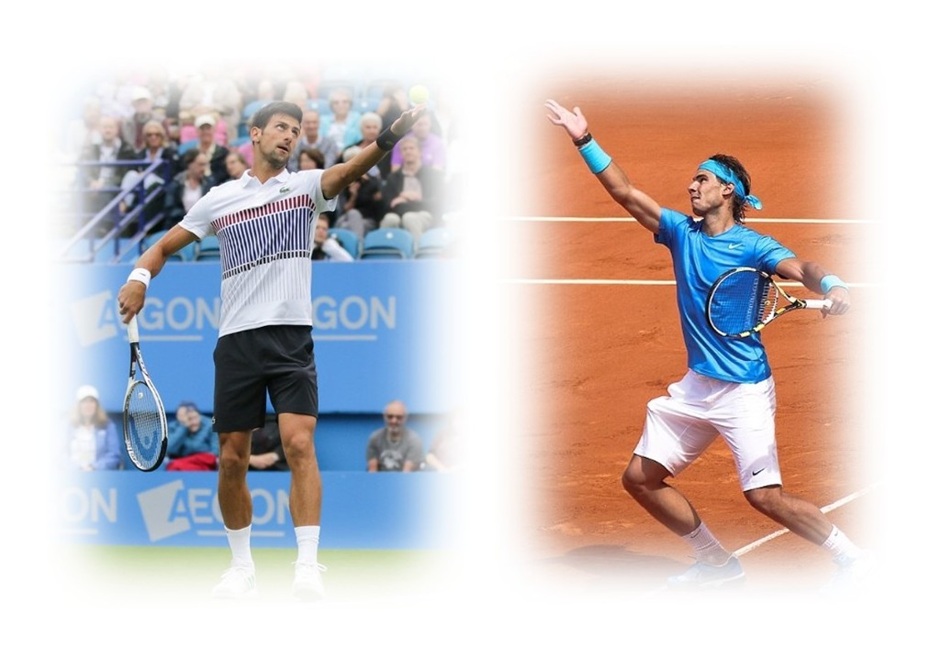
With the so-called ‘Big Three’ of Djokovic, Nadal and Federer trading points in games where the victor tallied less, this semi-final saw Nadal beat Djokovic 6-4, 1-6, 6-4. This meant that of a possible 108-points played in total, Nadal took 52 of them or 49%, while Djokovic claimed 56 or 51%. In a way, it’s similar to the possession statistics in football where a team wins despite controlling less of the play. As with football, too, it takes a first-rate mindset to get on with the job regardless of the scoreboard but what exactly is an elite, frame of mind?
‘One of the reasons you play at a club like Liverpool is because you have [an] elite mentality, and you have the mentality of a serial winner.’
Arne Slot, Head Coach, Liverpool football club
Well, it’s something of a cliché perhaps, but when Billy Ocean sang ‘When the going gets tough, the tough get going,’ he was alluding to the way certain people flick a switch when the tide turns against them. In fact, as the opposition overwhelms with wave after wave of attacks, these people raise a flag in defiance while marshalling some sort of response to the pressure. In these moments, athletes lean on a number of psychological mechanisms including something called being ‘in the clutch.’ It describes a sudden rise in performance under intense conditions and as we all know, it’s created some of the greatest spectacles in sport.
So, one of many studies looks into the ‘situational and subjective’ aspects of the ‘clutch,’ or the internal and external factors in a sporting scenario that collide, to produce one outcome or another. As ever, there are varying definitions but the overall consensus settles on the idea of rising to the occasion and this particular research cites four themes, in its results:
‘(1) the clutch involves situational and subjective factors, suggesting that the appraisal of the clutch is influenced by situational and subjective components; (2) the perception of the clutch comes and goes, suggesting that there may be multiple, fluctuating episodes of the clutch within an event; (3) pressure affects performance, and performance affects pressure, suggesting that the appraisal of pressure was perceived to impact performance, and that performance also influenced appraisal of pressure; (4) experience of anxiety during the clutch is varied, suggesting that the experience of anxiety is not inherent to clutch performance.’

It’s clear that athletes are performing multiple tasks simultaneously as they go about their work and those oscillating phases in a given clutch moment, represent testing of an elite mindset. So, when a critical goal or a point is conceded and the internal reaction is to feel ‘we’ve lost’ or ‘what’s the point?’ it veers away from that select mentality as the situational overwhelms the subjective, to the point of submission. It’s stating the obvious but as an important point. Why? Because every aspect of life from our daily routines to reacting under pressure involves a referential perspective, meaning what we do next depends largely on what we’ve done before, in similar circumstances.
So, it’s a transferable skill, and if we’ve capitulated before under stress as the clock runs down, it may be that our self-talk needs some attention. For that reason, research carried out on gymnasts looked at the relationship between self-talk and sporting performance, as well as the difference between ‘spontaneous organic’ and ‘strategic’ inner-dialogues. It’s an interesting area where by the time you step into the youth programme of a particular sport, spontaneous self-talk has already been moulded in the home that you’re raised in, which, in turn, sees a coach dismantling or building on it. Either way, it meets with a strategic training that when combined with talent, may produce wonders.
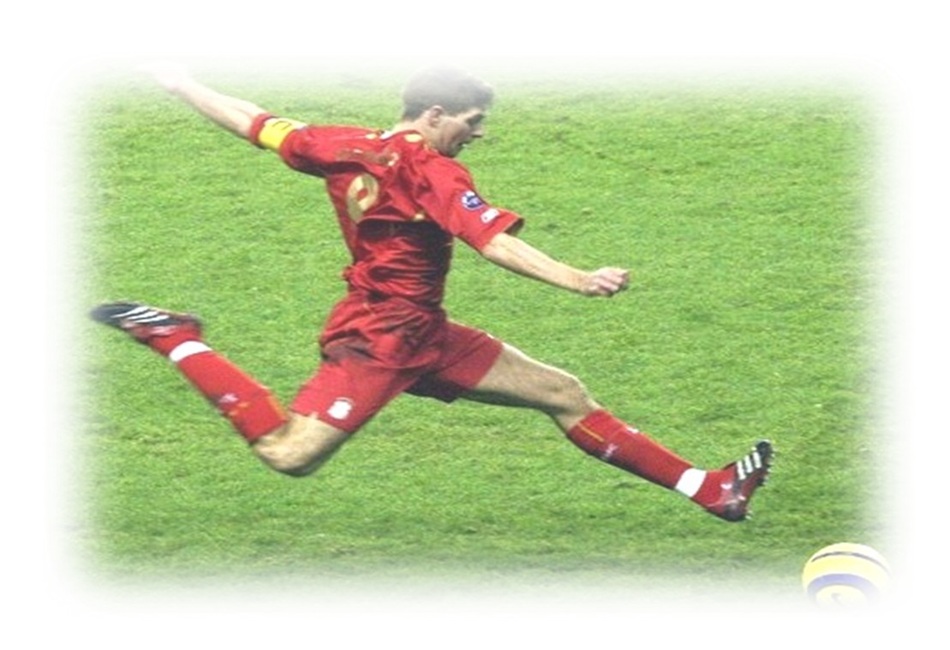
In fact, in that clutch moment, if your organic and strategic inner-dialogue inspire you to defy a narrative written by others, it can lift all around you from teammates to the fans imploring a fightback. One of the greatest examples of this was the former Liverpool captain, Steven Gerrard, also known as Captain Fantastic and for good reason. A combination of many players, he carried the grit and solidity of people like Roy Keane and Patrick Veira; the sublime thinking of Eric Cantona and Zinedine Zidane, alongside a cannon of a foot like Ronald Koeman and the Brazilian Givanildo Vieira de Souza. Most notably, he inspired and led Liverpool to achieve great things time and again and no more eloquently than in the 2005, Champions League final against AC Milan. In fact, enter ‘Gerrard rescues Liverpool’ into Google, and the list is long.
To understand what creates this elite mentality of never say die, you’d have to read the biographies of sports stars because within those pages lie the experiences and the lessons. The setbacks and fightbacks that took place long before a glorious night in front of the millions watching, both live and on television. A cricketing equivalent was Sir Ian Botham whose own motif of ‘swashbuckling’ often appeared in newspaper reports, before or after his name. A player with innate talent, he alongside Bob Willis inspired England’s incredible 1981 comeback against Australia, in the Ashes series. A turnaround so spectacular that it affected some of the opposition players for years to come, as Rodney Marsh admits to still not wanting to talk about it. In turn, Allan Border spoke of the pressure that builds in a dressing room when a team is losing and how it proved impossible for them to stem the flow, as their wickets fell to England.
‘All of a sudden, from being eighty behind, they were, you know, a hundred plus runs ahead, erm, after day four; so, it was just an incredible flip around of momentum.’
Allan Border, former Australian test cricketer
– (Interview at 8 mins, 35 secs)
‘You could see the whole, the way the Australians walked out, the whole… they didn’t have the same presence, and you could see they were getting a little bit jittery.’
Sir Ian Botham, former England test cricketer
– (Interview at 10 mins, 20 secs)
In any sport at any level, not thinking about the scoreline is a hard thing to do where the here and now determines the numbers, but in 1908, the psychologist Robert Yerkes realised that an optimal amount of stress or physiological arousal led to a corresponding improvement, in efficiency. Crucially, too little or too much produced the opposite effect which makes sense in considering intrinsic and extrinsic motivation and fight, flight or freeze. Known as the Yerkes-Dodson law, it’s not without its critics or controversy, but in plain terms, it prescribes the optimal state of being to make good in a contest which translates into clutch moments, too.
Equally, the ‘Individual Zone of Optimal Functioning’ describes an athlete’s ‘pre-competition anxiety’ as a performance rises and falls, relative to the anxiety’s base line. In other words, trying to measure your level of fear before attempting to compete or perform can help to regulate that fear comparatively, over time. This is because the IZOF model suggests that if your anxiety levels are within your personal zone of functioning prior to starting, then your performance should be optimal. If, on the other hand, it falls outside of that zone before you begin then you may struggle to show your best work as you try and control your anxiety, while playing. That makes sense where focusing becomes a problem.

Women’s sport carries its own share of comeback titans and one of the most prolific was Serena Williams. Winner of 73 singles titles, 23 Grand slams and a career win/loss ratio of 858 to 156, she exemplified the courage and mental strength that it took to say, no, when the chips were down. As she established a rivalry with Maria Sharapova, Williams on more than occasion came back from a set down to take the match against her Russian counterpart, and her tenacity is well-documented as she refused to sign-off, on somebody else’s script. During the 2013, WTA Sony Open Tennis Final in Miami, for example, Williams dropped the opening set and a break point before rallying a concerted comeback to take the match, 4-6, 6-3, 6-0.
‘I decided I can’t pay a person to rewind time, so I may as well get over it.’
‘If anything, you know, I think losing makes me even more motivated.’
Serena Williams, former women’s tennis champion
Another strong entry in the comeback ledger is Danica Patrick, the only woman to win an Indycar series round, in a male-dominated sport. In Japan, in 2008, she came from behind strategically in a two-hundred-lap race to take the lead in the last few laps and finish a few seconds ahead of a double Indy-500 champion in second placed, Helio Casroneves. She’d been proving herself from the age of ten in a go-kart and by the time she was hurtling down a straight at the Daytona 500, she was used to the mental strength required to battle and just as importantly, never give up.
‘I think you can be happy and still be competitive. A good lesson for everybody is to think a bit before you speak and represent who you really are instead of the brash, emotional you.’
‘Our mind is incredibly powerful, so as soon as you think you can do something, you can. That’s really the teaching. Not me doing something; me doing something doesn’t make you able to do something, right? You have to believe it.’
Danica Patrick, former professional racing driver
– (Interview at 2 mins, 1 sec)
Whether you’re male or female, the ability to cope with pressure and the prospect of failure in a game let alone life, is a talent unmatched. It allows you to transcend the evolutionary runes of loss as the zero-sumism of do or die, propels you into action. So, it takes confidence, control and maturity to organise your thinking against the run of play, and as you stem your opponents momentum while creating opportunities at the same time, you inspire yourself into believing that anything is possible. It might be a three-goal deficit or a thirty-point gap; a set full of lost games and squandered moments, but so long as the effort is there you’ll create chances and that’s how you recover. Converting those options into something meaningful is a different matter entirely, but you can’t take advantage of what you don’t have.
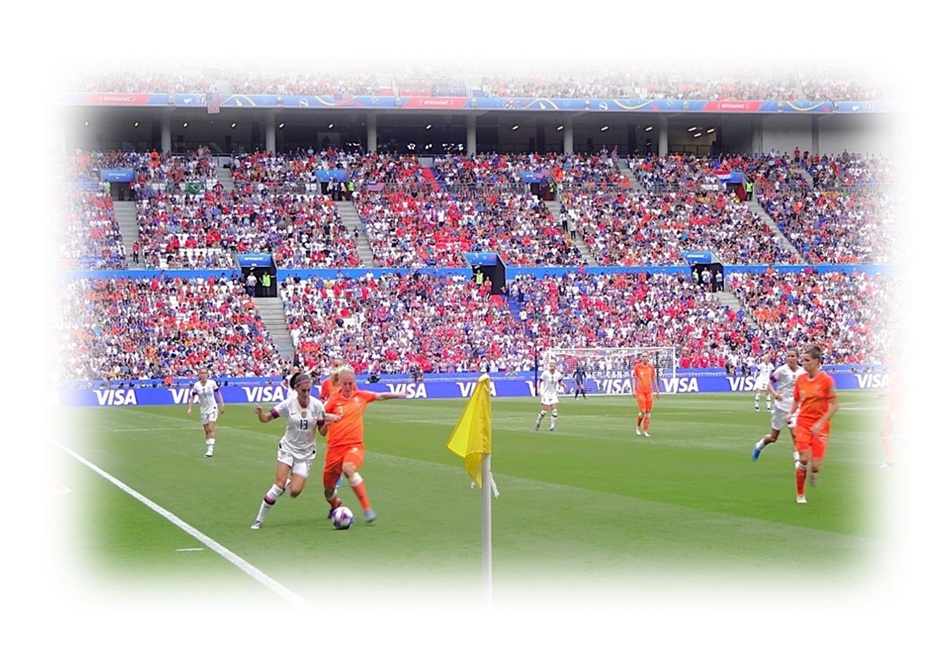
On the website of the sports psychology coaching organisation ‘Inspiring Sporting Excellence’, David Charlton interviewed Hannah Bromley, a former elite professional and international footballer, with New Zealand. In the podcast, ‘Demystifying Mental Toughness’, she talked about the resilience needed to play in different countries and cultures, and in response to being asked, what advice would she give to a younger self, she replied:
‘What I’d tell the younger Hannah is everything that I communicate with the younger athletes now and that is, it’s a journey, and it’s a process and it’s okay to have the ups and downs, but what I would have loved is the tools and techniques that I’ll go through with players and athletes on the daily, that can help them on the daily. So, those little bits like getting help from understanding that you can stop a thought coming through; so, [with] thoughts coming: are you able to recognise that thought and go, “Okay, that’s not helpful, for me. That’s actually playing a memory from that game where I did really bad, and I’m about to play a brand new game: why, am I going back to that?”’
Again, the same thing applies in the heat of a match and where going behind in points or goals, asks a certain something of you and your teammates. Do you have the self-discipline, to manage your ego? Will you lash out in frustration and risk being sanctioned or will you focus harder, on the job-in-hand? Can you accept the responsibility of your position and influence or would you prefer others, to carry your water? These and other questions are the drivers in a comeback as they separate the wheat from the chaff, when it really matters.
Of course, in another epic tale, the blue team in Manchester carries its own upswing story in the jaw-dropping injury time drama of 2012. As Queens Park Rangers threatened to pull off a mind-boggling, 2-1, 10-man siege against the power and might of City, the title chasers were in points lock-step with the other Manchester team meaning if this game ended in a draw, United would take the league on goal difference. Step up, sporting drama and where in the 92nd and 94th minute, City both equalised and then snatched the winning goal against the now legendary commentary of: “Agueroooooooo!!”
At times, sports fans may struggle to appreciate the love and passion that others feel for different games but the common ground of an improbable comeback, unites spectators everywhere.
As Sid Waddell, the energetic darts commentator famously said:
“That’s the greatest comeback since Lazarus!”
Copyright © 2025 | recoveryourwellbeing.com | All Rights Reserved
Images:
Back of the Net, by Shan huang, Pexels – Main Image
1999, Champions League Winners, by Sean Murray, Flickr, licensed under the Creative Commons Attribution-Share Alike 2.0 Generic license
Nadal & Djokovic, by James Boyes and Novak Djokovic respectively, licensed under the Creative Commons Attribution-Share Alike 2.0 Generic license
Mental Preparedness, by Cottonbro, Pexels
Steven Gerrard, by Philip Chambers, courtesy of Wikipedia, licensed under the Creative Commons Attribution-Share Alike 2.5 Generic license
Williams & Sharapova, by Christian Mesiano and Tourism Victoria respectively, licensed under the Creative Commons Attribution-Share Alike 2.0 Generic license, and the Creative Commons Attribution 2.0 Generic license, respectively
2019, Women’s World Cup, by Holly Cheng, courtesy of Wikipedia, licensed under the Creative Commons Attribution-Share Alike 4.0 International license
‘Manchester United v Bayern Munich 1999 final’, UEFA Champions League, 2025, Youtube, accessed 22nd May 2025, https://www.uefa.com/uefachampionsleague/match/56379–man-utd-vs-bayern-munchen/
‘AC Milan v Liverpool 2005 final’, UEFA Champions League, 2025, Youtube, accessed 22nd May 2025, https://www.uefa.com/uefachampionsleague/match/80813–milan-vs-liverpool/
‘Gareth Southgate Pizza Hut Advert’, Qwikmedia, 18th April 2023, Youtube, accessed 23rd May 2025, https://www.youtube.com/watch?v=6SgAclSkCpA
‘Ryder Cup 2012 – Medinah’, Ryder Cup, 12th September 2014, Youtube, accessed 23rd May 2025, https://www.youtube.com/watch?v=l77mifP8IJE
‘Botham Resurrects England’, Cricket.com.au, 23rd July 2013, Youtube, accessed 23rd May 2025, https://www.youtube.com/watch?v=vMwUjBUw2X8
‘Win Probabilities of the Minnesota Vikings Largest Comeback in NFL History’, Minnesota Vikings, 21st December 2022, Youtube, accessed 23rd May 2025, https://www.youtube.com/watch?v=xtNH7pZvABk
Associated Press, ‘Ogunbowale’s 27 Points Lead No.5 Irish Over No.6 Lady Vols’, ESPN, 19th January 2018, accessed 24th May 2025, https://www.espn.co.uk/womens-college-basketball/recap?gameId=400987881
Quote – Billie Jean King: ‘Champions keep playing…’, Brainyquote, 2025, accessed 25th may 2025, https://www.brainyquote.com/quotes/billie_jean_king_121917?src=t_sports
‘Nadal vs Djokovic Olympics 2008 Highlights’, Don Dao, Youtube, 3rd August 2010, accessed 25th May 2025, https://www.youtube.com/watch?v=OPoKUbTojxU&t=11s
Will Unwin, ‘Born to Run: Arne Slot Says Springsteen and Salah Can Inspire a title Repeat’, The Guardian newspaper, 24th May 2025, accessed 25th May 2025, https://www.theguardian.com/football/2025/may/24/arne-slot-springsteen-salah-inspire-liverpool-title-repeat
Swann, C, et al, ‘Performing Under Pressure: Exploring the Psychological State Underlying Clutch Perfomance in Sport’, Journal of Sports Sciences, 35(23), 2272-2280, https://doi.org/10.1080/02640414.2016.1265661, https://www.tandfonline.com/doi/full/10.1080/02640414.2016.1265661
Matthew J Schweickle, et al, ‘Exploring the “Clutch” in Clutch Perfomance: A Qualitative Investigation of the Experience of Pressure in Successful Performance’, Psychology of Sport and Exercise, Volume 54, May 2021, 101889, ISSN 1469-0292, Results, https://doi.org/10-1016/j.psychsport.2021.101889, https://www.sciencedirect.com/science/article/abs/pii/S1469029221000078
Santos-Rosa, FJ, et al, ‘Positive and Negative Self-talk and Performance in Gymnastics: The Role of Contextual, Personal and Situational Factors’, PloS One, 2022, Mar 24;17(3):e0265809, doi: 10.1371/journal.pone.0265809. PMID: 35325003; PMCID: PMC8947089, https://pmc.ncbi.nlm.nih.gov/articles/PMC8947089/
‘Steven Gerrard . Captain Fantastic Trailer’, Mbouncing, 3rd February 2012, Youtube, accessed 26th May 2025, https://www.youtube.com/watch?v=6xJ_75X1tYE
Dominic Fifield, ‘Gerrard Inspires Liverpool By Sheer Willpower’, The Guardian newspaper, 26th May 2005, accessed 26th May 2025, https://www.theguardian.com/football/2005/may/26/newsstory.championsleague
Google, ‘Gerrard rescues Liverpool’, 26th May 2025, https://www.google.com/search?q=Gerrard+rescues+Liverpool
Huw Tubervill, ‘Botham at 65: They Say Never Meet Your Heroes, But I’m Glad I Did’, The Cricketer magazine, 24th November 2020, https://www.thecricketer.com/topics/opinion/sir_ian_botham_65_never_meet_your_heroes_glad_i_did.html
Quote – Rodney Marsh: ‘Botham Resurrects England’, Cricket.com.au, 23rd July 2013, Youtube, 10 secs, accessed 23rd May 2025, https://www.youtube.com/watch?v=vMwUjBUw2X8
Quote – Allan Border: ‘Botham Resurrects England’, Cricket.com.au, 23rd July 2013, Youtube, 8 mins, 35 secs, accessed 23rd May 2025, https://www.youtube.com/watch?v=vMwUjBUw2X8
Quote – Sir Ian Botham: ‘Botham Resurrects England’, Cricket.com.au, 23rd July 2013, Youtube, 10 mins, 20 secs, accessed 23rd May 2025, https://www.youtube.com/watch?v=vMwUjBUw2X8
Richard M. Ryan and Edward L. Deci, ‘Intrinsic and Extrinsic Motivations: Classic Definitions and New Directions’, Contemporary Educational Psychology, Volume 25, Issue 1, 2000, Pages 54-67, ISSN 0361-476X, https://doi.org/10.1006/ceps.1999.1020. https://www.sciencedirect.com/science/article/pii/S0361476X99910202
Alex Dimitriu, M.D, ‘Why Some Experts Believe Stress Can Aid Performance’, Psychology Today, 11th January 2023, Reviewed by Vanessa Lancaster, accessed 26th May 2025, https://www.psychologytoday.com/us/blog/psychiatry-and-sleep/202301/can-stress-aid-performance-some-experts-say-yes
Karl Halvor Teigen, ‘Yerkes-Dodson: A Law for all Seasons’, Theory & Psychology, 4(4):525-547, November 1994, doi: 10.1177/0959354394044004, https://www.researchgate.net/publication/247743193_Yerkes-Dodson_A_Law_for_all_Seasons
Jokela M, and Hanin YL, ‘Does The Individual Zone of Optimal Functioning Model Discriminate Between Successful and Less Successful Athletes? A Meta-Analysis’, J Sports Sci, 1999 Nov;17(11):873-87, doi: 10.1080/026404199365434. PMID: 10585167, https://pubmed.ncbi.nlm.nih.gov/10585167/
‘Individual Zones of Optimal Functioning’, Sporting Bounce, Sport Performance Directory, 9th September 2021, accessed 26th May 2025, https://www.sportingbounce.com/blog/individual-zones-of-optimal-functioning
‘Serena Williams’, The WTA Tour, Women’s Tennis Association, 2025, accessed 26th May 2025, https://www.wtatennis.com/players/230234/serena-williams
Jeff Donaldson, ‘Serena’s Seven Greatest Comebacks’, The Tennis Island, 15th March 2015, Nos 3 & 7, accessed 26th May 2025, https://thetennisisland.com/2015/03/15/sns-serenas-seven-greatest-comebacks/
Quote – Serena Williams, ‘I decided I can’t pay a person…’, Brainyquote, 2025, accessed 26th May 2025, https://www.brainyquote.com/quotes/serena_williams_183400
Quote – Serena Williams, ‘If anything, you know…’, Brainyquote, 2025, accessed 26th May 2025, https://www.brainyquote.com/quotes/serena_williams_444291
‘Danica Patrick’s Career Goes Full Circle With Final Race at Indy 500’, ESPN, 27th May 2018, Youtube, accessed 26th May 2025, https://www.youtube.com/watch?v=EIs9lN4XkX4
‘Danica Makes History’, NTT Indycar Series, 21st April 2008, Youtube, accessed 26th May 2025, https://www.youtube.com/watch?v=NqsX2tKm6hc
Quote – Danica Patrick, ‘I think you can be happy…’, Brainyquote, 2025, accessed 26th May 2025, https://www.brainyquote.com/quotes/danica_patrick_429504
Quote – Danica Patrick, ‘Our mind’s are incredibly powerful…’, ESPN interview, 27th May 2018, accessed 26th May 2025, https://www.youtube.com/watch?v=EIs9lN4XkX4
Quote – Hannah Bromley, ‘Overcoming Challenges in Elite Professional Women’s Football’, Inspiring Sporting Excellence podcast, by David Charlton, 2022, 9 mins, 25 secs, accessed 25th May 2025, https://www.sport-excellence.co.uk/psychological-challenges-professional-womens-football/
‘Man City 3-2 QPR – Epic Last 10 Minutes – PL30’, Premier League, 17th August 2022, accessed 23rd May 2025, https://www.youtube.com/watch?v=qrFPRrZLGmU&t=582s
Quote – Sid Waddell: ‘That’s the greatest…’, Brainyquote, 2025, accessed 25th May 2025, https://www.brainyquote.com/quotes/sid_waddell_413118?src=t_comeback

 recover your wellbeing