

music inflames us in a preferable way, while the impact of stress can be ruinous
Imagine being able to press pause on a situation before stepping away from it and yourself to view it all, as an observer. As you peer at contorted features in an argument, the sneering contours on a mouth support inverted eyebrows, framing a glare that’ll leave no prisoners. Equally, the flared nostrils of your opponent carry an intent suggesting the crest of a conflict, lies in the distance. As you wander around these frozen figures, though, what are you thinking? If only, it was possible? If only, we could hit that button before taking a wrong turn or making a cureless mistake?
Of greater interest, perhaps, is the biochemical make-up of those involved because as cortisol surges and your fight outmuscles flight or freeze, a well-rehearsed and inflammatory response takes hold in the body, with a powerful impact. If the stress or an infection is transitory, your body relies on acute inflammation to fight the good fight before relaxing as the parasympathetic part of your nervous system takes over. This cooling, as it were, changes your energy consumption that in turn, helps your normal functioning to resume. However, what if you were to stay on alert or you returned to that state soon afterwards or repeatedly, through chronic stress?

Well, maybe, we’ve all been there at some point in the relentless tide of life’s pressures or when our faculties took leave of our senses while the tension in our temples, fingers and tongues, acted or reacted in ways with no pause. For some people, it’s a way of life as everything seen, felt or heard becomes a slight of some kind to be treated as war: while for others, a source of exhaustion seems apt as they bounce between rest and the ceiling again. Yet, as with so much else, whatever your relationship to stress, it’s clear that getting to know the dynamics can be a gamechanger in your approach and subsequent health.
‘I can’t think of a disease that doesn’t involve inflammation, but we’re [only] now learning more and more about the physiological role of inflammation.’
Akiko Iwasaki, PhD, Professor of Immunobiology, Howard Hughes Medical Institute
Yale Medicine, interview, 2m, 5s
That was in 2022, and so if science is only just beginning to understand the complex mechanics of inflammation, it would be interesting to know how much thought the rest of us give to the idea and of its wide-reaching potential for trouble, too. For instance, it’s been associated with an array of health issues from changes in brain circuitry via depression to cardiovascular disease and diabetes. It’s been linked to autoimmune disorders and kidney and liver dysfunction as well as cancer and neurodegenerative disorders. So, the enduring and insidious effects are well-documented, but what can we do about the psychological stress contributing to a spectrum of causes that starts with an unstable homeostasis?
In short, very little where life is concerned but our personal tastes are a different matter and for some more or less than others, it’s true, but in real terms, it means keeping tabs on the things we do irregularly or through habit. Of course, we’ll mostly take that for granted, but in testing for the calm or chaos, we’ll find ourselves with decisions that make life easier or somewhat harder. In other words, are you paying attention to the call to unwind as inflammation unpicks you in ways unseen? It can mean the difference between notes of distress whistling through your body as your potential in the future, veers one way or another.
‘Music creates order out of chaos: for rhythm imposes unanimity upon the divergent, melody imposes continuity upon the disjointed and harmony imposes compatibility upon the incongruous.’
Yehudi Menuhin
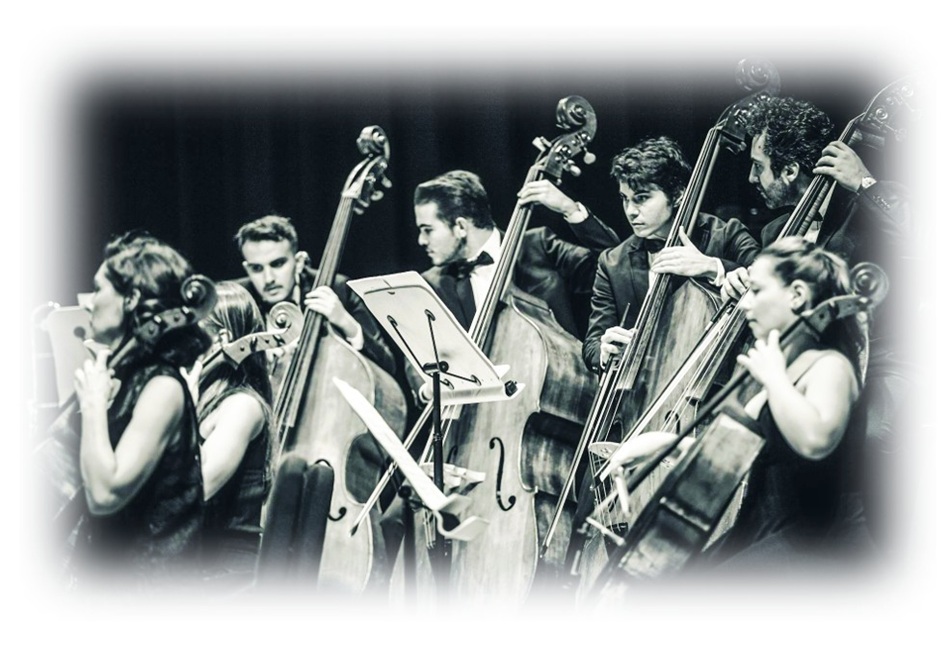
It’s true as opposed to noise with its irregular and disordered patterns that are often in the background or unwanted. Yet, syncopated, off-beat sounds are a pleasant form of chaos and especially if you like funk music, and so as our bodies work tirelessly and in the grip of stress, we’re left with a few measures to find healing again and most notably in the bars unrelated to alcohol. Instead, these measures bring time and frequency to moments in life, we may never forget. Haunting pieces like, ‘Chopin’s piano concerto No.1, 2nd movement’, or ‘Bach’s double violin concerto, 2nd movement’, too. Or, perhaps, it’s Dave Brubeck’s, ‘Take Five’ or Adele’s, ‘Set Fire To The Rain’ or Lady GaGa or Kendrick Lamar. No matter your preference, music’s ability to reflect calm and chaos in all respects, is unmatched.
In fact, it’s effect on wellbeing is so well-known, it makes us ask why isn’t it prescribed more often alongside clinical interventions? It moves us and calms us and energises and provokes us. It tells us how to feel while in a movie when to feel it, as it frames decisions and moments that mark off a time that may be forgotten in the absence of a score. Below the radar, though, music is shaping our minds in interesting ways as cells respond in the physics and chemistry.
‘The [musical impact on cells] studies are categrorised into simple and complex sounds depending on the type of sound employed. Some of the promising effects reported were enhanced cell migration, proliferation, colony formation and differentiation ability.’
Dongho Kwak, et al, ‘Music for Cells? A Systematic Review of Studies’
More specifically, music has been shown to interrupt the release of stress hormones by the hypothalamus and pituitary and adrenal glands, thus mitigating cortisol’s effect on the mind and body. Meanwhile, witnessing chaos is enough to spike the pro-inflammatory cytokines that are set to wreak havoc on your system as other immune responses through neutrophils, for example, are significantly impacted by the stress of chaos. Originating in your bone marrow, these white blood cells outnumber other types as they travel through the bloodstream to deal with various forms of bacteria and virus. Like everything else in your body, though, they’re susceptible to extremes and so if cortisol and adrenaline are on the rampage over time, neutrophils and their function can be supressed. Known as neutropenia, it lowers resistance to infections and disease leaving you vulnerable to everything from autoimmune problems to cardiovascular issues.

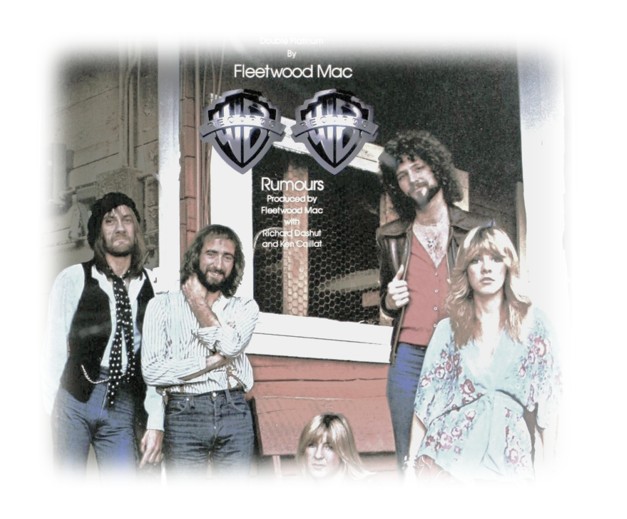
So, as music helps to reduce inflammation, it’s hard to doubt when it shakes us so visibly in weird and wonderful ways and for a great example, look no further than Fleetwood Mac’s ‘Go Your Own Way’: a true anthem, on every level. Whether you’re screaming at the top of your lungs in a car with no-one around to hear you, or you’re surrounded by people in a pub as the floorboards bounce in rendition: you know you’re transcending life as the cells in your body react to the reinforcing effect of dopamine. With Mick Fleetwood’s visceral drum pattern pacing out the measures, too, something within connects to a billion heartbeats as the pain of narrative loss rises in tandem to the joy of a brand new beginning.
Written by Lindsey Buckingham, it was the fifth song on an album packed with great songs but there’s something about the timbre or the stressed quality of his notes: lifting the song to its heights. It’s also the reverberating mood as he sings, as well, which in light of lyrics proclaiming disdain for a woman who’s not only broken his heart but is standing just a few feet away as she helps to execute the very song disparaging her, is extraordinary. In fact, it’s beyond remarkable in tying together feelings and emotions that are as oppositional as they are congruent and to underline that: Stevie Nicks once responded to a television interview question from Jerry Penacoli, an entertainment reporter.
‘JP: Do you think, had you not joined Fleetwood Mac you and Lyndsey would still be together?
Stevie Nicks: I think had we not moved from San Francisco to L.A, both of us feel that we would have gotten married and stayed there…he was absolutely the romantic love of my life.
In a separate interview with Lyndsey Buckingham, Jerry Penacoli put the same question to him.
Lyndsey Buckingham: Well, that’s a nice thought; you know, it’s so hard to second guess events that have transpired and what a different road would have meant. What did happen was meant to happen in the way it did.’
Reflective thoughts on what may have been are never easy to align but then and critically so: it’s not the so-called details that are important; it’s what they represent on a bigger scale and in terms of their music. Because, in the end, it’s through their relationships that Abba and Fleetwood Mac sourced the calm and the chaos of the human condition and in a way that crafted something unique.
So much so, that the complexity of Fleetwood Mac’s relationships in which Stevie Nicks then became involved with their drummer, Mick Fleetwood, having written her response to ‘Go Your Own Way’ with the wonderful ‘Dreams’: simply rose. However, she later learned of his romantic attachment to a friend of hers called Sara, which inspired the deeply haunting track of the same name. Meanwhile, Christine and John McVie’s eight-year marriage came to an end amidst the stress and pressures of recording and touring, which led to her relationship with a member of stage production and her beautiful song ‘You Make Loving Fun’.
There and gifted to the world were four incredible songs lifted from the remnants of real calm and chaos, pain and suffering. Mere staples of existentialism but where so many artists are fuelled by the exact same thing there has to be something special, in rising above that tortured space. Cynics might just call out the money and the lifestyles but surely, in order to collaborate after sharing that type of love, some kind of calling beyond the material is needed first and foremost.
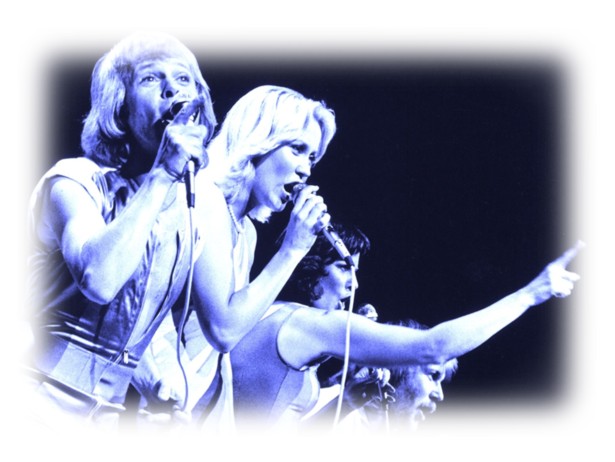
In then turning to Abba, we were offered the same thing and ‘The Winner Takes It All’ is a track for all time.
To begin with, that same sense of collapse and wilfulness permeates the song through Agnetha’s mournful voice and lyrics reminiscent of an ancient Greek tragedy. So, as she opens with the line: “I don’t wanna talk,” we’re instantly thrown into the midst of a trillion quarrels of lovers past and present. In fact, whether a bereft man or woman in the 5th century somewhere or a citizen in times more modern in its ways, the declaration echoes through the ages in an act of conscious prodding. Again, though, from an album full of classics: it spent ten weeks in the UK charts upon release in 1980. Two of those were at number one and six were in the top ten.
The story behind this piece seems to settle on the divorce between Björn and Agnetha, in 1980, but where he felt that the song wasn’t meant to channel a personal loss, he’s also said that the split invariably influenced certain aspects, too. She appears to be in tune as Jim Hayes writing in the Irish Independent newspaper, conveyed in 2020:
‘It is the experience of a divorce, but it’s fiction. There wasn’t a winner or a loser in our case. A lot of people think it’s straight out of reality, but it’s not.’
Björn Ulvaeus
‘Björn wrote it about us after the breakdown of our marriage. The fact that he wrote it exactly when we divorced is touching really. It was fantastic to do that song because I could put in such feeling. I didn’t mind sharing it with the public. It didn’t feel wrong. There is so much in that song. It was a mixture of what I felt and what Björn felt, but also what Benny and Frida went through.’
Agnetha Fältskog
Of course, these are just splinters of information unable to convey the necessary depth and context of a person’s true feelings, let alone the complex nature of a divorce. Still, as the melody carries us up and down and Agnetha takes the lyrics north and south, too, in “The gods may throw a dice” and “Their minds as cold as ice,” we willingly journey with her. Caught in the ache of a serene voice and our memories or the fear perhaps, of a loss: we acknowledge something deep, something raw and everlasting. In fact, as the vowel of the title’s ‘all’ spins off into the centuries, the truth of a masterpiece unfolds. Meanwhile, the nuts and bolts of “The judges will decide” and “the likes of me abide,” nods to the humanity in an untangling of love that may read, in two ways. In one sense, it could be a stretch of mandated distance whilst in another, it’s a seat in family court. Either way, this macro-micro swing between a divine lottery and the whims of life feels tragically ancient and all of this, in a four-minute pop song.
Equally poignant is the atmospheric ‘Knowing Me, Knowing You’, which was recorded in 1976 and during apparently strained times but well before the break-ups. Then, there’s the wonderful ‘One of Us (is crying)’ in which regret over losing love flows with such melodic charm that’s it’s hard to not to take the title, literally. Finally, one of the loveliest songs ever perhaps, lies in the track, ‘Andante, Andante.’ As the quartet were by now either separated or in the process of doing so: Anni-Frid takes up lead vocals and her lower, mellow sound leans into the harmonies in this heart-warming, yet wrenching ballad. Naturally, the strain of her marriage and music-related stresses may have fed her vocals before she and Benny finally divorced in 1981, just a year after their band-mates.
For so many people, these songs were the backdrop to childhoods spent running in and out of homes with money for an ice-cream van threatening to disappear at any moment or as hands were washed for teatime, after playing in the street after school. Yet, these and other songs from both groups continue to leave indelible marks on millions of people. Of course, numerous singers and bands have done the same thing but rarely perhaps have others created such timeless, multi-million-selling songs from the fusion of creativity, love, marriage and divorce. In other words, the calm and the chaos.
‘Without music, life would be a mistake.’
Friedrich Nietzsche
So it would and for many across the globe, without those relationships in Fleetwood Mac and Abba: we would have been deprived of something creatively and chaotically, meaningful. That combination of hope and despair, analgesia and inflammation, reaching back into the depths of time before emerging in description as a feedback loop of sex, love and possibly heartache.
‘My journey has always been the balance between chaos and order.’
Philippe Petit; the man who walked between the Twin Towers
It’s been that way for much of the planet, too.
Copyright © 2025 | recoveryourwellbeing.com | All Rights Reserved
Images:
Cymbals & Snare, by Josh Sorenson, Pexels
Behind the Eyes, by Mohamed El-Aminemsiouri, Pexels
Classical Musicians, by Trksami, Pexels
Medical Scans, by Shvetsa, Pexels
Fleetwood Mac, by Rumours Trade Ad Billboard 1977-Warner Bros, Pexels – Courtesy of Wikipedia, ‘This work is in the public domain in the United States because it was published in the United States between 1930 and 1977, inclusive, without a copyright.’
Abba in Edmonton, Canada, 1979, by Anders Hanser – Courtesy of Wikipedia, ‘This file is licensed under the Creative Commons Attribution 3.0 Unported license.’
‘Understanding Acute and Chronic Inflammation’, Harvard Health Online+, Harvard Health Publishing, Harvard Medical School, 1st April 2020, accessed 17th August 2025, https://www.health.harvard.edu/staying-healthy/understanding-acute-and-chronic-inflammation
Physiopedia contributors, ‘Parasympathetic Nervous System’, Physiopedia, 12th August 2022, Page Version ID: 313640, accessed 17th August 2025, https://www.physio-pedia.com/Parasympathetic_System
Quote – Akiko Iwasaki, ‘I can’t yhink of a disease…’, ‘How Inflammation Affects Your Health’, Yale News, Yale School of Medicine, 8th April 2022, interview – 2 mins, 5 secs, accessed 17th August 2025, https://www.yalemedicine.org/news/how-inflammation-affects-your-health
Felger, J, et al, ‘Inflammation Is Associated With Decreased Functional Connectivity Within Corticostriatal Reward Circuitry In Depression’, Mol Psychiatry 21, 1358-1365 (2016), accessed 17th August 2025, https://www.nature.com/articles/mp2015168#citeas
‘How Inflammation Affects Your Health’, Yale News, Yale School of Medicine, 8th April 2022, Para 1, accessed 17th August 2025, https://www.yalemedicine.org/news/how-inflammation-affects-your-health
Furman, D, et al, ‘Chronic Inflammation in the Etiology of Disease Across The Lifespan’, Nat Med 25, 1822-1832 (2019), https://doi.org/10.1038/s41591-019-0675-0, Abstract, accessed 17th August 2025, https://www.nature.com/articles/s41591-019-0675-0#citeas
Liu YZ, et al, ‘Inflammation: The Common Pathway of Stress-related Diseases’, Front Hum Neurosci, 2017, Jun 20;11:316, doi: 10.3389/fnhum.2017.00316, PMID: 28676747; PMCID: PMC5476783, accessed 17th August 2025, https://pmc.ncbi.nlm.nih.gov/articles/PMC5476783/
Quote – Yehudi Mehuhin, ‘Music creates order…’, Brainy Quote, 2025, accessed 17th August 2025, https://www.brainyquote.com/quotes/yehudi_menuhin_393508?src=t_chaos
‘Visual Demonstration of Syncopation’, Music Teacher Videos, Youtube, 14th June 2022, accessed 20th August 2025, https://www.youtube.com/watch?v=eAEoy-DlKqU
Frédéric Chopin, ‘Piano Concerto No.1 in e-minor, 2nd movement’, Youtube, Olga Scheps, 22nd January 2014, accessed 18th August 2025, https://youtu.be/2bFo65szAP0?si=kF_Ltt415ovhz2bv&t=1324
Johann Sebastian Bach, ‘Double Violin Concerto in D-minor, 2nd movement’, Anne Sophie Mutter, 4th June 2019, accessed 18th August 2025, https://youtu.be/Qcp8pvRkooY?si=4fznFCH4ODZ-YNLL&t=250
Dave Brubeck, ‘Take Five’, from the 1959 ‘Time Out’ album, Youtube, Tori Chitic, 22nd January 2012, accessed 18th August 2025, https://www.youtube.com/watch?v=tT9Eh8wNMkw
Adele, ‘Set Fire To The Rain’, from her ’21’ album, Youtube, Gde Bayu Perdana, 16th October 2012, https://www.youtube.com/watch?v=1twUUM0KxDg
Andrew E. Budsen, MD, ‘Why Is Music Good For The Brain?’ Contributor, Editorial Advisory Board Member, Harvard Health Publishing, Harvard Medical School, 7th October 2020, accessed 18th August 2025, https://www.health.harvard.edu/blog/why-is-music-good-for-the-brain-2020100721062
Carolyn Arnold, et al, ‘The Psychology of music-based interventions and the experience of pain’, Frontiers in Psychology, Sec. Perception Science, Volume 15, 10th May 2024, 1664-1078, 10.3389/fpsyg.2024.1361857, Abstract, accessed 20th August 2025, https://www.frontiersin.org/journals/psychology/articles/10.3389/fpsyg.2024.1361857/full
Quote – Kwak, et al, ‘Music for Cells? A Systematic Review of Studies Investigating the Effects of Audible Sound Played Through Speaker-based Systems on Cell Structures’, Music & Science, 5, https://doi.org/10.1177/20592043221080965, original work published in 2022, Abstract, accessed 18th August 2025, https://journals.sagepub.com/doi/10.1177/20592043221080965
Alan Barker, ‘Can Music Change Our Immune System?’, British Science Association, 12th September 2016, Paras 5 & 6, accessed 20th August 2025, https://www.britishscienceassociation.org/blog/can-music-change-our-immune-system
Speakman S, et al, ‘Cytokine Fluctuation During Acute Stress Is Correlated To Life Trauma’, J Trauma Acute Care surg. 2023, Oct 1;95(4):535-541, doi: 10.1097/TA.0000000000004006, Epub 2023 May 11, PMID: 37165473; PMCID: PMC10545070, https://pmc.ncbi.nlm.nih.gov/articles/PMC10545070/
Vyvyane Loh, MD, ‘Chronic Stress: Inflammatory Cytokines’, Youtube Shorts, @vlmdrounds, https://www.youtube.com/shorts/clfUVQT6kow, taken from: Anxiety and Brain Inflammation, Episode 41, 27th June 2023, accessed 18th August 2025, https://www.youtube.com/watch?v=ohGZsYE9wys
Kate Bergdale, ‘Extravasation of Neutrophils’, Youtube, 24th August 2016, accessed 18th August 2025, https://www.youtube.com/watch?v=B9Qi7we0Ynk
Obeagu EL, ‘Stress, Neutrophils and Immunity: A Dynamic Interplay’, Ann Med Surg (Lond), 15th April 2025; 87(6):3573-3585, doi: 10.1097/MS9.0000000000003304, PMID: 40486559; PMCID: PMC12140713, https://pmc.ncbi.nlm.nih.gov/articles/PMC12140713/
Jennifer Hulzen, ‘What Are Neutrophils and What Do They Do?’ Medical News Today, Medically Reviewed by Mia Armstrong, MD, updated 11th July 2024, accessed 18th August 2025, https://www.medicalnewstoday.com/articles/323982
‘Go Your Own Way’, Fleetwood Mac, Youtube, 27th September 2018, accessed 2nd May 2024, https://www.youtube.com/watch?v=ozl3L9fhKtE
NDA, ‘Drugs and the Brain’, National Institute on Drug Abuse’, Drugs, Brains and Behaviour: The Science of Addiction, 6th July 2020, Paras 12 & 13, accessed 19th August 2025, https://nida.nih.gov/publications/drugs-brains-behavior-science-addiction/drugs-brain
‘Rumours’ album, Fleetwood Mac, Warner Records, 1977, accessed 5th May 2024, https://www.amazon.com/Rumours-Fleetwood-Mac/dp/B000002KGT
Svetlana Whitener, ‘Emotions vs Feelings: Understanding the Difference Can Improve Emotional Intelligence, 16th November 2022, accessed 2nd May 2024, https://www.forbes.com/sites/forbescoachescouncil/2022/11/16/emotions-vs-feelings-understanding-the-difference-can-improve-emotional-intelligence/
‘Stevie Nicks & Lyndsey Buckingham 2011 Interview’ Youtube, 12th September 2011, accessed 2nd May 2024, https://www.youtube.com/watch?v=LZiH4aZ7tUY
‘Stevie Nicks & Lyndsey Buckingham 2011 Interview’ Youtube, 12th September 2011, accessed 2nd May 2024, 1 min: 03 secs, https://www.youtube.com/watch?v=LZiH4aZ7tUY
‘Dreams’, Fleetwood Mac, Youtube, 6th October 2024, accessed 2nd May 2024, https://www.youtube.com/watch?v=5oWyMakvQew
‘Sara’, Flleetwood Mac, Youtube, 27th September 2018, accessed 2nd May 2024, https://www.youtube.com/watch?v=9bWGy0K5VF0
‘You Make Loving Fun’, Fleetwood Mac, Youtube, 8th August 2023, accessed 2nd May 2024, https://www.youtube.com/watch?v=ZsDJLaqw5Tc
‘The Winner Takes It All’, Abba, Youtube, 8th October 2009, accessed 2nd May 2024, https://www.youtube.com/watch?v=92cwKCU8Z5c
‘Super Trouper’ album, Benny Andersson and Björn Ulvaeus, 3rd November 1980, accessed 22nd May 2024, https://www.amazon.co.uk/Super-Trouper-Abba/dp/B004R2HGMC
‘The Winner Takes It All’, The Official UK Charts Company, 2024, accessed 22nd May 2024, https://www.officialcharts.com/songs/abba-the-winner-takes-it-all/
‘In Focus: The Winner Takes It All – The Story of a Masterpiece’, Abba, The Official Site, 2024, Para 7, accessed 22nd May 2024, https://abbasite.com/articles/the-winner-takes-it-all-the-story-of-a-masterpiece/
Jim Hayes, ‘A Break-up Laid Bare In Abba’s Small Masterpiece’, Irish Independent newspaper, 8th August 2020, Para 2 & 3, accessed 22nd May 2024, https://www.independent.ie/regionals/wicklow/lifestyle/a-break-up-laid-bare-in-abbas-small-masterpiece/39429241.html
‘Knowing Me, Knowing You’, Abba, Youtube, 8th Ovtober 2009, accessed 23rd May 2024, https://www.youtube.com/watch?v=iUrzicaiRLU
‘One of Us’, Abba, Youtube, 9th October 2009, accessed 23rd May 2024, https://www.youtube.com/watch?v=IIKAe8Wi0S0
‘Andante, Andante’, Abba, Youtube, 12th December 2018, accessed 23rd May 2024, https://www.youtube.com/watch?v=CS-30pO94lo
Friedrich Nietzsche quote, ‘Without music…’, Classic FM, Global 2024, accessed 23rd May 2024, https://www.classicfm.com/discover-music/latest/quotes-about-classical-music/nietszche/
Quote – Philippe Petit, ‘My journey…’, Brainy Quote, 2025, accessed 18th August 2025, https://www.brainyquote.com/quotes/philippe_petit_693347

 recover your wellbeing