


a brief look at Freud’s theory of a death instinct
Equations are everywhere: describing anything from the everyday ‘this’ equals ‘that’ or the rate at which something does or doesn’t happen to the complexities of Lagrangian Mechanics, as it describes a system changing. At the same time, other rules guide the relationships and results of our many decisions, like the desire to achieve or to get out of bed each day, and it all adds up. So, if, for instance, you compare the number of opportunities you have in a particular month by the times you’re willing to act on them, you’ll get a simple ratio leaning towards inertia or effort. Nothing special there, but what happens when the willingness to try falls, in the direction of zero? What do the numbers say about an instinct that seems as natural and as reliable as breathing but which can surprise us, in various ways?
It’s a calculation for more inclined minds, but one of Freud’s theories more than touched on the matter and while it’s been controversial on a number of levels from a lack of empirical evidence to its philosophical indelicacy, it’s also been useful to psychoanalysis in a number of ways.
‘The simultaneously binding and clashing forces of the life instinct and the death drive together form an entwined dual system that is the source of all creation. That’s a controversial claim, because our society is constructed around valuing life above all else; to even suggest that on some level we are preoccupied with death, or engaging in self-sabotage, runs the risk of being perceived as a character flaw or an admission of personal failing.’
Projections: Death Drive on Film, Freud Museum London

Well, perhaps the quickest way to insult humanity is with a baseness of thought around the sanctity of life which only seems to apply on a personal level because ironically, the 20th Century saw around 187-million people killed in combat. In his 1993 book, ‘Out of Control: Global Turmoil on the Eve of the Twenty-first Century’, Zbigniew Brzezinski, the retired National Security Advisor to former President Jimmy Carter assessed the lower range to be 167-175 million. With the population of present-day London at almost 9-million, it would take the destruction of eighteen-and-a-half versions of the city to reach the lower end of that estimate. So, whether in millions or multiples, the numbers at scale are scarring and it pushes us to ask about the relationship between a desire to inflict death while apparently, seeking it for ourselves in some way – and therein, of course, lies the controversy.
You see, how do we embrace the idea that we’re fundamentally driven towards Self-destruction when everything about life, tells us otherwise? The very reason behind so much war and bloodshed, for example, is to avert some sort of existential crisis that may or may not be real while on a smaller scale, we’ll do almost anything to survive on a daily basis. In fact, the outward expression of the death drive towards others as Sigmund Freud wrote in his 1920 book ‘Beyond the Pleasure Principle’, rings in opposition to self-destruction, but in truth: he states that the death instinct is directed inwardly, before being turned on others. The eternal question and contentions are why?
‘The reduction of physical tension to the lowest possible point, that is, death. It is first directed inward as a self-destructive tendency and is later turned outward in the form of aggression.’
American Psychological Association
Why would we want to return to a state of non-existence, beyond losing the survival instinct that propels so many into taking their own lives? It’s a pressing issue where each year, over 700,000 people worldwide end their lives prematurely with reasons spanning sickness, chronic pain and depression to substance dependency, failed relationships and financial problems. In these tragic situations where life’s pressures have proven too much for a willingness to try again: the point of existence has lost the basic quality carrying most of us through to the end, and its most eloquent expression perhaps lies in a quote by the French philosopher, Albert Camus:
‘There is but one truly serious philosophical problem and that is suicide. Judging whether life is or is not worth living amounts to answering the fundamental question of philosophy.’
It seems true in so far as there is no other question as simple and yet, each day, so many people face challenges that would leave more of us posing that philosophical question on an hourly basis, perhaps. Existential matters like war zones and abject poverty or illness or some kind of abuse. Experiences shaping the brain in ways where the fight against annihilation, seems profoundly and constantly set.
‘Under the circumstances, the term “death instinct” ought to mean an aspiration, a drive to be dead. Perhaps Freud was right, even though neither the biologist nor the theologian would find it possible to agree with him. Let us assume that Freud was right; he certainly did not prove his case, because there is nothing instinctual about dying, even though the end is inevitable. Here again we find a strange semantic or terminological confusion, a tendency to use terms which are familiar to us in the psychoanalytical glossaries, but which in certain contexts become somewhat confusing labels.’
Gregory Zilboorg, psychoanalyst and historian: in the introduction to ‘Beyond the Pleasure Principle’
Introduction, page xiv, para 3

Despite its cultural power, Freud’s work has been endlessly challenged and rightly so in considering the subjective nature of his methodology. Meanwhile, the death drive amongst many of his theories continues to stir the deepest of passions and a spectrum of interpretations including some religious objections, too, on account of nihilistic determinism. As the opposite of faith and eternal life, the death instinct pushes us to examine the truth of entropy and where our bodies tend towards decay and disorder, while as Freud himself, said:
‘If we are to take it as a truth that knows no exception that everything living dies for internal reasons – becomes inorganic once again – then we shall be compelled to say that ‘the aim of all life is death’ and looking backwards, that ‘inanimate things existed before living ones.’
Sigmund Freud, ‘Beyond the Pleasure Principle’ page 32, para 1
In this light, he seems right about a death drive but maybe part of the problem lies with the imbued sense of intent surrounding the theory and where few of us actively search for the end. So, the idea that we seek out this death state through our thoughts and behaviour feels wrong while at the same time, it feels right, too, in certain circumstances. Take smoking, for instance, an addiction and habit bringing pleasure to millions of people on the one hand as it literally destroys the body, on the other. So, the fact of taking a cigarette while seeing the awful imagery designed to put people off, and then lighting it to draw on the contents seems counter-intuitive, in terms of a counter-balancing life drive. Of course it does, but in the same vein as the long-term processing of climate change: meaning, unless death is literally upon us, we’ll ignore the input potentially taking us there. Yet, no-one is intentionally trying to kill planet Earth, either.
It seems like a mess, but it’s a different practise to the Compulsive repetition Freud talks about on page twelve of the book and in which: ‘The patient cannot remember the whole of what has been repressed in him, and what he cannot remember may be precisely the essential part of it…He is obliged to repeat the repressed material as a contemporary experience instead of, as the physician would prefer to see, remembering it as something belonging to the past.’ He goes on to cite the Oedipus Complex or infantile sexual life as the origin of these repressions, but whether he means across a spectrum of repressions requires deeper reading.
Regarding the death drive: he suggests that compulsive repetition is an expression of pain that the pleasure principle can’t account for by definition, leaving the instinct to return to the inorganic state or death, as the only explanation. It’s an interesting idea, but if we’re driven to re-enact pain it’s possible that the intensity of a trauma forms neuronal connections and perhaps rapidly so, that are difficult to reverse without interventions. Obviously, Freud never had access to this knowledge, and so we’re left with a range of thoughts and suppositions about the way we experience the mind.
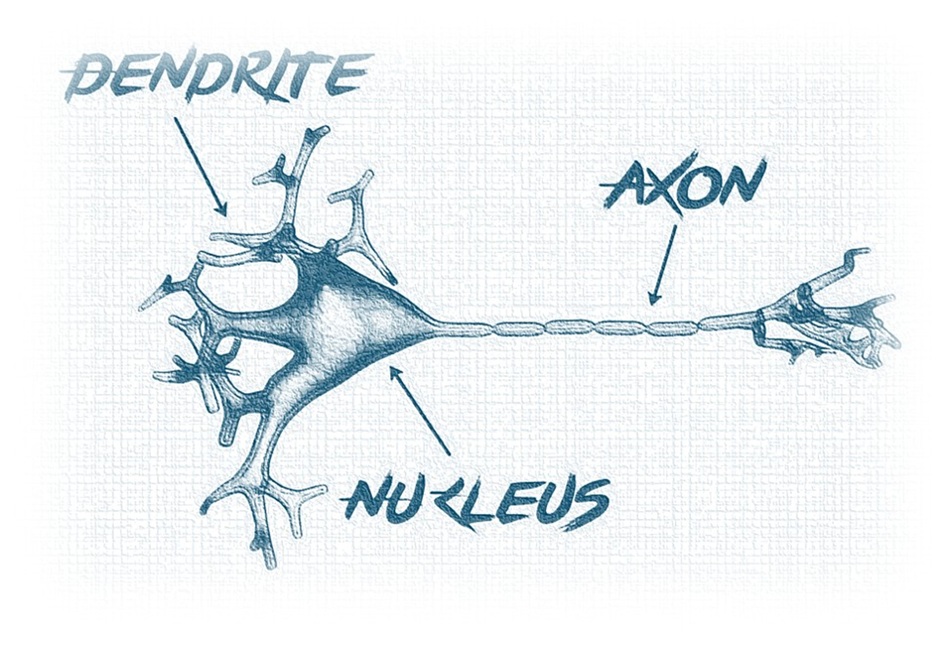
With the inseparability of our minds and bodies, too, we’re connected in ways that Freud understood and as the instinctual drives link both together, we’re able to live our lives to the best of our abilities and in the knowledge that what we think or do matters on various levels. In fact, in page two of ‘Beyond the Pleasure Principle’, he quotes Gustav Fechner, a German philosopher and experimental psychologist, who advocated that the mind and body are, in fact, tied together while also writing about the evolution of life, in his 1873 book: ‘Some Ideas on the Creation and Development of Organisms.’ In it, he said:
‘Insofern bewusste Antriebe immer mit Lust oder Unlust in Beziehung stehen, kann auch Lust oder Unlust mit Stabilitäts- und Instabilitätsverhältnissen in psychophysischer Beziehung gedacht werden.’
This roughly translates to:
‘Insofar as conscious impulses are always related to pleasure or displeasure, pleasure or displeasure can also be thought of in terms of stability and instability in a psychophysical sense.’
G.T Feschner, ‘Einige Idem zur Schopfiings- und Entwicklungsgeschichte der Organismen, 1873’
Well, this is important because it offers a psychophysiological link to what we call homeostasis or the systemic balance of our bodies regarding chemicals, fluids and temperature and the instability of which can lead to death. For Freud, it ties in with his concept of ‘pleasure and unpleasure’ and the unreleased tensions that can affect the homeostatic balance of food, sleep and energy. In the long-term and unless the body turns on itself in some way, it’s the opposite to the death drive as it tries to avoid cellular break down.
Again, it’s important to avoid a sense of consciousness or intention when it comes to a death instinct while the homeostatic contrast reflects elements of Freud’s own contradictory nature as he himself acknowledges that his ideas are speculative and tentative, while at the same time offering a sense of surety through a subjective certainty.
‘We have arrived at these speculative assumptions in an attempt to describe and to account for the facts of daily observation in our field of study. Priority and originality are not among the aims that psychoanalytic work sets itself; and the impressions that underlie the hypothesis of the pleasure principle are so obvious that they can scarcely be overlooked.’
Sigmund Freud, ‘Beyond the Pleasure Principle’ page 1, para 2

So, for all his flaws, perhaps Freud’s genius, if you like, was to build a bridge from the abstractions of an unseen cellular world to something more tangible and reasonably comprehensible. Of course, the limitations of his time have led to a great deal of his work being reconsidered but that’s normal in a world where growth is referential. Yet, the fact is: when you read his writing which isn’t always easy, you may find yourself with admiration for some of his pioneering thought processes whilst at other times, it feels like he was playing darts in the dark.
Ultimately, his famous book was influenced by Sabina Spielren, a Russian doctor and pioneer of psychoanalysis and the idea of a death instinct. On the first page of her 1912 book ‘Destruction As The Cause of Coming Into Being’, she wrote:
‘Death is a symbol of moral failure.’
She was quoting Wilhem Stekel, a contemporary, as she referenced the anxieties and neuroses around sex that can lead to such negative feelings in people, as well as the link between sexual desire and death imagery that was popular, during the late 19th Century.
By itself, it represents a simple yet powerful equation if reflecting a religious or timebound attitude towards suicide or the destruction of millions of people as Freud himself was deeply affected by the First World War, but as we calculate our own fear of death or thanatophobia against an inexorable and biological drive towards it: we draw a ratio expressing an acceptance or struggle of our time here on Earth.
It means, of course, that decay is inevitable while at the same time, decaying towards decay is not.
Copyright © 2025 | recoveryourwellbeing.com | All Rights Reserved
Images:
Time has Flown, by Jeanette Atherton, Pexels – Main Image – AI Generated
World War Again, by szafran, Pexels
Waiting, by Izzy Serious, Pexels
Nerve Cell, by All In One Movie, Pixabay
Sigmund Freud, by L Moonii, Pixabay – AI Generated
‘Is This The Biggest Equation In Physics? The Lagrangian of the Standard Model’, Youtube Shorts, @PopCultureScientist, Abigail James, 11th March 2023, accessed 28th August 2025, https://www.youtube.com/shorts/_oRTlbK8Wao
‘Contemporary Perspectives on the Freudian Death Drive: In Theory, Clinical Practise and Culture’ (Oxfordshire, Routledge, 2019) https://www.routledge.com/Contemporary-Perspectives-on-the-Freudian-Death-Drive-In-Theory-Clinical-Practice-and-Culture/Bluml-Giorgi-Huppert/p/book/9780367149345?srsltid=AfmBOoryxBT81TNsTy_-HvZrb86yduIXUsp0QNaDHwpDe7Aerk39BnBI
Staff Writer, ‘Death Instinct: Understanding Freud’s Profound Theory and Its Modern Relevance’, The Chicago Psychoanalytic Institute, 5th December 2024, accessed 28th August 2025, https://chicagoanalysis.org/blog/psychoanalysis/death-instinct-therapy/
‘Projections: Death Drive on Film’, Freud Museum London, What’s On – On Demand – Courses, 2025, accessed 28th August 2025, https://www.freud.org.uk/whats-on/on-demand/courses/projections-death-drive-on-film/
Imperial War Museum, ‘Timeline of 20th and 21st Century Wars’, 2023, accessed 11th December 2023, https://www.iwm.org.uk/history/timeline-of-20th-and-21st-century-wars#:~:text=Conflict%20took%20place%20in%20every,from%201900%20to%20the%20present
Zbigniew Brzezinski, ‘Out of Control: Global Turmoil on the Eve of the Twenty-first Century’ (New York, Touchstone, 1995) 1st Edition, https://www.amazon.co.uk/Out-Control-Global-Turmoil-Century/dp/0684826364/
Willima Berry, ‘How Recognising Your Death Drive May Save You’, Psychology Today, Reviewed by Ekua Hagan, 26th October 2011, accessed 30th August 2025, https://www.psychologytoday.com/us/blog/the-second-noble-truth/201110/how-recognizing-your-death-drive-may-save-you
Sigmund Freud, ‘Beyond the Pleasure Principle’ (New York, 1990, W.W Norton & Company) accessed 30th August 2025, https://www.amazon.com/Beyond-Pleasure-Principle-Norton-Library/dp/0393007693#detailBullets_feature_div
‘Death Instinct’, American Psychological Association, 19th April 2018, accessed 30th August 2025, https://dictionary.apa.org/death-instinct
‘Suicide’ World Health Organisation, Overview, 28th August 2023, accessed 31st August 2025, https://www.who.int/news-room/fact-sheets/detail/suicide
‘Suicide’ World Health Organisation, Who Is At Risk, 28th August 2023, accessed 31st August 2025, https://www.who.int/news-room/fact-sheets/detail/suicide
O’Dwyer, K, ‘Camus’ Challenge: The Question of Suicide’, Journal of Humanistic Psychology, 2012, 52(2), 165-177, accessed 31st August 2025, https://doi.org/10.1177/0022167811402999
Quote – Greogory Zilboorg, ‘Under the circmstances…’, ‘Beyond the Pleasure Principle’ (New York, 1990, W.W Norton & Company) accessed 30th August 2025, Introduction, page xiv, para 3, https://www.amazon.com/Beyond-Pleasure-Principle-Norton-Library/dp/0393007693#detailBullets_feature_div
‘Five Reasons to Forget Freud’, The British Psychological Society, 7th May 2024, accessed 30th August 2025, https://www.bps.org.uk/psychologist/five-reasons-forget-freud
James Carroll, ‘The Pope’s Shrink and Catholicism’s Uneasy Relationship With Freud’, The NewYorker, News Desk, 8th September 2017, para 2, accessed 31st August 2025, https://www.newyorker.com/news/news-desk/the-popes-shrink-and-catholicisms-uneasy-relationship-with-freud
Quote – Sigmund Freud, ‘If we are to take it…’, ‘Beyond the Pleasure Principle’ (New York, 1990, W.W Norton & Company) accessed 30th August 2025, page 32, para 1, https://www.amazon.com/Beyond-Pleasure-Principle-Norton-Library/dp/0393007693#detailBullets_feature_div
Rachel B. Blass, ‘Understanding Freud’s Conflicted View of the Object-relatedness of Sexuality and its Implications for Contemporary Psychoanalysis: A Re-examination of Three Essays on the Theory of Sexuality’, The International Journal of Psychoanalysis, Volume 97, Issue 3, 20th July 2016, pp. 591-613, https://doi.org/10.1111/1745-8315.12547, accessed 30th August 2025, https://onlinelibrary.wiley.com/doi/abs/10.1111/1745-8315.12547
Quote – Sigmund Freud, ‘We have arrived…’, ‘Beyond the Pleasure Principle’ (New York, 1990, W.W Norton & Company) accessed 30th August 2025, page 1, para 2, https://www.amazon.com/Beyond-Pleasure-Principle-Norton-Library/dp/0393007693#detailBullets_feature_div
Cogan, R, ‘Repetition Compulsion’, In The Corsini Encyclopedia of Psychology, Wiley Online Library, (eds, I.B Weiner and W.E Craighead) https://doi.org/10.1002/9780470479216.corpsy0791, https://onlinelibrary.wiley.com/action/showCitFormats?doi=10.1002%2F9780470479216.corpsy0791
‘Nirvana Principle’, American Psychological Association, 19th April 2018, accessed 30th August 2025, https://dictionary.apa.org/nirvana-principle
Gvozdanovic G, et al, ‘Experimental Trauma Rapidly Modifies Functional Connectivity’, Imaging Behav, 2021, Aug 15(4):2017-2030, doi: 10.1007/s11682-020-00396-2, Epub 2020 Sep 28, PMID: 32989650; PMCID: PMC8413225, https://pubmed.ncbi.nlm.nih.gov/32989650/
Cieri F, Esposito R, ‘Psychoanalysis and Neuroscience: The Bridge Between Mind and brain’, Front Psychol, 2019, Aug 28;10:1790, doi: 10.3389/fpsyg.2019.01983, PMID: 31555159; PMCID: PMC6724748, https://pmc.ncbi.nlm.nih.gov/articles/PMC6724748/
Marius Dumitrescu, ‘The Relationship Between Body and Soul from the Perspective of Freud’s Psychoanalysis’, Procedia – Social and Behavioural Sciences, Volume 92, 2013, Pages 294-298, ISSN 1877-0428, Abstract, accessed 31st August 2025, https://doi.org/10.1016/j.sbspro.2013.08.675, https://www.sciencedirect.com/science/article/pii/S1877042813028061?ref=pdf_download&fr=RR-2&rr=977ed3e98d5603dd
The Editors of Encyclopedia Britannica, ‘Gustav Fechner’, Encyclopedia Britannica, Philosophy & Religion, Philosophers, 15th April 2025, accessed 30th August 2025, https://www.britannica.com/biography/Gustav-Fechner
G.T Feschner, ‘Einige Idem zur Schopfiings- und Entwicklungsgeschichte der Organismen, 1873’ (Hamburg, 2012, Tredition Classics) Part XI, Page 94, Para 2, accessed 30th August 2025, https://www.amazon.com.be/-/en/Gustav-Theodor-Fechner/dp/384724812X?language=en_GB; https://archive.org/details/einigeideenzurs00fechgoog/page/n108/mode/2up
‘Homeostasis – Negative and Positive Feedback (Thermoregulation and Lactation)’, Armando Hasudungan, Youtube, 4th November 2019, accessed 30th August 2025, https://www.youtube.com/watch?v=bfuOljRU1nk
‘Sabina Spielren: Forgotten Pioneer of Psychoanalysis’, Revised Edition, Editd by Coline Covington, Barbara Wharton, 2nd Edition, (Oxfordshire, Routledge, 2015), https://www.taylorfrancis.com/books/edit/10.4324/9781315700359/sabina-spielrein-barbara-wharton-coline-covington
Sabina Spielren, ‘Destruction As The Cause of Being’, Journal of Analytical Psychology, 1994, 39, 155-186, accessed 31st August 2025, https://archive.org/details/destruction-as-the-cause-of-coming-into-being/mode/2up?view=theater
‘Dr Wilhem Stekel’, Nature 146, 123 (1940), https://10.1038/146123b0, https://www.nature.com/articles/146123b0#citeas
Jonathan Jong, ‘How Scared of Death Are We Really – And How Does That Affect Us?’ The Conversation, 8th February 2016, accessed 31st August 2025, https://theconversation.com/how-scared-of-death-are-we-really-and-how-does-that-affect-us-54258

 recover your wellbeing